Q&A with Professor Francesca Dominici
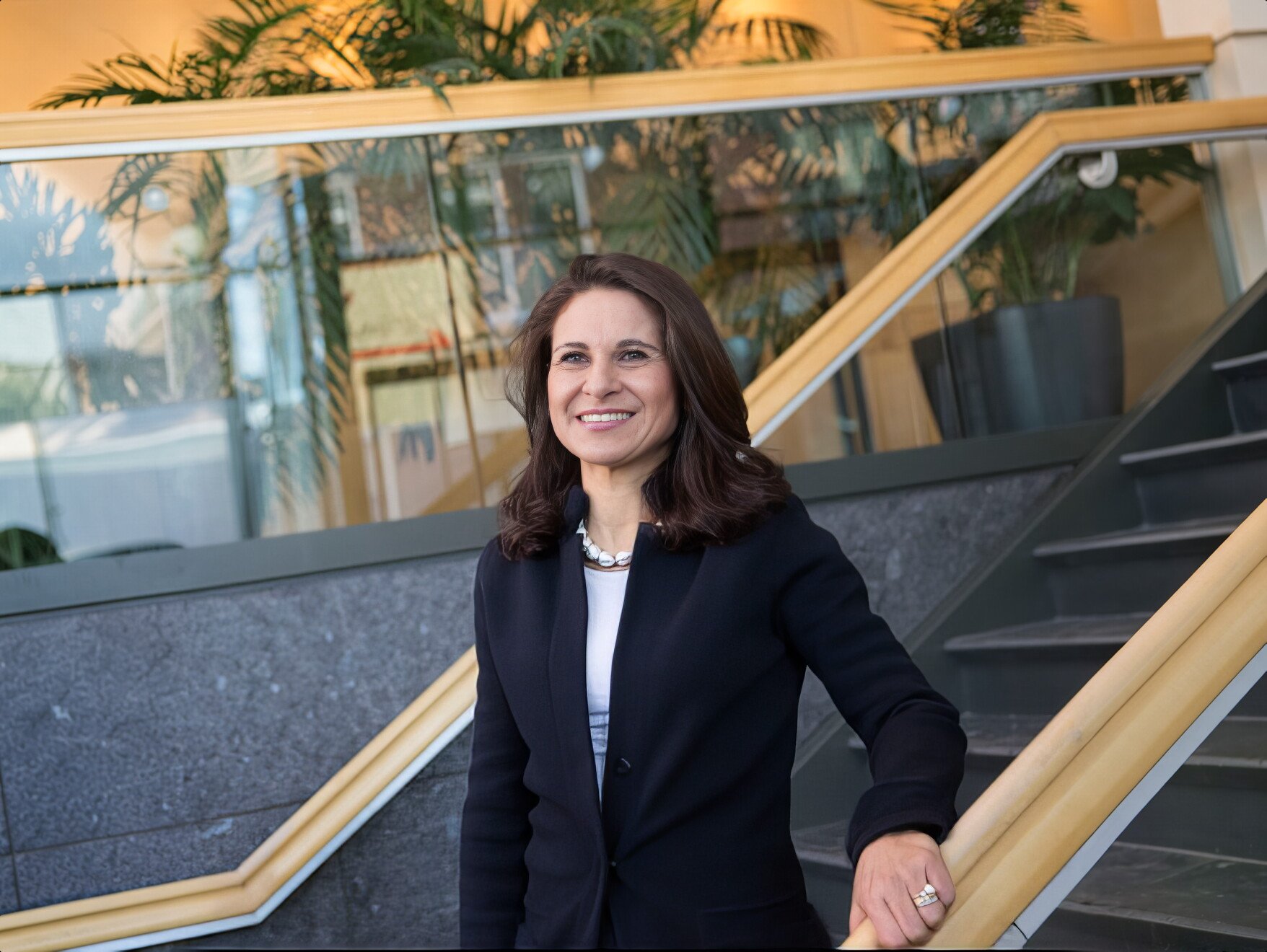
Francesca Dominici is the Clarence James Gamble Professor of Biostatistics, Population, and Data Science at Harvard T.H. Chan School of Public Health and Director of the Harvard Data Science Initiative. Named to Time100 Health in 2024 and elected to the National Academy of Medicine, she works at the frontier of a defining paradox: AI is simultaneously our most powerful tool for understanding climate-health relationships — and a growing source of the very emissions affecting the communities she studies. She is the founder and lead PI for the National Studies on Air Pollution and Health Group (NSAPH) with over 100 members and 12 institutions.
Emily Chien: Thank you, Professor Dominici for joining me today to share your breakthrough research and impact at the intersection of AI, health impact and the future of responsible AI.
Francesca Dominici: I appreciate the opportunity and it’s great to be here.
Chien: So, may we start at the beginning? Before AI, foundation models, and data centers, where did this all begin?
Dominici: When I was a child growing up in Italy, I didn't know what mathematics could do for the world. And then I discovered statistics. And statistics and me – it was really love at first sight because I could combine mathematics and probability with solving important problems, revealing patterns and ways to tackle problems in ways we hadn’t been able to do before.
I am very technical, and I want to drive social impact. I earned my PhD in statistics in Italy from University La Sapienza and University of Padua. Thereafter, I came to the US which turned out to be my lifetime. Even 30 years ago, it was clear that the US was the leader in science and the ability to apply statistics to solve important problems.
More recently, in the last few years, the distinction between statistics and data science and now AI has blended. So that's how I found myself in terms of an academic mission and doing my own science and data science pathway.
Chien: We first met in 2017 at the very energizing HDSI launch. You co-founded the Harvard Data Science Initiative (HDSI), with Dean David Parkes, and serve as HDSI Director. What is HDSI, and what motivated you to launch it? What makes it different from a traditional academic research center?
Dominici: We realized even then that at the core of most of the scientific innovation, including if your goal was to deliver social impact in the health, climate, resilience, energy, or the environment – a strong data science foundation was important meaning the rigor of accessing, manipulating and analyzing data, developing new models, and being able to figure out computationally sustainable algorithms. In fact, it has not only accelerated my own work but also accelerated everybody's work.
HDSI has a unique place in the ecosystem because it is a cross-University umbrella organization designed to leverage data science to ultimately advance really hard and important cross-interdisciplinary topics. By its design, it is domain-agnostic and collaborative across disciplines. And that's increasingly important.
Chien: Matching the HDSI organizational design to the types of problems was prescient; so many of the planet’s challenging problems require interdisciplinary expertise and collaboration.
Dominici: Exactly. And as then, as early visionaries, and now fast forward with the AI transformation, all benefit from a cross-fertilization of knowledge and computation across many fields of science and study. It’s nearly impossible to solve an important societal problem unless you have an interdisciplinary lens and a really strong foundation in data science and computation.
Chien: You’ve built a landmark Amazon Web Services (AWS) partnership and the related Impact Computing Project. What’s the origin story? And my second question is focused on the “paradox”.
Dominici: The AWS Impact Computing Project launched in 2022 and now supports 13 faculty-led research projects at a speed and cost that would otherwise be prohibitive for a university lab. My goal was to re-imagine the university model of scientific research, seeking to speed important scientific discoveries with industry partner engagement.
The fact is that many of the advanced scientific problems and the hardest problems that we still have to solve – across climate change, healthcare and even in the arts and the humanities – are so complex, multidimensional, and computational-based. Thus, industry has a larger role to play in partnering with universities to solve them.
AWS builds computational infrastructure. But AWS also realized that they wanted access to a partner with expertise in the sciences. And even though AWS is a public company with bottom line targets, they're engaged in social impact problems and building better infrastructure by being connected with engineering and scientists whilst helping drive societal impact. And then the Harvard scientists have the ability not only to have access to research funding, but also to have access to the best possible infrastructure helped advance research.
Today, our AWS partnership is strong. Together, we’ve funded different projects ranging from climate to atmospheric sciences to astronomy to healthcare. And again, we brought together the best of both worlds, the AWS computational infrastructure, with the best of the data and the science from across the university.
Chien: And how has that influenced your research impact?
Dominici: In today’s world of AI, I use my energy and research curiosity to advance two sides of the same coin. And let me explain what I mean by that.
One side of the coin is about understanding, quantifying the environmental and health impact of the AI infrastructure, figuring out what optimization and what strategies can guide the development of data centers, so we both enable the proliferation of AI, because we need AI, but also how we can minimize the adverse impact on the community? So that's one side of the coin.
The other side of the coin is that I am also developing foundation models and AI algorithms to figure out the best possible way to save lives from extreme weather events like tropical cyclones, hurricanes, and extreme heat.
I am carrying forward both these two areas of research; despite there being two sides of the same coin. I do think that's what’s challenging and what is a moral imperative of a scientist to look at new technology and its transformative value from many different lenses to really figure out the path forward that will be most sustainable.
Chien: And that brings us to the foundation models you're building for healthy climate adaptation. Can you describe how better tools and compute power offer ways to advance discovery vs. even a few years ago?
Dominici: Yes, it’s pretty revolutionary. Before this latest AI tooling, how would we analyze the health impact of something like climate change? We would: 1) assess exposure to extreme heat; 2) identify when and where any heat waves occur; 3) link it with electronic medical records (EMR); 4) try to figure out how many more hospitalizations we get and how to prevent them.
Chien: What’s the problem with that?
Dominici: We could only look at one exposure at a time – either heat or wildfires or tropical cyclones. And we'd only be able to see and study one disease at the time. And we were very limited in the type of data we could ingest. Each of these studies would take up to five years and millions of dollars.
Today, with an AI foundation model, we can do so much more, and much faster.
We can ingest and train the model on multimodal data which could be many at the same time: high resolution satellite image data, tabular data, images, text, audio, data on how the people are exposed to extreme weather events. And then we link to the US population health experience using a Medicare claims dataset that captures diagnoses and related hospitalizations, enriched with US census data and weather records, allowing the model to learn spatial and temporal relationships between climate and environmental stressors and health outcomes.
This data is managed with very strong security, anonymized, is US HIPAA compliant, with confidentiality. We run in a private cloud.
The beauty of this is that in the same way you can compose a poem in a Shakespeare-like style after the AI has been ingested data from the World Wide Web, here you can start addressing questions about yourself and the worldwide community about actions can better minimize the adverse health impact of whatever extreme weather event can happen in the community. Example: “What happens to heart disease hospitalizations in Phoenix if summer temperature rises 2 degrees C?”
So, it's very transformative; you can solve thousands of problems to help minimize the adverse impact of extreme weather events by training one model instead of spending millions of dollars and many years to do a different study every time.
Chien: This is a very large endeavor!
Dominici: Yes! We have finished model training, using nine terabytes of data. Here’s where the AWS partnership is so important because we are training a large AI model on the entire US healthcare system.
Chien: How can we leverage the AI architecture you’ve developed for other geographies? Is it scalable to other domains?
Dominici: We are piloting the Climate-Smart Public Health (CSPH) framework for resilient health systems not only in the US, but also in parallel in Madagascar. Why Madagascar? It concentrates climate-health challenges in one place – vulnerability to cyclones, floods, droughts, with climate-sensitive diseases like malaria, malnutrition, and limited local health facilities.
This is incredibly exciting and why our research teams are very committed and very busy.
Chien: You’ve forged a powerful partnership with an industry titan, AWS.
Dominici: I feel that we in academia are still behind compared to what industry and businesses can achieve in model development, speed and engineering expertise, but the important thing is that we are ahead in terms of scientific knowledge discovery and access to data the industry doesn't have.
I believe in a collaborative approach with industry. Especially in the context of large, urgent social impact problems – climate change or cancer, or many disease treatments – we have to find ways to create a win-win equation on both sides because time is of essence.
But it is true that I'm also engaged on this other controversial aspect, which is the big tech company, including Amazon; they need to be much more responsible.
And that's where we can help in how they build this AI infrastructure in a way that they're not building it in areas that have the highest poverty rate and they're only relying on fossil fuel with dramatic and actually negative health consequences for the community.
Chien: Some might say you are literally playing both sides of the coin?
Dominici: Yes, because ultimately as a scientist, the pursuit of the truth is so important. And because I believe there is a sustainable long-term model where governance shapes how AI infrastructure is built, and AI is deployed responsibly so that the social impact problem can be solved.
Chien: Words like visionary, transformational come to mind about your direction of travel. Curious - what does the three-to-five year road ahead look like? What would you like to accomplish?
Dominici: The foundation model is work in progress, I’d like to see its access expanded to health departments, city planners, not as only a proprietary research asset. And we hope to scale the CSPH framework to many more countries.
I would love to prioritize and try to better understand and formulate what's going to be the role of the human in this transformative and disruptive phase with AI technology. And it is so very exciting.
What is the role of scientists? I think it's important that AI agents, over time, become a support and mimic the way scientists' brains try to discover the truth, not the opposite. Can we find ways that AI becomes a very diligent PhD student who learns the way that I think, but this PhD student is by far much more computationally efficient than any other PhD student? Instead of the vice versa, where the scientists get dominated by this AI agent, where the AI agent dictates how science should be conducted.
And so we need more work on governance and guardrails because I do think that on one hand, what is really exciting, and I see it in my lab, is the way that we're doing science is completely changing overnight.
Finally, in the next chapter, establishing a health impact assessment for AI and energy infrastructure as a scientific norm – in a similar way that the environmental impact assessments became standard practice.
Chien: To close, what keeps you up at night? And what gives you hope?
Dominici: I'm very optimistic. We’ve made a lot of progress, and AI foundation models represent a transformational leap forward in what questions we can answer and how quickly.
But on the other hand, we need to better understand how these AI agents actually learn. AI technology advances have been accelerating faster than regulatory and human understanding. How do we research how these AI models learn and how they're going to learn in a way that is responsible and ultimately will advance society in a positive way? Regardless of the domain or use case, issues about safety and guardrails need to be carefully thought through. I want to help us strengthen the amount of responsibility and governance of the system, especially in the sciences.
Chien: Francesca, thank you for sharing your mission and inspiring research at the intersection of AI, science, and the future of responsible AI.
Dominici: Delighted to participate, and thank you, Emily.
About the Author:

Emily A. Chien is a Harvard Business School Executive Fellow specializing in how Agentic AI is reshaping business models, markets and governance. She was AI/ML Fellow at the World Economic Forum Responsible Use of Technology and AI Programme. At IBM she advised C-suite bankers, insurers and asset managers as a leader in the AI practice, global offering leader and partnerships liaison. Earlier, Emily held strategic and operational executive roles at JP Morgan, American Express, Fidelity Investments, and Prudential Financial.
This Q&A has been edited for length and clarity.
Cover Photo Credit: Emiliia, stock.adobe.com