
When Courts Are Attacked, Democracy Is at Risk
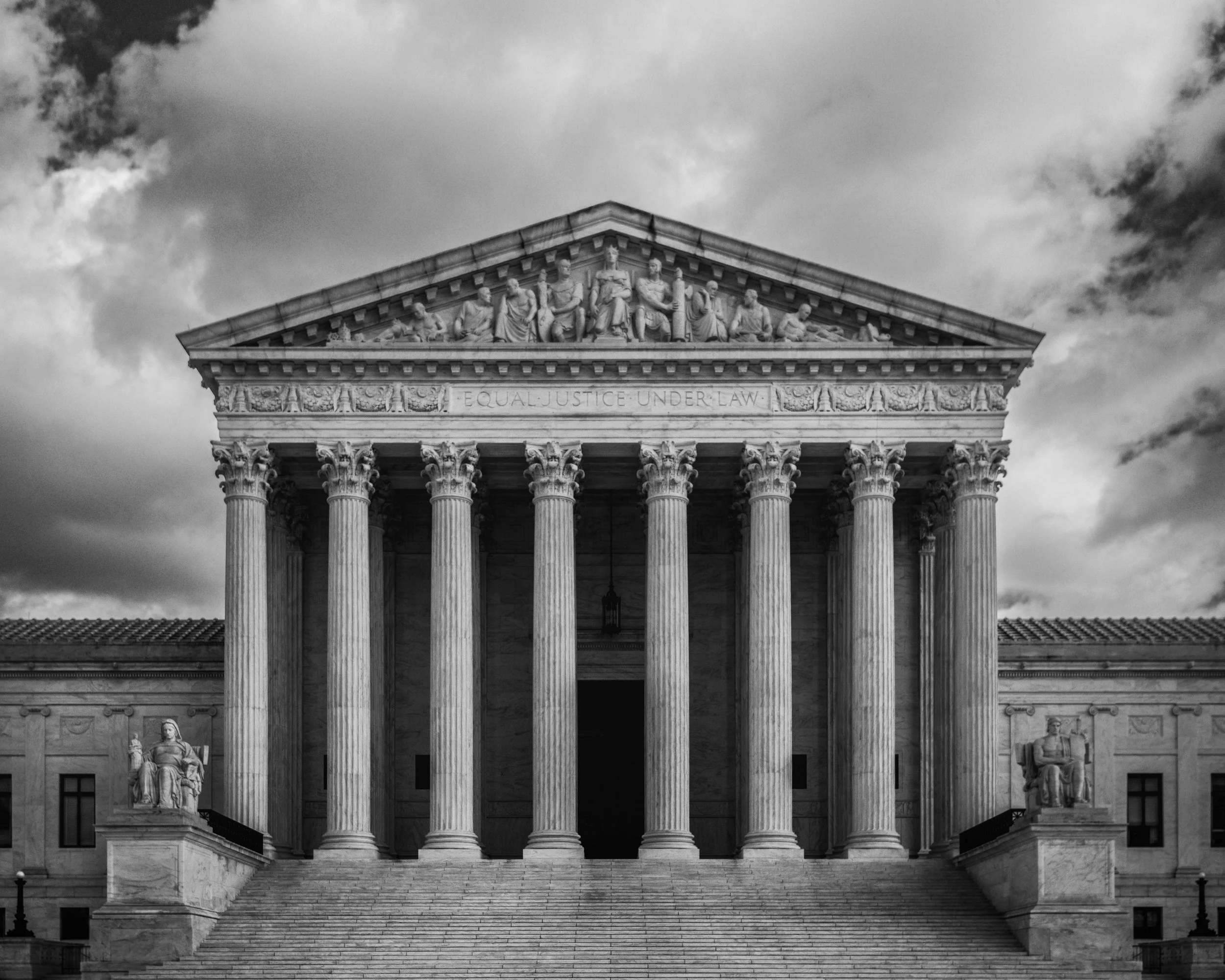
With America’s increasing political polarization, the one branch of federal and state governments designed to be above the political fray — the judiciary — is facing increasing attacks. Unrestrained, hyperbolic criticism of the diligence, intelligence, and integrity of judges comes not just from parties who have lost in court, but from public officials, media figures, and internet agitprops. The perception of judges as “politicians in robes,” who invent law without public hearings or public debate, has damaged confidence in the rule of law and perhaps even made the hard intellectual work of judging a physically dangerous job.
Generations of Americans have been taught, or have intuitively grasped, that judges are different from other government officials — that a judge’s only constituency is the law, which they apply equally to all without fear or favor. Now, this baseline understanding has been undermined by a constant refrain that many judges, at all levels, are petty, unchained tyrants.
Federal judges have been the most well-publicized targets of such attacks. Many Democrats suggested enlarging the Court during President Biden’s presidency in a frank attempt to tip the Court’s philosophical balance. Some Republican senators have recently urged the impeachment of lower court judges who ruled against Trump Administration initiatives. The President himself has frequently launched vituperative attacks on judges who ruled against him. After a recent Supreme Court decision, he labeled the six justices in the majority as a “disgrace to our nation” who were “swayed by foreign interests,” while calling the justices appointed by Democratic presidents “fools and lapdogs.” A few years back, the Senate minority leaders warned two justices that if they voted a certain way in a pending case they would “have released the whirlwind, and you will pay the price.” He continued: “You won't know what hit you if you go forward with these awful decisions.”
Whether coincidentally or not, credible threats against federal judges have markedly increased in recent years. State courts are also under attack, perhaps less colorfully but just as certainly. Some states have already made their judicial selection process more political. In the past decade, North Carolina and Ohio have made their nominally nonpartisan elections explicitly partisan. Kansas voters will decide this August whether to replace their non-partisan appointment — retention election system with partisan judicial elections, and efforts are underway in other states to jettison their merit selection systems. In Arizona, voters were asked in 2024 to abolish fixed judicial terms and give life tenure during good behavior to members of the state supreme court and certain lower courts, but the measure failed. And whatever congressional Republicans might say about enlarging the U.S. Supreme Court, their Republican cohorts in the Arizona and Utah legislatures have enlarged the number of supreme court justices and, as with their federal counterparts, physical threats and attacks on state judges are rising.
To maintain the appearance as well as the reality of judicial impartiality, sitting judges cannot publicly defend their conduct against unfair attacks. Those no longer in office, however, have no such constraints. Indeed, former judges have assumed leading roles in many of the pro-democracy groups that have sprung up in America over the last decade. Most of these efforts have focused on controversies surrounding federal executive and, to a lesser extent, federal congressional interference with federal courts. But the threats to state courts, which handle 95-98% of all judicial matters, are no less real.
To help defend state judicial independence, more than fifty former state chief justices banded together late last year to form the Alliance of Former Chief Justices. Working under the umbrella of pro-democracy group, Keep Our Republic, the Alliance works to help citizens understand how strong state courts protect everyone from arbitrary state action and ensure that all persons are treated fairly in the resolution of private disputes. The Alliance is modeled on a similar group of retired federal judges who created the Article III Coalition earlier last year. Members of the Alliance, acting as individuals, have signed amicus briefs, published articles and editorials, commented on proposed administrative rules changes, and engaged with media and citizen groups in defending the judicial system and the legal profession against arbitrary government action. The Alliance is strictly non-partisan. Of those members who can be identified as members of a political party, Republicans and Democrats are almost equally represented.
The late Chief Justice William Rehnquist called our judicial system “one of the crown jewels of our system of government." But no system relying merely on checks and balances to restrain the power of any one part of government can thrive on autopilot. Each succeeding generation must ensure that the inspired vision of our founders is preserved. The judiciary was called by Alexander Hamilton “the least dangerous branch,” but it is surely the least understood branch as well. We can hope that former state chief justices can play some small role in helping citizens understand the vital importance of both state and federal court independence. Ultimately, of course, people get the government they deserve, and citizens must do whatever is necessary — voting, speaking, exhorting, marching — to ensure that our leaders respect and preserve the rule of law.
About the Author:

Thomas Phillips served as Chief Justice of the Supreme Court of Texas from 1988 to 2004, being elected and re-elected four times as a Republican after his initial appointment by then-Governor William P. Clements. Throughout his time on the bench, he and most of his fellow justices advocated for judicial reforms to strengthen independence and reduce the influence of partisan politics in judicial selection. A graduate of Harvard Law School, he currently practices law in Austin, Texas, focusing on issues and appeals. He was president of the Conference of Chief Justices in 1997-98, and he currently serves on the executive committee of the Alliance of Former Chief Justices.