
Music, Protest, and the Power of Collective Voice
Q&A with Ronald Eyerman
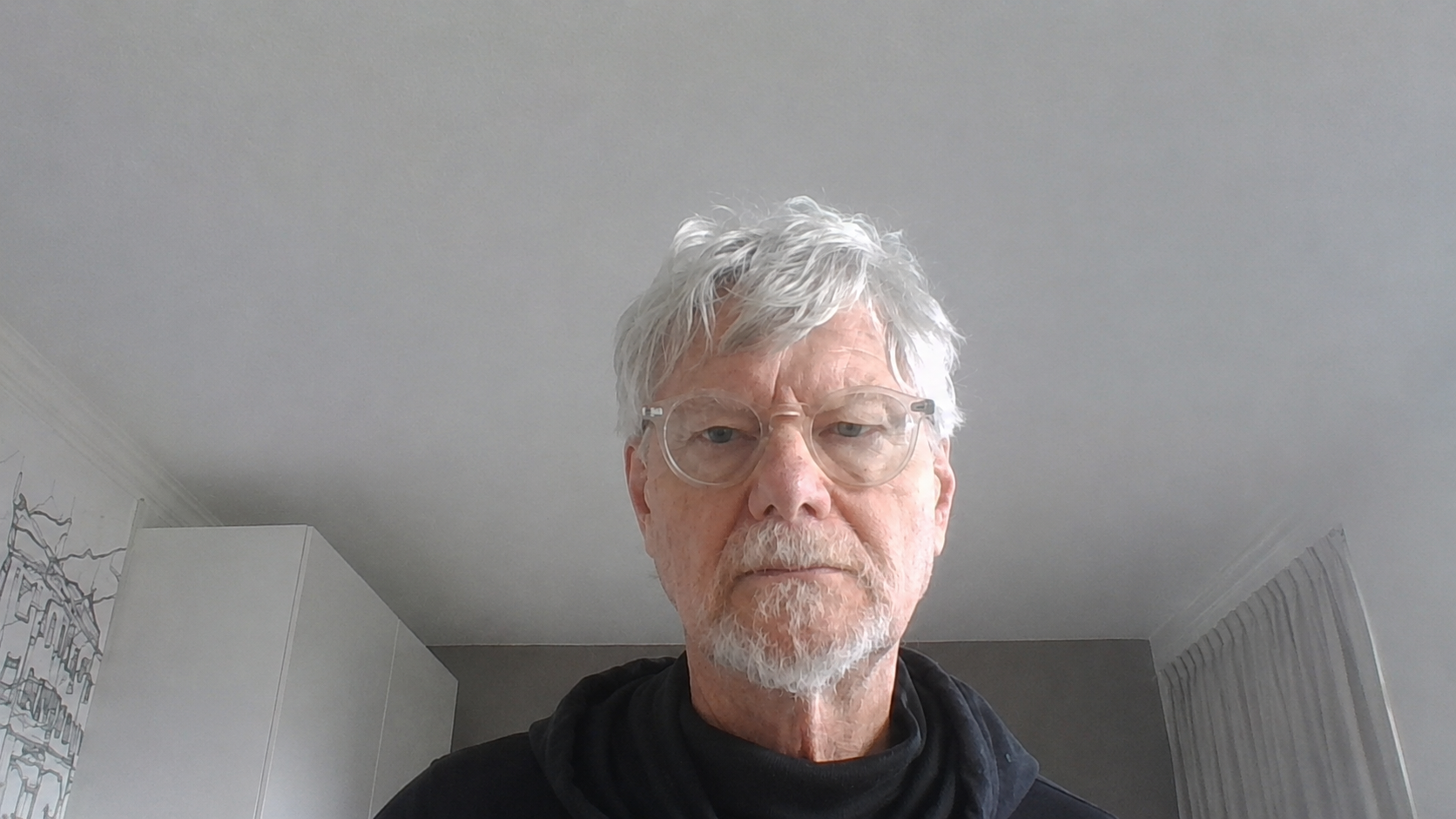
Ronald Eyerman is Emeritus Professor of Sociology at Yale University and a founding co-director of Yale's Center for Cultural Sociology. Trained at the University of Lund in Sweden, Eyerman has become one of the foremost theorists of the intersection between culture, collective identity, and social change. His work spans social movement theory, critical theory, the sociology of the arts, and the study of cultural trauma.
Eyerman is perhaps best known for two foundational contributions to the field. His 1998 book Music and Social Movements: Mobilizing Traditions in the Twentieth Century, co-authored with Andrew Jamison, was among the first works to rigorously link the political sociology of social movements to cultural theory, examining how music builds collective identity and sustains activism — from 19th-century populist movements to the American Civil Rights era. His 2001 book Cultural Trauma: Slavery and the Formation of African American Identity brought the concept of cultural trauma into mainstream sociological discourse, arguing that the memory of slavery — processed and transmitted across generations — became the generative ground of African American collective identity. Together, these works ask how culture and art shape the way communities understand injustice, mobilize for change, and ultimately forge the identities that sustain them.
John Carroll: On January 28, 2026, just four days after the shooting of Alex Pretti and within three weeks of the shooting of Renee Good, Bruce Springsteen released "Streets of Minneapolis," a new song bearing witness to their killings. In a statement accompanying the release, Springsteen explained his intention: "I wrote this song on Saturday, recorded it yesterday and released it to you today in response to the state terror being visited on the city of Minneapolis. It's dedicated to the people of Minneapolis, our innocent immigrant neighbors and in memory of Alex Pretti and Renee Good." More than a musical remembrance, the song reads as a tribute to the courage of the people of Minneapolis opposing the Administration's immigration and deportation policies, and as a harsh and specific criticism of the government actors promoting and carrying out those efforts. With its timing and its content, "Streets of Minneapolis" plainly stands as a call to action. Within three months, the song had received more than five million plays on Spotify and the official audio had been streamed more than six million times on YouTube. We have asked Ron Eyerman to situate Springsteen's song within the larger canon of social protest music.
In our lifetimes, we've become accustomed to the link between music and social purpose. Bob Dylan and Joan Baez, among others, sang at the 1963 March on Washington. For more than 40 years, Willie Nelson, Neil Young, and John Mellencamp have led Farm Aid concerts drawing attention to the challenges confronting family farms. Pete Seeger and Springsteen sang "This Land Is Your Land" at the first Obama inauguration in January 2009. Is the integration of music and social movements a distinctly modern phenomenon? How far back does this relationship actually go?
Ronald Eyerman: Much further than most people assume. We tend to anchor social movements in the institutional guarantees of the modern era — the right to assemble, the right to protest — but music and collective singing were part of early peasant uprisings against the feudal system. They performed many of the same functions we see today: building a sense of collective purpose, generating shared courage. Popular tunes had their lyrics rewritten to serve protest on all sides of an issue. And there was a recurring combination of march tempo and religious themes that persisted from those early revolts all the way through the labor movements of the early twentieth century and into the American civil rights movement. Joe Hill — the Swedish-American IWW organizer — is the iconic example. He famously transformed religious hymns into labor protest music, and his influence rippled forward for decades.
Carroll: Artists seem very aware of this lineage and often announce their affiliation with social movements by laying claim to the past. Springsteen himself did it with "The Ghost of Tom Joad," and his recent song echoes his earlier "Streets of Philadelphia." How do artists use past works?
Eyerman: It's a beautiful thread. In the 1930s, singers and songwriters were performing "I Dreamed I Saw Joe Hill Last Night" — a song Paul Robeson carried around the world and Joan Baez sang at Woodstock. In 1992, the British singer Billy Bragg transformed that very phrase into "I Dreamed I Saw Phil Ochs Last Night," invoking one of the defining protest voices of the 1960s. What you're seeing is a living tradition: singers and songwriters referencing and learning from one another across generations. Movements gain legitimacy by invoking earlier movements, and music is one of the most powerful vehicles for that continuity. It's not just nostalgia — it's a form of political inheritance.
Carroll: All of the examples we've been discussing illustrate the role that music plays in promoting progressive causes. Is that the full picture?
Eyerman: Not at all, and it's an important corrective. Reactionary movements have always drawn on music as well. George Wallace often used country music to rally supporters from the back of a flatbed truck. The extreme right has adopted heavy metal and punk — an aggressive wall of music. More mainstream are patriotic music traditions, which vary by country but frequently incorporate national folk idioms; in the United States, country music has long been mobilized for conservative causes. Conservative movements are generally slower to take to the streets, but when they do — as Tea Party activists demonstrated — they reach for traditional national symbols, including music. Think fife and drum. The emotional logic is the same across the political spectrum: music unifies, it signals belonging, it stirs people to act.
Carroll: Other works of art, like Picasso's Guernica or Yeats' "Easter 1916," have explicit political and social content but don't play an active role in social movements. What is it about music specifically that makes it so effective for collective action?
Eyerman: The conversation goes back to Homer — there's a very old reckoning with music's power to lure and seduce people into acting in ways they ordinarily would not. Part of that is subconscious. Music affects human emotions in ways that other art forms may not, and it has a particular capacity to invite and unite. That's been exploited in both traditional and protest politics. Campaign rallies use music as a recruiting tool and a rallying cry. Protest movements do the same. Collective singing transforms a loose gathering of individuals into something more cohesive — a group that is psychologically prepared to act together. It provides strength and courage in precisely the moments when those are hardest to sustain: a confrontation with authorities, a violent clash with opponents.
But there's also a cognitive dimension that's easy to underestimate. Protest music typically carries an explicit text — it tells you what is being protested and why. That's part of what makes it unique as a form of political communication: it moves people emotionally through sound while simultaneously informing them about what is wrong and what should be done. Sound and argument, working together.
Carroll: Are there structural features that define a protest song?
Eyerman: There's a fairly recognizable architecture. Protest songs tend to articulate a problem, name those responsible, and prescribe action. Phil Ochs's "Broadside ballads" of the 1960s are the textbook case. Timeliness is central to their effectiveness — but it's also their vulnerability. Songs that name specific actors and reference specific events can fade as public memory moves on. The people and policies named become unrecognizable to new generations.
Some songs, though, transcend that timeliness and become bridges between movements. Dylan's "The Lonesome Death of Hattie Carroll" is one example — there's something in the emotional power of his delivery, the extraordinary precision of the lyrics, that keeps it alive. But Joe Hill himself is an even better illustration of a different principle: when the singer or the protester becomes the focus, when the messenger becomes the message, something more durable happens. Joe Hill the martyr outlasts the specific grievances of his moment. Heroic protest is remembered; the particulars of the cause can be forgotten.
Carroll: That raises the question of who gets to define what counts as a protest song. There was a notable artistic disagreement along those lines involving U2 and Sinéad O'Connor.
Eyerman: Yes, and it's a genuinely illuminating one. When U2 initially played "Sunday Bloody Sunday" in concert, Bono introduced the song by saying, "This is not a rebel song." He insisted it was not a protest song — he wanted to express his personal anguish at the violence in Northern Ireland, from the position of a southerner from a mixed family who felt caught in the middle. In that reading, the song says enough — it protests violence without taking sides. Sinéad O'Connor responded to Bono's demurral by writing “This is a Rebel Song,” an allegory about British-Irish relations, and recorded "The Foggy Dew," a song that very much takes a side.
The same song can function as protest or as elegy depending on who is singing it, where, and for whom. In Northern Ireland, music played an enormous role in that conflict — the old Irish tradition of collective singing was deeply formative of collective identity and political mobilization. And yet music also bridged the divide. The punk scene in Belfast, the showbands — they created spaces where the divide could, at least temporarily, be crossed. That was Bono's aspiration, even if O'Connor's was something different.
My view is that context is at least as determinative as lyrics or the singer's stated intention. In response to Dylan's explicit disavowal of writing "protest songs or anything like that," Phil Ochs pointed out that the songs spoke for themselves, whatever Dylan's intention: "I don't think he can succeed in burying them. They're too good. And they're out of his hands."
Carroll: A popular artist like Dylan or Springsteen brings with them a community of followers that likely doesn't map onto the separate community that shares their political views. Springsteen's following is, in significant part, older, blue-collar, suburban, and white — characteristics that tend to coincide with right-of-center politics. Have protest songs historically reached across political borders to educate and create dialogue?
Eyerman: Springsteen especially has a much broader audience than his protest songs, and some of that audience would tune these out. Yet his authenticity can reach across that divide and open ears to new ideas and values. This is true of music generally.
Carroll: How is digital technology transforming the role that music plays in social movements?
Eyerman: Profoundly, and in ways that extend to the music itself, not just its organization. During the Women's Marches of the first Trump presidency, organizers drew on protest traditions from around the globe — an extraordinary range of songs and genres. One of the most remarkable moments was an a cappella flash mob performance of “Quiet" at the Washington, D.C. demonstration. What made it unusual wasn't just the stripped-down sound — it was that the performance had been rehearsed entirely over Skype and the internet, with participants who had never met face to face. The use of digital media to organize protests is now well documented as a turning point in political mobilization. What that example shows is that the shift has reached into rehearsal rooms and performance itself.
Carroll: When I first heard "Streets of Minneapolis," my immediate thought was that it was this generation's "Ohio" — Neil Young's 1970 song about the shooting of four college students protesting the Vietnam War by National Guardsmen. Like Springsteen's song, "Ohio" was recorded within days of the Kent State killings. Springsteen's song seems even more powerful when heard in the context of "Ohio."
Eyerman: "Ohio" is unambiguously a protest song, and I think Neil Young would agree. It's time-bound — a contemporary audience would likely need historical context — but Young's delivery keeps it emotionally powerful across that distance. It was designed to record an incident in popular memory, to bear witness.
"Streets of Minneapolis" is doing something different and more ambitious. It's working in the tradition of the Broadsides, of Phil Ochs, of Joe Hill: here is what is happening, here are those responsible, now let's act. It aims to mobilize, not just to memorialize. And Springsteen's celebrity matters enormously here — his audience extends far beyond any protest community. The mode of presentation also deliberately builds on "Streets of Philadelphia," which reached a mass audience through its association with the film. When someone of that stature says this is the moment, this is the injustice — the singer becomes as important as the song. That's a lesson protest movement have always known, but it bears repeating.
Carroll: I wonder whether decades from now Springsteen's song will be adopted by other movements, or whether it will remain an artifact from a particular moment in time.
Eyerman: I would guess that "Streets of Minneapolis," like Ochs's Broadside ballads, will stay anchored to this moment — but that's not for me to say. What I would note is that Springsteen performed that song at the March 28, 2026 "No Kings" rally in Minneapolis. At the same rally, 85-year-old Joan Baez sang Dylan's "The Times They Are A-Changin'," a song she first sang standing next to Dr. Martin Luther King. I can think of no better illustration of the central role that music plays in social movements.
About the Author:

John Carroll is a 2021 Harvard ALI Fellow and senior legal executive who served as partner at Skadden, Arps, Slate, Meagher & Flom and Clifford Chance, where he was partner-in-charge of the Americas and a member of the firm’s global executive committee. Earlier, as assistant U.S. attorney for the Southern District of New York, he led the Securities and Commodities Task Force. He currently serves as president of The Legal Aid Society, working on operations, finance, development, diversity, culture, and leadership recruitment.
This Q&A has been edited for length and clarity.