From First Jobs to Collective Leadership: Shaping Lasting Impact and Equity
Q&A with Wendy Kopp
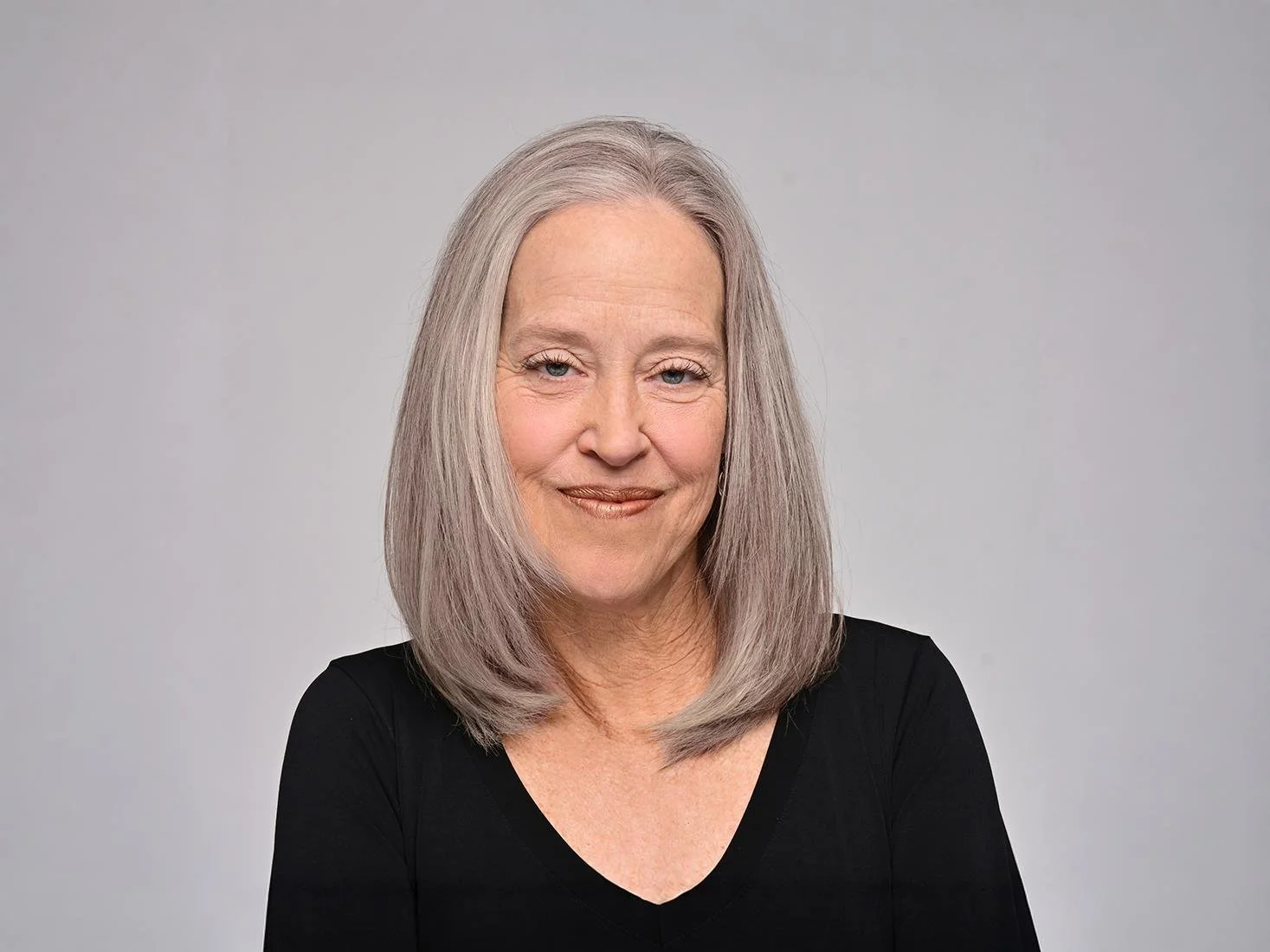
Wendy Kopp is CEO and Co-founder of Teach For All (TFA). Kopp conceived of and proposed the idea of Teach For America in her undergraduate thesis at Princeton University in 1989. She founded and led the organization for 24 years. Kopp led the development of Teach For All to be responsive to the initiative of social entrepreneurs around the world who were determined to adapt this approach in their own countries.
Kopp is the author of A Chance to Make History: What Works and What Doesn’t in Providing an Excellent Education for All (2011) and One Day, All Children: The Unlikely Triumph of Teach For America and What I Learned Along the Way (2000). She holds honorary doctorate degrees from 15 universities and is the recipient of numerous awards including Forbes 50 Over 50 (2025), the WISE Prize for Education (2021), the Skoll Award for Social Entrepreneurship (2008), and the Schwab Foundation’s Outstanding Social Entrepreneur Award (2003).
This conversation explores how early career experiences shape the next generation of leaders who will take on the world’s most pressing societal challenges. Drawing on Kopp’s global perspective, grounded in decades of work advancing educational equity and cultivating leaders through service, we examined what it takes to build equitable pathways into public‑impact leadership.
Gina Lazaro: What led you down your path of service?
Wendy Kopp: When I think about where this started, I always go back to my first week doing summer sales for a student organization in college. We were meeting with potential donors, and one of those meetings was with Benjamin Edwards, the CEO of A.G. Edwards. We asked if he would support our work. He turned his chair around, looked at us, and said — in a very intense tone — “Why would I ever support you when kids two blocks from here are dying on the streets from violence in their community?”
I was caught completely off guard, and all I could honestly say was, “I have no idea why you would support us.” That question stayed with me, and I resolved then that I was going to find my way to do something that really matters in the world, in the face of community issues.
Lazaro: It’s powerful to hear how much the meeting with Mr. Edwards shaped your thinking.
Kopp: It was just so striking to me. He was an amazing, super thoughtful man.
Lazaro: I'd love to hear how early career choices influence not just individual lives but our society’s ability to confront big societal challenges.
Kopp: I think about what will be different if many of our most promising leaders take first jobs that are facing the realities of our country, such as meeting community needs and being proximate to inequity and injustice, versus first jobs working in skyscrapers far removed from those realities. Because essentially, what you do shapes who you become. It really influences your perspective, worldview, relationships, and priorities.
Lazaro: You just shared the inspiration from meeting Benjamin Edwards, what else shaped your thinking?
Kopp: Even from the start, the big idea of Teach For America was that it would have both an immediate impact in classrooms and a long-term effect by influencing the consciousness of all these future leaders. But we could not have anticipated how it would play itself out. We saw early on — we were probably five years in — that about 80% of the TFA alumni were still full-time, all-in, in the work. Some were still teaching, and others left the classroom but were doing related things. And we saw, first in the U.S., that they became this incredible leadership force for change in urban and rural areas. But the most striking thing was seeing the same thing once we started supporting social entrepreneurs around the world to adapt this idea to their countries. It was surreal to see the same data points from such diverse contexts all around the world — from India to Peru to Austria.
People from all different academic majors and career interests would commit two years to teach in their country's marginalized communities. And no matter what country, 75% of them would never leave the work. It was surreal to the point where we said, let's go figure out what happens to people during the two years of teaching. So, we worked with independent researchers who started doing rigorous independent studies to look at this question.
These studies, which have been done across five countries, used a methodology called regression discontinuity analysis to look at people right on the programs’ admissions line. Some would barely get in, and some would barely not. The researcher looked at how they were different at that point of admissions. They were a little bit different; the selection model worked. But by the end of the two years, they looked completely different. The research showed that the people who taught through one of the Teach For All organizations would come to believe even more in their own self-efficacy, their sense of agency that they could make a difference. They came to believe even more in the potential of students and families in low-income communities. Their view of the nature of the problem's solution shifted entirely — from coming in thinking technical fixes like more funding would solve the problem to thinking this is a deeply complex, adaptive, systemic challenge.
And their priorities would shift, including their career trajectories. We saw from the research that it wasn't just that we were attracting people who might not otherwise have taught in low-income communities. It was that this experience was turning them into the leaders we need — people who have a sense of possibility, believe in their students, understand there's no silver bullet solution, and are forever committed to the work.
It's why I've become so obsessed with this question of first jobs. It’s always been challenging, but it’s become even more so, to inspire young people who have lots of other options to actually commit these two years. I think about a world where fewer people are putting themselves in proximity to the real challenges we face. It's a world of more social division, rather than more of the leadership we need.
Lazaro: Is there a way for people to engage in this important work without committing to two‑years? Many capable, motivated individuals may face financial constraints — like student loans — that make a two-year commitment challenging.
Kopp: There are so many financial enablers around Teach For America and other service organizations at this point. It’s interesting that young people, who are very privileged versus those who have Pell Grants and are from lower income backgrounds, matriculate at the same rate to Teach For America, because there's a financial aid program and you can get loan deferral. But I think what all young people are worried about, those from less privileged and more privileged backgrounds, is whether in the long run, they can have financial security.
So, their concerns are often less about how they’ll make it in these two years but about how these two years set them up for the future. It's one of the things we're thinking about: how do we put stronger enablers around this work, not just within the Teach For All network, but beyond it, so that more young people can realistically take these two years and also see them as a step that expands their opportunities long-term. That could include immediate financial assistance and corporate recruiting partnerships that enable young people to see their long-term options remain open. If those companies were recruiting on the back end of programs like TFA, they would get people who have the human skills they need. And let's see what disruption AI generates in entry level jobs, as it may lead to all our incentives being aligned.
Lazaro: I’m interested in hearing more of your thoughts on corporations and leadership, including ideas like recruiting from the Teach For America talent pool.
Kopp: Yes, that's one of our thoughts. What if companies were making it clear that they would recruit from, say, Teach For America or other similar professional corps in the same way that they recruit at top colleges? I think that would do wonders in terms of encouraging young people to commit to the two years, because a lot of them have an inclination to want to do something like this. But there's so much pressure to find a job, given the uncertainty of the financial and economic climate. So, we're exploring establishing new corporate partnerships to give young people more confidence that they can do something like this first.
Lazaro: Teach For America and Teach For All have placed 120,000 young people in classrooms worldwide. I'd love to hear more about any patterns you've observed. What is it about those early experiences that influence the direction of their future lives?
Kopp: The thing that was so striking once we launched Teach For All is truly, it's the same movie playing in all these different countries in terms of the hearts, minds, and souls drawn to the work. The fact that young people come in so unsuspecting, meaning they really think this is going to be a two-year commitment, and you look 5, 10, 15 years out in some cases, and just realize, these people with these early experiences are exercising leadership throughout the educational system.
We've come to articulate our purpose as a network as developing collective leadership to ensure all children fulfill their potential. By that, we mean, developing a critical mass of people who are working throughout the ecosystem around kids: some are teaching, some are running schools as school principals, some are working in the government ministries, and some have launched social innovations or advocacy organizations that are pushing on the system from the outside. Once you have enough of them, all on the same mission, with the networks and relationships to step up from their individual pursuits and learn together and collaborate, it leads the system through a phase transition. It can take a system from being stuck in place to having the capacity to continuously improve.
I think this is the missing piece in efforts to improve education, because so much of improving education has been about the technical practices, and those are all super important including improving the curriculum, teacher training, assessments, getting the buildings open, and technology, but without the people who are all on the same mission to implement all of those things with intention, you don't see improvement. And there's growing amounts of educational research that show that.
What's so fascinating is seeing this play out across very different contexts in communities across the world in India, Austria, Peru, Chile, and Nigeria. About 10 years into our work in these communities, the level of energy and working together is incredible. It feels like a political campaign: people pushing together to move the system from point A to point B. People are everything. Any business leader knows that. You have a problem, you find your best people and put them on it. That is also true in the social sector. But we don't have the same resources as the private sector to go after top talent and cultivate it over time.
Lazaro: What are some of your success stories? What are these leaders doing 5, 10, 15 years out?
Kopp: In the U.S., there's a report that was published a few years ago called Eight Cities. It looks at eight cities in the U.S. that have made the most progress in improving their school system, including DC, New Orleans, Chicago, Denver, and others. In each of these cities, graduation rates jumped 20 to 30 percentage points. Proficiency levels showed significant Improvement across multiple metrics.
In every one of these cities, if you took Teach For America alumni out of the picture, the story would look different. These are cities where we’ve placed 2,000 to 3,000 people over time, and many of them never left. In some of these cities, 20 to 40 percent of the school principals are TFA alumni. They are spread across the district: running schools, leading departments, and in some cases serving as superintendents. They are also running many of the NGOs in the city that focus on education and serving on school boards.
There is real collective leadership. If you removed these individuals, you would take away an enormous amount of the energy and leadership in the system. Take Newark, New Jersey, for example — one of the eight cities and one of the most improved urban school districts in the country. Some of the most transformational schools in the nation are in Newark. About 75 percent of those schools are run by TFA alumni, and roughly 30 to 40 percent of the teachers are alumni as well. The former superintendent there was also a TFA alum. And there are so many of these people who never would have taught or worked in Newark, who came for two years — and never left. Over time, they became an extraordinary leadership force for change in the city.
Lazaro: Incredible. Those are fantastic successes.
Kopp: We honestly see the same thing around the world. It can be hard to fully bring it to life, because there are so many individual examples we could point to — from James Talarico, whose teaching experience in San Antonio motivated his political run, to one of the top ten Global Teacher Prize finalists this year who was a Teach For America alumna.
There are so many other examples from all over the world. One of the top ten World’s Best Schools this year was led by a Teach For Mexico alum. She was placed in her school in Mexico City and, by her second year, was appointed principal. She’s now been there for nine years and has turned the school into an incredible lighthouse in Mexico City, showing what is possible for kids.
Those individual stories are powerful, but the real story is what these leaders have accomplished collectively. Because you need everyone. You need the minister, but if the minister doesn’t have strong relationships with school principals, teachers, and advocates working outside the system, you can’t actually move anything forward. You need the troops. It’s everyone working together, across roles and levels, that truly drives change.
Lazaro: Where do you see the most critical leadership gaps today in the U.S.? Are there certain types of experiences that help prepare future leaders to fill those gaps?
Kopp: We’re launching an initiative called Rising Generation with a focus on the U.S. to address the needs we see. It has an ambitious goal: to drive a norm shift in first job choices, so that many more of the most promising emerging leaders choose roles that directly address the country’s most pressing community needs.
One part of this initiative, which we’re still very much at the front end of, is exploring whether we can support the development of more professional corps to meet needs in other sectors. These would offer full‑time, salaried roles for recent graduates, organized around specific professions where there are acute workforce shortages and significant social need.
I was recently in Denver speaking with the mayor and other leaders, and they described enormous shortages in areas like EMTs, Child Protective Services workers, and sheriffs. In the UK, there are well‑established professional corps for many of these roles. Interestingly, some of these efforts were launched by alumni of Teach First, the UK equivalent of Teach For America, who went on to build professional pathways in fields like policing.
We want to explore the development of similar corps here, because while it’s essential that Teach For America continues to be at its very best, we also need strong, mission‑driven pathways in other critical sectors if we’re going to reach the point where not just a few, but many young leaders, take these first jobs a reality. The idea is that this model — structured, values‑based service opportunities — could work across a range of professions that are vital to the community.
Lazaro: We've talked about the private sector. What about universities? They often say they’re preparing students to go out and change the world. What could they be doing differently?
Kopp: Another important part of the work we’re doing through Rising Generation is simply naming and elevating this issue. There’s a real reckoning happening in higher education right now with many universities stepping back and asking themselves: What does it mean to live up to our public purpose? And how do we rebuild public trust?
A lot of attention is rightly focused on issues like affordability, ideological diversity, and fostering more constructive dialogue on campus. We believe that “first jobs” needs to be elevated alongside that agenda, especially given the growing body of evidence showing that what you do early in your career shapes who you become over time.
Universities often articulate lofty missions about developing the next generation of civic leaders. But without intentionally fostering reflection among students about what they want their lives to be about, and what their civic responsibilities are, it's very hard to live into those missions.
We’ve also seen a dramatic shift in campus culture over the last 10 years. Today, students are often recruited into prestigious career tracks as early as their freshman or sophomore year. That creates a powerful campus culture centered on securing elite jobs. And students who don’t follow that path, and a fair number don’t, often have little support in finding their way. There simply aren’t enough structured, visible alternatives for students who choose a different route. As a result, many students come to believe that they must pursue the corporate paths, and that if they miss that window, they may never find their footing professionally.
Universities face real challenges here. I’ve learned just how difficult this is through conversations with many career services offices. They aren’t in control of corporate recruiting timelines or hiring practices. At the same time, we’ve seen the impact that institutional leadership can have when university presidents make this a genuine priority. That’s why we’re building a President’s Circle, a group of university leaders committed to elevating this issue and thinking together about how to shift campus culture in meaningful ways.
Lazaro: You've spoken about the widening gap between those shaping decisions and those living with the consequences. Why is addressing this gap so urgent now?
Kopp: We’re in an extremely polarized moment in our country. When I think about the fact that, just a decade ago, about a third of Harvard students were going into finance, consulting, and tech, and now it’s well over 50 percent, while the number of students going into public service has plummeted — that cannot be good for lessening the divisions in our country. And yes, Harvard isn’t the only institution that matters — we absolutely should be concerned about graduates from many other colleges and universities. But it does matter what paths these highly privileged students choose too.
Teach For America has worked for many years to ensure that many of those who serve have themselves experienced the inequities we’re trying to address. That’s essential. But we also need the most privileged people on the front lines as well. The reality is that meaningful change often requires people who have access, influence, and privilege. It takes everyone working together. We need a diverse coalition focused on this work.
What we’ve consistently seen is that collective leadership is what drives real system change. Peter Senge wrote about this more than a decade ago, looking across sectors and concluding that collective leadership, not individual heroics, is what enables transformation.
I see this most clearly in education, but it’s not limited to education. Without a critical mass of people working together across an ecosystem, we simply can’t solve the complex problems we face. We need people in the arena — not only advocating, protesting, and voting, which are all important — but also people who are deeply engaged in the work itself: learning what works, building relationships, and doing the hard, heavy-lifting of making change happen.
Lazaro: Could you talk more about proximity, and what is it about the two-year experience that leads people to want to stay engaged in a powerful way?
Kopp: From talking with so many people all over the world, there’s a phrase I hear again and again, one that travels across borders: “This changed my DNA.” I could be in Dhaka or Dallas or Denmark, and people say the same thing: “this changed my DNA.”
And the research suggests that it actually does. What’s so striking is how surprised the researchers themselves are. Many of them study what drives bias reduction and increased civic engagement in adults, and I’ve heard that it can be a deflating field, because very few things actually move those outcomes. They’re stunned by the effect sizes they see here.
A big part of it is working so closely with kids. They see firsthand, in their own classrooms, that when they meet students with high expectations and provide the additional support they need, the students excel. At the same time, they become outraged by the systems their students are up against. It’s that combination — falling in love with their students and their families and feeling real moral outrage about the barriers they face — that makes it impossible to walk away.
And people don’t walk away. About 75 percent of these individuals never leave the work. They stay engaged, full‑time, year after year, for the rest of their lives — somewhere within the system.
Lazaro: My mom was a teacher and counselor, and she touched many lives by showing up every day to help her lower‑income students work through and overcome challenges.
Kopp: That’s amazing. I think one of the reasons I’ve become so fixated on this issue is because of my own college‑age kids. When you meet them and their friends, who are spread across campuses all over the country, and really talk with them, it becomes clear that this is actually a solvable problem. The original inspiration behind Teach For America came from being a college senior and realizing that my generation, often assumed to only want to work on Wall Street or in consulting, wasn’t necessarily choosing those paths. They were simply the fields recruiting most aggressively. The idea was that if students were recruited just as aggressively to teach, many of them would choose that path instead.
Having proximity to what my own kids are experiencing has helped me see even more clearly that it is possible to influence first job choices. So many students today are deeply civic‑minded. They genuinely want to change the country and the world. But they’ve become convinced that the way to do that is by first going through rigorous corporate training programs. And to be clear, those programs do offer valuable learning. But what young people often don’t realize is that they’re unlikely to change the world if they skip the step of working in proximity to our biggest social challenges. That proximity is what gives you the perspective, insight, skills, relationships, and credibility needed to take on complex systemic challenges.
What I’ve seen is that once students really hear this message, they start thinking differently. They begin asking themselves, how do I find my path to proximity? Some consider taking a corporate job first and then serving later, perhaps before business school. But in practice, if you don’t choose to serve first, life tends to take over, and the choice becomes much harder. That’s why I think the simplest and most effective approach is to encourage young people to do this kind of work first and then push corporate recruiting timelines back a bit to make space for it.
Lazaro: What about people at the later stages of their careers? For those who are looking to make an impact later in life — like participants of the ALI program. Is there a role for them, and how do they engage?
Kopp: One of the spin‑offs of Teach For America, called The New Teacher Project, partnered with school districts across the country to create teaching fellows’ programs. One of the realities of Teach For America is that participants are often relocated to different parts of the country. But for many people later in life, their roots are firmly in a particular community.
These teaching fellows’ programs were designed to recruit people within their own communities, mid‑career changers, people nearing the end of their careers, as well as younger professionals, and prepare them to teach locally. There’s now a fairly robust infrastructure in the education space that supports this kind of pathway. And I think there’s real potential to build similar infrastructure in other sectors as well.
These professional corps are not inexpensive. You have to invest in recruiting and selecting people, training them, and supporting them well. One of the ways we justify that investment is that it pays off year after year throughout a person’s long-term career trajectory. That’s part of why we focus so much on the front end of the pipeline. But we also need everyone in this work. And we’ve seen that mid‑career changers and later‑stage professionals can make an enormous difference when it comes to tackling big social challenges.
Lazaro: As you look at the next generation, what gives you the most optimism and hope? What signals do you see that young people still aspire to lead with courage and a strong sense of responsibility?
Kopp: At the beginning of Teach For America, the main skepticism people had was whether our generation would actually want to teach in urban and rural communities. Later, I watched social entrepreneurs around the world face that same skepticism in their own countries. People would say, of course there’s a civic spirit in the U.S., but not here. And time after time, every single country proved them wrong.
What I’ve seen consistently over time is that in every rising generation, there is a meaningful percentage of people with a real inclination to be part of something larger than themselves. There are always those who want to take on the biggest challenges we face and help build a better future.
I still see that very clearly in our country today. And there’s plenty of evidence to support it. Surveys show that this generation is deeply concerned about social and civic issues, and around the world we see young people stepping up, sometimes at great personal risk, to fight for justice and change.
Lazaro: Is there anything else you'd like to share?
Kopp: I’m excited about taking this issue on, and the timing feels right. We don’t yet know exactly what the impact of AI will be on entry‑level jobs, but we do know that it’s likely to increase the value companies place on strong people skills, adaptability, and judgment. And those are exactly the kinds of skills that are developed through these proximate, professional experiences.
At the same time, given the moment our country is in, there’s a real yearning to figure out how to bridge divides and address the polarization that’s pulling us apart. When you put that social reality together with the economic shifts we’re seeing, the timing for this work feels perfect. So, we’ll see, but it feels like a moment of real possibility.
About the Author:

Gina Lazaro is a 2021 Harvard ALI Fellow and Co-Editor in Chief of the Social Impact Review. She serves on the advisory council of HighSight, a non-profit focused on educational opportunities for low-income African American and Latino youth, and is a former board member of Education Pioneers, a non-profit building leadership and management pipelines for the education sector.
This Q&A has been edited for length and clarity.
Cover Photo Credit: Teach For Argentina