
Q&A with Rajan Mehta
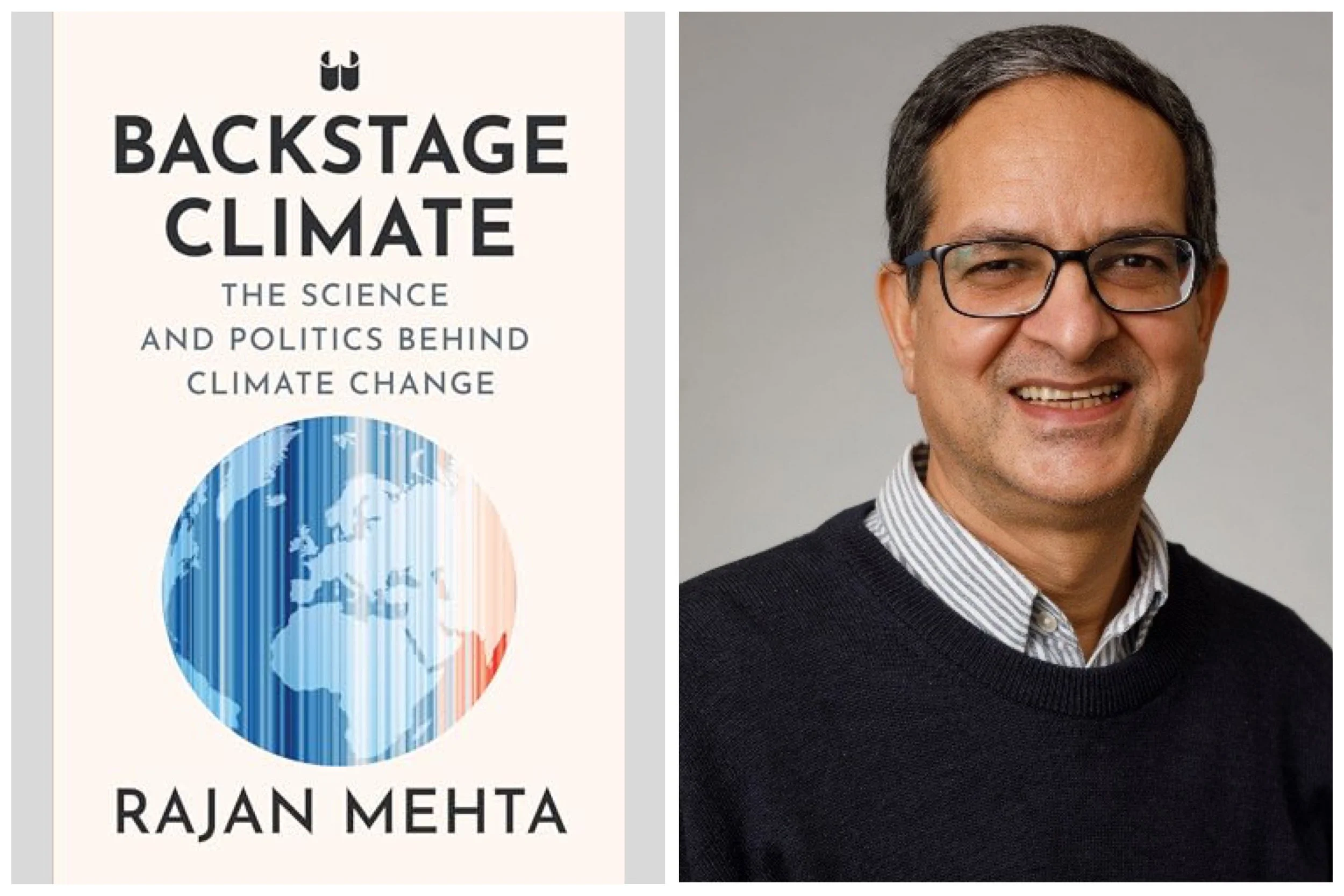
Rajan Mehta is a serial technology entrepreneur who held senior positions at Motorola and Nortel. In 2022 he was a fellow at Harvard’s Advanced Leadership Initiative (ALI) where he took a deep interdisciplinary dive into the science and politics of climate change, culminating in his approachable best-selling book, Backstage Climate: The Science and Politics of Climate Change.
In this Q&A, Keith Forman, a 2020 ALI Fellow, recently spoke with Rajan Mehta about his work during and following his fellowship, the perspectives he developed on climate science and policy, and the ideas that informed his book.
Keith Forman: Rajan, how did you first learn about ALI?
Rajan Mehta: I was exiting my first venture and researching two concepts for my next venture. One was a SaaS (software as a service) platform - which was a comprehensive, end-to-end infrastructure for creating, managing, and distributing enterprise intelligence - and the other was a platform to create a circular economy for carbon. I had written a paper on creating a circular economy for carbon and shared it with some professors at Harvard Kennedy School in 2018. They mentioned that this was a topic of interest and asked if I would like to pursue a research fellowship. I gave it a pass for several reasons. I was not much of an academic, and I had also started my new venture. But I remained in touch with them. Then COVID came and it provided all of us an opportunity to reflect and rethink our lives. I thought, maybe I should take a sabbatical and pursue an academic path. I reconnected with the Kennedy School, but the fellowship of three years earlier was no longer available. I was directed to ALI and was introduced to its founder Rosabeth Kanter, whose book “Think Outside the Building: How Advanced Leaders Can Change the World One Smart Innovation at a Time” I had just read. Thereon things fell in place.
Forman: What is your educational background?
Mehta: I was educated as an electrical engineer, but I started my career in computers and then shifted to telecom. I worked at Motorola and Nortel for 18 years, and although I started in technical roles, I soon moved to the business side. When I left Nortel in 2006, I was heading their service provider segment, which was their main business in South Asia at that time. My entrepreneurial instincts then kicked in, and I started two tech companies; the second of which, a SaaS platform, is an ongoing enterprise.
Forman: Let’s talk about your book, Backstage Climate: The Science and Politics of Climate Change. Throughout you allude to India and to your upbringing, can you speak to that and what got you into climate?
Mehta: There were two trigger points in my life that really pushed me into learning more about climate. The first one occurred when we were having a social gathering at home with a lot of friends and family from out of town. At some point the children were restless, and we asked them to take the ruckus outside and do some drawing instead. When they came back, my kids had drawn a landscape, but they represented the sky as gray, whereas most of the other kids who were from outside Delhi had drawn it blue. That really got me thinking, because honestly, in Delhi you rarely see a blue sky. It's been so polluted for decades. That got me interested in air pollution and I started reading about the issue in my spare time.
The second trigger was around seven years back. I was visiting my ancestral village after a long time, and maybe because I was looking at it with a different lens altogether, I saw that the green had turned brown. The beautiful hills and gorges we used to see were now essentially scrub land and landfills. The temperature had gone up a couple of notches.
Forman: You had now found a cause; what steps did you take to convert it into action?
Mehta: I used my ALI fellowship at Harvard to learn as much as I could about the climate crisis, and to meet as many deep thinkers on the topic as possible. Once I finished, I went back to India and set up two platforms. One was Climate Venture Partners; the other was Climate Action Labs. Climate Venture Partners was to be a venture studio where I thought I might be able to bring some Western technologies, which were climate friendly, into India.
I was looking at long duration energy storage systems. But that was not to be. I did a little bit of groundwork and saw that the opportunity existed but realized I was not the right person to see it through. The second platform that I started was Climate Action Labs, which is a nonprofit. In India, the concept of corporate social responsibility is strong. If your company makes a profit above a certain limit, you are required to give 2% of that profit by regulation for social responsibility activities. I had some money in my company, which was earmarked for this, so I shifted that into Climate Action Labs to get it started. I took a two-pronged approach. One was to create awareness and bring the topic of climate change centerstage. To take climate conversations to the dining table. To motivate people to make changes to their lives and behaviors. It was these objectives which started me down the path to writing this book.
My other idea was to bring all stakeholders on a common page. The first thing I did was to meet some scientists, first at Harvard, then back in India. I realized the scientists knew a lot about climate change. They understood the carbon cycle, the distribution of carbon, atmospheric capture, positive feedback loops, and all other facts. They knew less of the political economy, the power structures in society and the economic flows that govern business interests. At the same time, I went and met with politicians. They understood the power structures very well. They understood the aspirations of people very well. But they had no clue about the science behind climate change. This gave me an idea that to bring about change, there needs to be a reformation of economic and societal structures. We needed to get all these people onto the same platform. Closing this knowledge gap was the motivation behind the book. I tried to make it simple by writing it in the form of essays. The hope was that people would find it easy to digest and at the same time find it interesting.
Forman: I think the big tent approach comes through in your book. You are not ranking ideas, but logically moving through concepts, technologies, and outcomes.
Mehta: Yes, the idea behind the book was not only to make people aware of the climate problem but to get them invested in addressing it. This can happen when they develop an understanding of what is causing the problem, what is being done to address it, and what is standing in the way. That is how some people refer to the book as a primer on climate change.
Forman: You allude to Hindi teachings when you talk about the “Shiva Hypotheses” and how every 60 to 100 million years something traumatic happens to the Earth, and that scientists have looked back at geologic history and seen events which tie to the Shiva Hypotheses.
Mehta: That's true. If you go to the Smithsonian Institute, there is a graph they've plotted. It corroborates with this hypothesis.
Forman: I like the way you divert into anecdotes. You talk time scales, of course, and other important concepts such as greenhouse gas equivalency. I did appreciate those interjections, and they are pervasive throughout the book. One I learned was the cow count. I suspected India would be high up on the list, but I didn't realize Brazil exceeded India. You also touch upon the climate justice issue. I might have assumed an attitude of don’t blame India for this problem; the developed world’s industrial might has done most of the damage. You dismiss this pretty quickly stating, "we're all to blame."
Mehta: There is a rationale for that; we do not know when and where this climate monster will strike. Our models can predict that something wrong may happen. But where, when, and how is difficult to predict. Disaster could strike anywhere. If it strikes in the developed world, they have the means to address it. They have the systems, they have technology, they have infrastructure, they have money.
If disaster strikes in the developing world, we have nothing. There will be mayhem. Look at the floods in Nepal. The only way out for developing countries is to look to Nature, and hope that it comes to their rescue. If we are depending upon Nature, then we need to take care of it, and the only way we can take care of it is to remain disciplined in our emissions. Pointing fingers at the West and saying that because they created the problem, we have the license to spoil is illogical.
Forman: I also respect the fact that there is a direct correlation between access to energy and development. I believe we don't want to deny energy, but we want that energy to be sourced from non-fossil sources, and to that extent the West owes a debt to the lesser developed countries of the world. The West should amortize that debt by funding or helping to fund a transition that skips the fossil fuel phase.
Mehta: It does not have to be aid or money just given away. It could be in the form of investments. It could be technology transfer. It could be debt-swaps.
Forman: Do you mean debt forgiveness?
Mehta: I am suggesting debt-for-nature swaps, which could work to everybody's benefit. The developing world can use the repayment money they save towards clean energy growth. The world gets reduced emissions, and Nature gets conserved. All should be happy.
Forman: Switching gears, were you focusing on a specific audience for your book?
Mehta: I wrote the book as a general read for a global audience. I was careful not to give too many references to Indian mythology for instance, even though you enjoyed them. I gave just enough to make it interesting. I didn't want to skew it because climate is a global problem. The audience needed to be global.
Forman: The Indus Peninsula is one place where the effects of extreme heat are being most felt. The terminology of wet bulb moments is gaining greater awareness, written before the extended streak of 40-degree Celsius days in Delhi in 2025. Kim Stanley Robinson’s novel, “The Ministry for the Future,” starts out with a wet bulb catastrophe which takes the lives of twenty million people in India.
Mehta: It's a very gory start to the book.
Forman: But close to home. It does tie into one of your chapters involving scientific intervention, specifically solar geoengineering. You also write about nuclear fusion, carbon capture, and sequestration, direct carbon capture.
In our brief exposure to climate education as ALI fellows, and during our time in the classroom, we’ve seen attitudes shift not only on nuclear but on resilience versus mitigation. Maybe you can talk a little bit about that.
Mehta: First, let's discuss mitigation versus resilience or adaptation, which I speak about in the book. In my view, there are three bullets in our arsenal to fight climate change, with the ultimate objective being the avoidance of human suffering. These are mitigation, adaptation, and loss and damage. The more we invest in mitigation, the less we need to worry about adaptation, and the more we invest in adaptation, the less we must worry about loss and damage. And the more we invest in loss and damage, the less will be the human suffering, right? This should be our three-pronged approach.
I am also aware of the difference in opinion between the global North and the South. The focus is on mitigation in global North, whereas in the South we want adaptation. I am reminded of a story. In India, there are some fishing villages where people used to go out fishing in the night. If the sea turned rough, many of them would never come back. So, the Government started a program which took hold when mobile usage began. The government would announce that "today the sea is going to be rough", so don't go out, but the fishermen would still go out in the night, irrespective of the announcements and warnings. When a survey was conducted to ask some of the survivors, "Why do you do this?" "Why do you go out when you know that it's dangerous? The answer was, “Living is more important than life”. If they didn't go fishing, they would not have the means to survive.
The same logic applies to the global South for climate. Adaptation is important because the negative effects of a warming world are striking us today. We will not have the luxury of waiting for the impact of mitigation. So that is the reason the South wants to focus on adaptation. My personal view is that we must focus on all three approaches though.
Forman: It ties in with your interdisciplinary, big tent approach.
Mehta: If it was a pie of 100 initiatives that we could take and we needed to divide it; I would put majority on mitigation. It is just how a doctor approaches a problem. You need to root the evil from the bud itself. But I think each nation can decide how to distribute the pie between mitigation, adaptation, and loss and damage, depending upon the country and its present circumstances.
Forman: What about greenhouses gases that have already accumulated in the atmosphere?
Mehta: I think they are a problem, and we need negative emission technologies, because climate change is a stock and flow problem. Even if we get to net zero, which in itself is a challenge, global warming will not stop because of climate inertia. The stock of greenhouse gases already in the atmosphere will keep warming the planet for at least a couple of centuries to come.
Forman: It is argumentative, but feedback loops that have begun to impact biodiversity, ocean acidification, the location of currents, melting permafrost, and calving glaciers will continue to dramatically change life on earth. What should we do if the temperature suddenly shoots up?
Mehta: Solar geoengineering could be a way to get some immediate relief. To cool things down. To reduce immediate heat stress. Some parts of India experienced 52-degree centigrade temperature in May last year. We cannot stand to suffer that kind of heat. By deploying solar-geoengineering, not only will people get some immediate relief but our scientists, engineers and entrepreneurs who are working on this existential problem would get a little bit more runway for introducing technologies and solutions such as, negative emission technologies like direct air capture, natural capture, and other carbon reduction methods to bring down the stock of greenhouse gases in the atmosphere.
Forman: But solar geoengineering is very controversial.
Mehta: It is less controversial now than it was a few years back, but the geopolitics still make it a challenge. Its unintended and unexpected consequences are still being investigated.
Forman: Your book takes an alphabet soup approach. You don't pick a winner here. So where would you invest?
Mehta: I think I would bet on nuclear fusion. Because of the way the world is progressing, our energy needs are going to multiply. I think most projections and models which calculate the amount of energy the world needs have been consistently understated. AI’s demand for energy, which materialized out of nowhere, shows no signs of abating. So, if our goal is a comfortable life, we need to move away from fossil fuel energy. Solar and wind have the attendant issues of intermittency, their own carbon footprint and recycling costs. I see nuclear as a source of almost limitless energy.
The second thing I would want to put my money on is negative emission technologies, whether they are nature based, or technology based. The natural tragedies fueled by the warming climate will continue even when and if we achieve net-zero emissions. This will only change if the atmospheric levels of greenhouse gases come down, and therefore negative emission technologies will become essential. My third investment bet would be on decarbonizing industry - cement, steel, fertilizers, aluminum, and glass. Out of the eight billion people on Earth, we currently have five billion who still need proper houses to live in, proper roads, proper infrastructure, schools, etc. Industry must grow to meet these needs. We need to make sure that industry gets decarbonized.
Forman: Here's one thought that's not in the book. Very endemic to India. The two-stroke engines in India, powering the scooters, the motorbikes, the rickshaws, that seems to me to be low hanging fruit to make each of those engines plug in. Not only for fuel consumption, and air quality but from a noise perspective as well. Is there a movement afoot to make this happen in India?
Mehta: We are seeing a lot of movement towards electric vehicles here. For example, most of the fleets that are used by the gig economy, the Amazons of the world, to deliver last mile, are doing it on electric two wheelers. But they have their own carbon footprint, and we have to make sure that we’re not simply moving the emissions and pollution from the tailpipe to the chimney.
Having said that, adopting electric vehicles even though our energy mix is primarily fossil fuel based is still good as we are solving for the future. If we wait until India’s electric grid goes all renewable, it will be 30 years. Then it will be 30 more years to build an electric powered fleet. So, you'll take 60 years to become all electric. If we start adopting electric vehicles today and simultaneously are transitioning our electricity generation to renewables, we will achieve our goal towards net zero midway, much faster, in 30 years.
Forman: It seems the goal is not to prematurely retire fossil assets as it is to make sure through policies and incentives that obsolete equipment is replaced with affordable electric equipment.
Mehta: Absolutely. And, Keith, the whole idea is to move towards clean energy and net zero.
Forman: Rajan, thank you so much for writing this book and taking time to go backstage with us to understand the deep thought that underlies your very valuable contribution to the climate conversation.
About the Author:
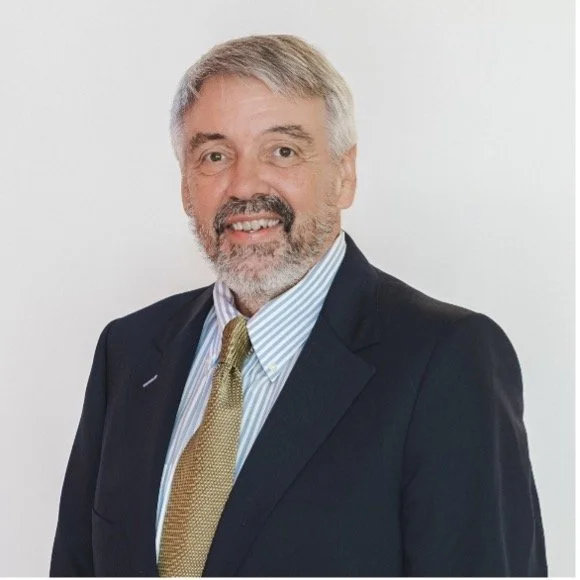
Keith Forman is a 2020 Harvard Advanced Leadership Initiative Fellow with over four decades of experience in leadership positions in the energy industry. He currently serves as the Chairman of Capital Clean Energy Carriers, a shipping company based in Greece. Over the years, he has advised global infrastructure and private equity funds on midstream energy investments, served as the CEO for renewable energy companies, and held positions as a senior financial executive in large midstream energy companies.
This Q&A has been edited for length and clarity.