Financing the Future of Our Oceans
Q&A with Torsten Thiele
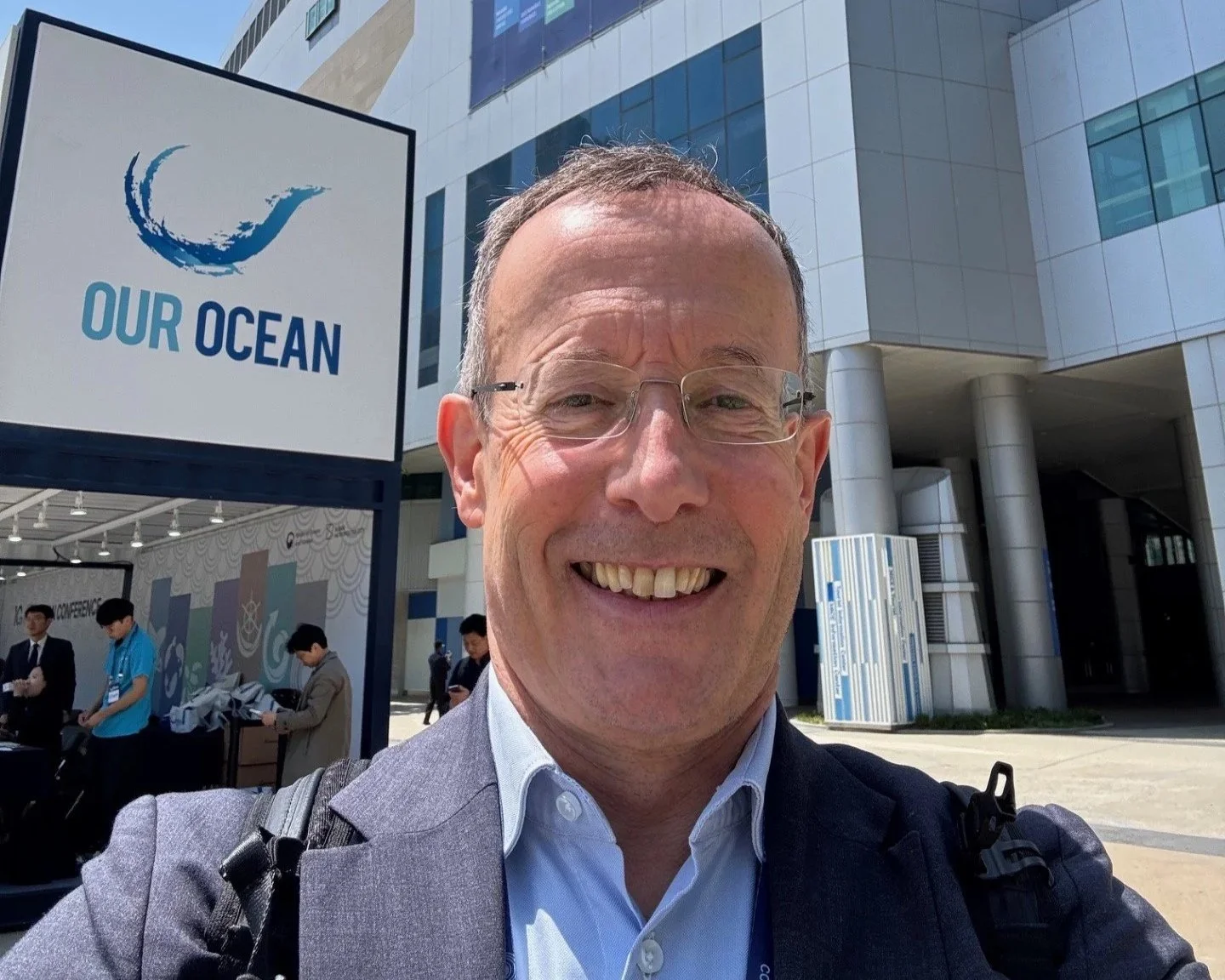
Torsten Thiele is the Founder of the Global Ocean Trust and a leading expert on ocean governance, blue finance, and climate‑resilient marine ecosystems. A former investment banker and senior advisor to international organizations, he now works globally to advance innovative financing solutions for ocean protection, climate mitigation, and sustainable development.
Since 2009, the Harvard Advanced Leadership Initiative (ALI) has welcomed about 50 experienced leaders each year into a unique learning community designed to help them launch high‑impact projects in their “third chapter.” More than 600 Fellows have completed the program, each aiming to leave Cambridge with a commitment to advancing meaningful social, environmental, or economic change.
This Q&A revisits the journey of Torsten Thiele (ALI ’14) more than a decade after his fellowship year, exploring how his ALI project evolved, how the experience reshaped his career, and what lessons emerging leaders can take from his work at the intersection of climate, oceans, and global policy.
Advice for the Next Generation
Alexander Bosch: What would you say to young students who want to work in the field of ocean conservation and marine restoration but feel overwhelmed by the scale of the challenges and unsure where to begin?
Torsten Thiele: I work closely with emerging young scientists — what we call ECOPs — and with youth participation networks, and I think young people often underestimate what they bring to the table. You live in today’s world. You have fluency in social media, access to recent research, and perspectives that people with longer careers simply don’t have. That is genuinely valuable.
I still encounter people who are unaware that the ocean is the defining issue of our time — that more than 95% of life on Earth is underwater, and that ocean systems are foundational to how our planet functions. If you have studied that, you are a resource. Be confident about it. Whether you’ve walked a beach and seen its degradation, or snorkeled in a bleached reef, you understand something that needs to be communicated and acted upon. That understanding is a contribution.
A. Bosch: Every little bit helps, I suppose. On that note. Carbon trading systems seem simultaneously to attract significant investment and significant controversy. What’s your view on their role in ocean conservation specifically?
Thiele: I’d actually use your interest in seagrass to illustrate the point. Seagrass beds are spawning grounds for juvenile fish and, in their sediment, significant stores of carbon. If you damage a seagrass bed, you are simultaneously destroying marine habitat and releasing stored carbon, a double loss. Protecting these areas requires calculating their value and creating instruments that allow investors to fund that protection and then account for the outcomes: tons of carbon preserved, biodiversity maintained.
In regulated markets, those outcomes can be recognized formally. In others, voluntary frameworks apply. The critical requirement in either case is high integrity. These instruments must not be used as a substitute for the transition that companies and institutions need to undertake regardless. They are supplementary tools, not escape routes. If handled with rigor and honesty, they can be genuinely powerful. If they become a mechanism for avoiding necessary change, they fail, and they undermine confidence in the broader framework.
A. Bosch: Is there a consensus globally that carbon markets, with appropriate integrity, are a net positive — or is the picture more varied by context and location?
Thiele: I try not to conflate what I’m advocating — high-integrity blue carbon instruments — with the broader global carbon market debate. These are specific ecosystems, and they deserve to be evaluated in their own terms. The fundamental insight that living natural systems are enormously valuable and deserve to be accounted for as such is correct. Traditional accounting captures the fish on your plate, not the fish as a functioning part of an ecosystem. That is the mental shift we need.
Some early work in terrestrial carbon markets did generate legitimate concerns, and it would be wrong to conclude from that experience that valuing nature financially is inherently flawed. The right conclusion is that we must be rigorous, science-led, and genuinely attentive to the complexity of the systems we are trying to protect. I discussed these themes at COP30 in Belém, including how Article 6 mechanisms can work in the ocean context. But for anyone not immersed in the technical details, the message is straightforward: living nature is essential to our survival. Let us find serious, honest ways to protect, restore, and invest in it.
Dr. Matthias Bosch: Torsten, you’re a 2014 ALI alumnus, and we connected through what you might call “the German connection” a couple of years ago. Could you briefly sketch how you developed your interest in ocean issues, and what brought you to Cambridge in the first place?
Thiele: I had a successful career in finance, and through that work I began to identify a real challenge: the world’s oceans are under enormous pressure, and they need something akin to social entrepreneurship — a serious, sustained engagement — to address that. I found that in my day job, that kind of commitment simply wasn’t possible. This wasn’t something I could pursue as a hobby; it needed to be done properly.
So, I went back to the drawing board, did some additional academic work around ocean issues, and then saw the opportunity to attend ALI and spend a year working through the details of what I wanted to achieve. I arrived at ALI with a very clear challenge in mind and a need for space to think deeply about it, but also for a conducive intellectual environment. Interestingly, some of the most valuable things I picked up had nothing to do with oceanography specifically. They were about how to describe a problem clearly, how to engage with people, and how to build a narrative.
M. Bosch: That’s very much what ALI is known for — giving people the toolbox to identify social problems and find pathways toward solutions. And the bridge from finance to ocean conservation, was that as wide a leap as it sounds?
Thiele: It is and it isn’t. For any challenge of that scale — and the ocean covers most of the planet — there will always be a financial dimension. But equally, one of the persistent challenges facing social causes is that if you cannot construct a credible financial narrative and demonstrate investable opportunities, it’s very difficult to engage with actors beyond a narrow circle of advocates.
I was keen to show that genuine investment opportunities do exist in the ocean space provided you also work on governance. For me, the intersection of ocean governance structures and financial solutions was a quite logical combination, not a contradiction.
From Banking to Blue Finance
A. Bosch: Was that transition — from investment banking to ocean-focused work — guided by ALI, or was it something you had already decided for yourself? I ask because many university students see a world they want to help but feel unable to make that step toward genuinely transitioning their work.
Thiele: To be fair, I had already made the mental step by the time I arrived at ALI. I found myself in places like a PhD seminar at the design school — where I was contributing the ocean perspective — and learning from the doctoral students how to describe a problem as a design challenge. How do you think about a vast, complex space when there is no obvious entry point? It was about picking up different languages in different corners of Harvard and using them to translate what first appears as an intractable problem.
A. Bosch: We hear a lot about the value of specialization — focusing on one skill, honing it, driving your argument from that depth. Do you agree with that, or do you see more value in cultivating a wider range of competencies?
Thiele: I think skills matter enormously, and by ‘skills’ I mean something quite concrete — the ability to describe the world in numbers, for instance, which is what finance really is. A half-skill doesn’t serve you well. You should be able to hold your own in finance, or in law, or in whatever discipline you claim. But you absolutely should apply those skills across a broad range of problems, because you only truly understand a skill when you use it in contexts of quite different natures.
For example, I worked on rolling out mobile telephony across Africa. That gave me real insight into how you tackle a complex problem that initially appears uninvestable — and then find a model that makes it both financially viable and transformational for local economies. That experience directly informed how I approached ocean finance.
What Is Blue Finance?
A. Bosch: You’re widely considered a pioneer in Blue Finance. It’s a compelling term. Could you explain what it means, and what its scope might be?
Thiele: Blue Finance refers to financial investments and mechanisms that support the sustainable use, protection, and restoration of oceans and coastal ecosystems. It channels capital into activities such as marine conservation, sustainable fisheries, ocean-based renewable energy, and coastal resilience, aligning economic returns with long-term ocean health.
Blue Finance sits at the intersection of two concurrent developments. The first is that finance as a whole began to grapple with its own impacts — essentially, the sector started looking for a mission statement. The evolution of sustainable finance, impact finance, and outcome-based finance is all part of that reckoning: what delivers genuine long-term transformational outcomes, and what should simply not be financed because it conflicts with sustainability?
I applied that broader discussion very specifically to the ocean context: What genuinely helps us restore ocean health? What allows us to work with marine ecosystems sustainably? What creates what I call an ‘ocean asset class’ — treating nature itself as a source of value within the system?
The second dimension is practical: you need the tools to make the concept operational. When we issued the first Blue Bond, people asked us how it worked — because there was no template. We had to write the rules, develop frameworks, build taxonomies and pathways. The most recent product of that work is the Handbook for Sustainable Ocean Plans, which I co-authored. Blue Finance, as a concept, carries enormous potential to secure long-term sustainability in ocean contexts but it requires technical rigor to convince states and governments to participate in.
A. Bosch: The Global Ocean Trust has a strong focus on blue bonds, largely at a sovereign level. Could that model scale down? Here in Cornwall, England, for instance, we face significant sewage pollution. Could a smaller-scale blue bond structure help protect coastal ecosystems locally?
Thiele: The key is to disaggregate the problem. Individual projects need financing, and the appeal of blue bonds is precisely that they tap the capital markets — the largest and most liquid pool of money on the planet, and therefore potentially the cheapest source of funding. The challenge is creating the linkage between that large, attractively priced pool and very specific local projects.
One approach I worked on with the Nordic Investment Bank is instructive. Rather than creating complex local instruments, we did the opposite: we bundled funding for sewage treatment plants across the Baltic states. The Nordic Investment Bank went to the capital markets at scale, then on-lent those funds to specific cities and projects throughout the region. A municipality in Lithuania suddenly had access to the same quality of financing as Stockholm. It was most beneficial precisely to the communities that had fewest alternatives. That bridging of what I call ‘the missing middle’ — connecting capital market efficiency to local-level need — is a core part of the work I do through the Ocean Risk and Resilience Action Alliance and other partnerships.
ALI’s Evolution and the Power of Coalition
M. Bosch: Much of what you describe seems to have been seeded by the ALI experience — drawing on Harvard Business School, the Kennedy School, perhaps the Law School. Do you see ALI itself evolving? Under Brian Trelstad’s leadership, there seems to be a real effort to build a much broader coalition with global reach.
Thiele: It’s a great question. One of the things that gave me tremendous hope through ALI was the initial trust and buy-in I received from the ALI faculty and my classmates. There was an almost palpable belief in people who are trying to change the world, and that spirit was a powerful generator of ambition and drive.
What I see now is an opportunity to preserve that spirit while layering on the accumulated experience of multiple ALI generations. A case study was produced about my work, and that knowledge can be passed forward. At New York Climate Week — which I’ve attended for years as part of the UN General Assembly — we had, for the first time in my experience, a gathering with the Salata Institute and ALI fellows where we exchanged information about how our respective work feeds into each other. The combination of that informal enthusiasm with a more organized, cohesive coalition approach seems exactly right. The opportunity is very large.
M. Bosch: We are trying to do something similar here in Munich — a collaboration with TU Munich and Harvard to build an ALI-inspired ‘Lifelong Leadership’ program. There is a concern that ALI currently attracts predominantly North American cohorts with relatively few participants from Europe. We hope a partnership can help change that.
Thiele: One thing that struck me in my own cohort was the quality of our Latin American classmates. A cross-cohort approach linking Europe with that broader group, and potentially reaching into Asia, would allow North American participants to engage with a genuinely global range of experiences. A European hub for that exchange seems like a compelling idea.
Science, Regulation, and the Road to Investment
A. Bosch: In 2020, you supported the IUCN in writing guidance on integrating nature-based solutions into coastal resilience projects. How does one position oneself to have a major multilateral institution come seeking your expertise? That seems like a hallmark many would aspire to.
Thiele: I believe strongly in engaging proactively with the conservation and scientific communities. My approach has been to offer collaboration, to learn from these institutions, and to contribute wherever I can. IUCN has a remarkable structure of World Commissions, expert groupings that I have the privilege of being part of, including the World Commission on Protected Areas and the World Commission on Environmental Law. Membership allows you to share your expertise with a wider community and work on specific projects.
Through IUCN, I was involved in the Blue Natural Capital Financing Facility, which tested coastal resilience investment in multiple developing countries with support from the Luxembourg government. The broader principle is this: coastal ecosystems are rapidly changing and are critical both as buffers against storm surges and climate change and as reservoirs of carbon, biodiversity, and a whole range of ecosystem services. If we can map and value these systems, we can make better decisions about what I call ‘blue infrastructure’ — and that is an enormous investment thesis. It allows private capital to flow into spaces that previously depended entirely on public funding, which is limited and shrinking. But it must be done in alignment with science and in partnership with local communities. The coastscape solutions that result are complex but putting them together yields far better outcomes both on the ground and in financial terms.
A. Bosch: It sounds as though building these relationships takes years of patient work. And it seems like conferences and academic exchanges are the initial entry points?
Thiele: Yes, and I’d add volunteering as an equally important pathway. I see myself partly as an academic. I study, write papers, give lectures and conference presentations. But I also volunteer extensively, going wherever I can help, and that sometimes leads to consulting work, though often it is simply a contribution. The point is that everyone can volunteer. Everyone has entry points — at a local, community, or organizational level — to find ways to contribute. Being in the room, helping move things forward, you learn how processes work, you understand what is genuinely needed, and you build relationships. More hands on the tiller really does make things move.
About the Authors:
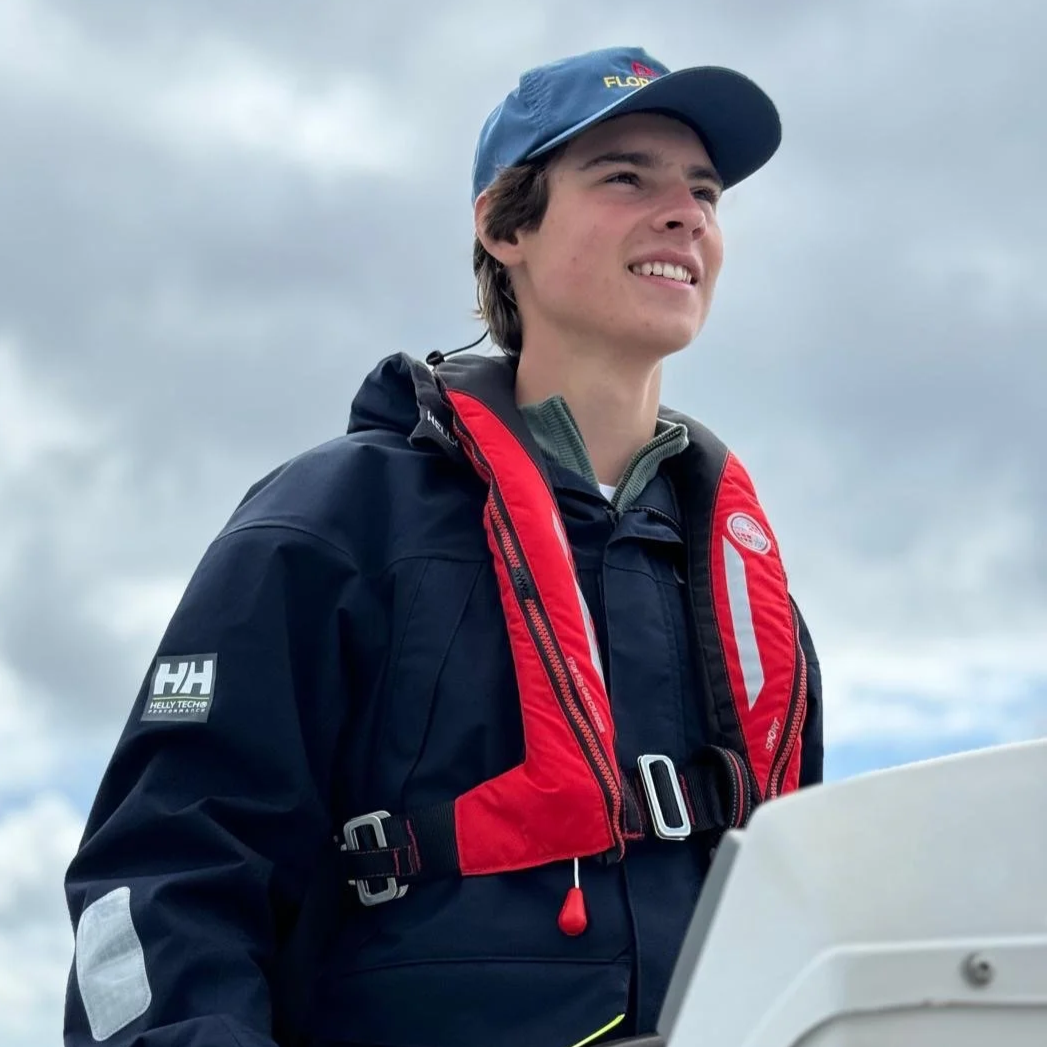
Alexander Bosch is studying Marine Biology at the University of Exeter in the UK. He has a strong interest in blue finance and carbon trading systems and has launched a project along the coast of Cornwall that uses kelp—large brown seaweed forming underwater forests—to store carbon and explore its commercial potential.

Matthias Bosch is a 2023 Harvard Advanced Leadership Initiative Fellow. After 25 years of practicing intellectual property law and litigating complex patent disputes with his law firm Bosch Jehle, Matthias switched directions and began working fully with social impact and philanthropy organizations. After returning to Munich, Matthias pursued the project of establishing an ALI-like program at the Technical University of Munich. The program, LifeLong Leadership at the TUM Institute, will launch in October 2026.
This Q&A has been edited for length and clarity.