
Boosting Electoral Participation: Mobile Voting as a Tool for Citizen Engagement
Q&A with Linda Rebrovick and Bradley Tusk
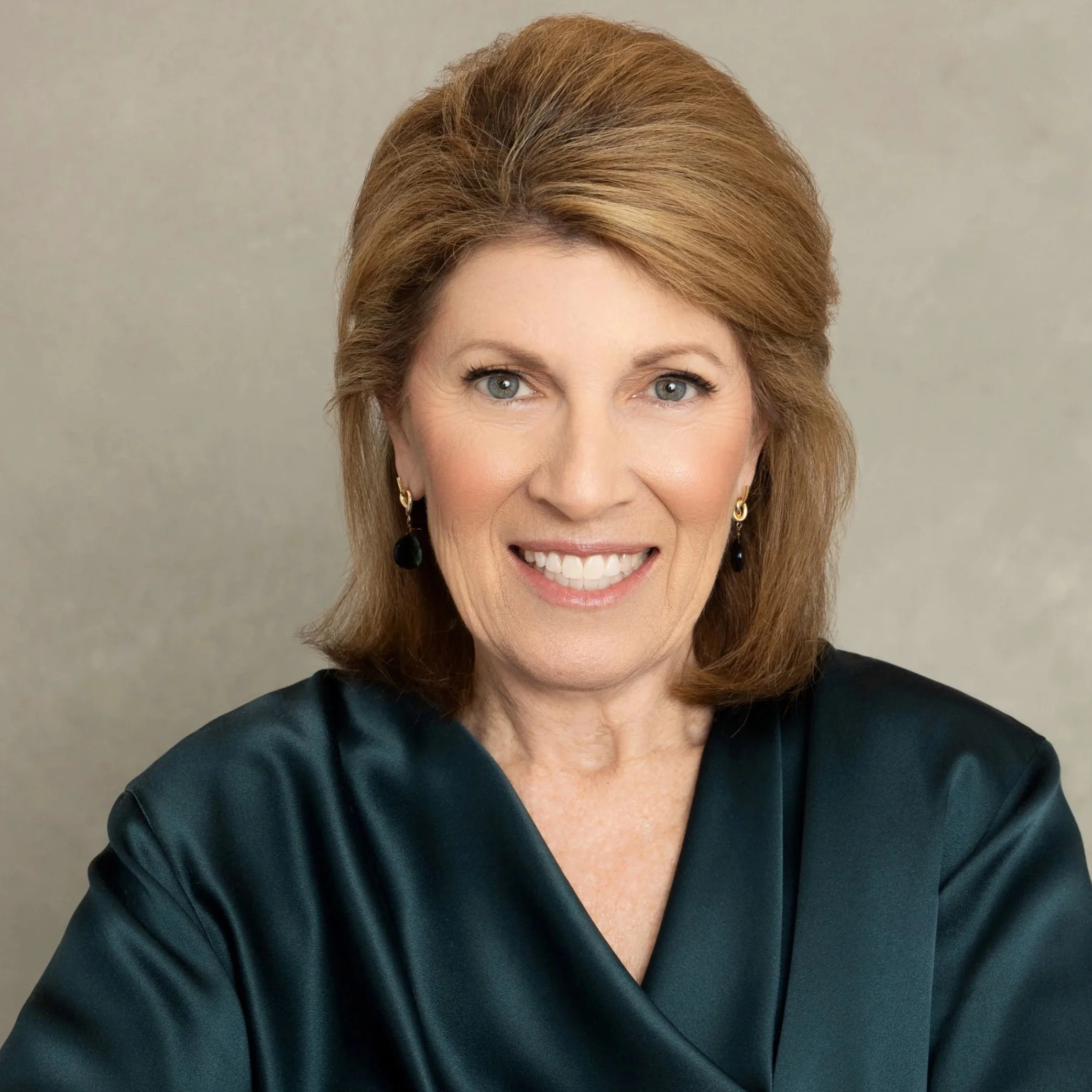
Linda Rebrovick is President of Impact Corporate Consulting and a senior executive with more than thirty years of leadership experience across consulting, healthcare, marketing, and governance. Her career includes roles as Business Unit Executive at IBM Consulting and Services, Executive Vice President and Managing Partner for Healthcare at KPMG Consulting, Chief Marketing Officer at BearingPoint, and Chief Executive Officer of Consensus Point. She has served on seven public and private boards. Rebrovick also serves on advisory boards for the Edmond & Lily Safra Center for Ethics at Harvard University, EdAccess, Leadership Nashville, and the Community Foundation of Middle Tennessee. A 2021 Fellow of Harvard’s Advanced Leadership Initiative, she holds a BS in Marketing from Auburn University’s Harbert College of Business, graduating with High Honors, and has been recognized as a member of Omicron Delta Kappa and as one of Auburn University’s Top 400 Women Graduates of the past 100 years. She is Adjunct Faculty at the Vanderbilt University School of Nursing, where she is helping establish the Vanderbilt Healthcare Executive Legacy Institute focused on healthcare social impact leadership.
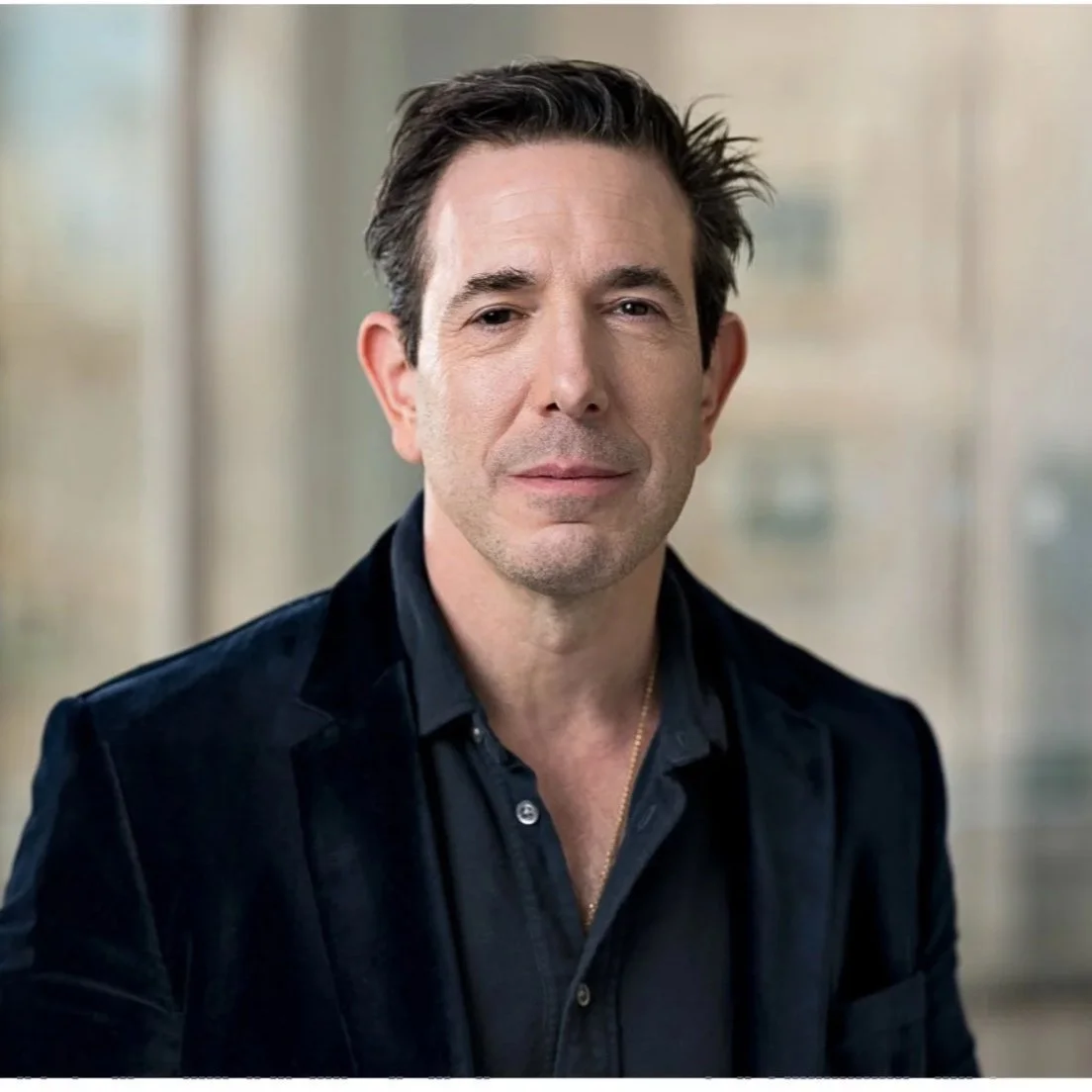
Bradley Tusk is a venture capitalist, political strategist, philanthropist, and author of Vote with Your Phone: Why Mobile Voting Is Our Final Shot at Saving Democracy. Through his family foundation, he is leading the national effort to expand mobile voting in U.S. elections, while Tusk Philanthropies also runs anti-hunger initiatives that have driven more than $2 billion in public policies across 23 states, helping to feed nearly 14 million people. He is the Managing Partner and Co-founder of Tusk Venture Partners, the world’s first venture capital fund focused exclusively on early-stage companies in highly regulated industries, and the founder of Tusk Strategies and Tusk Ventures. Earlier in his career, Tusk served as campaign manager for Michael Bloomberg’s 2009 mayoral reelection, as Deputy Governor of Illinois, as Communications Director for U.S. Senator Chuck Schumer, as Uber’s first political advisor, and as an adjunct professor at Columbia Business School.
Sandra Kresch: Linda, you've been working on mobile voting since you began your ALI Fellowship. Tell us about your project.
Linda Rebrovick: When I ran for mayor of Nashville in 2015, I learned that turnout is very low in both primaries and general elections in our city and across the US. In the 2015 Mayoral election, around 20% of the registered voters cast a ballot and 50% of all residents in Nashville were registered to vote. Active citizen engagement is critical to preserve our democracy, and increasing voter participation became the perfect objective for my social impact project at Harvard. My social impact focus was to design and implement a pathway to make it easier to vote, so more people will vote, especially in primary elections.
Kresch: Bradley, you have been on the path of getting mobile voting implemented for a long time, and you feel strongly that it's an important thing to do. Why do you think this is critical now, and what problems will it address that we need to solve?
Bradley Tusk: There are very few people today who would say our country is working really well. When you look at any survey of trust in government, it is abysmal, and there are so many massive societal problems, from guns to immigration to healthcare to education to climate. Having worked in the city government, state government and federal government in both legislative and executive branches, and having seen it from every angle, we are in this mess not because these problems are intractable or because most of us couldn't agree on a solution. Rather, it’s because the structural way that we elect people leads to polarization and extremism, and that's what makes it so difficult to solve actual problems. So, in a world of gerrymandering, really only the primary election matters.
The Times did a really interesting study of the 2024 general election, and they found just 8 percent of congressional races (36 of 435) and 7 percent of state legislative races (400 of 5,465) were decided by fewer than five percentage points. So, the primary is really the determinative election in most cases, and primary turnout is very low. It's typically around 10%. And who are those voters? They're the extremes. The far right, the far left, or special interests who can move money and votes in low turnout elections.
In my experience, elected officials base every decision solely on winning their next election. They are trying to satisfy these very small groups who will actually participate in their next primary at the expense of everyone else. That either gets us the absolute chaos and dysfunction of Washington, D.C. or just totally one-sided governments, whether it's the state of Texas on the right or the city of Portland on the left. None of that is representative of how the vast majority of people actually feel. So, we have a structural problem, not an actual political problem, in my view.
Kresch: Why is mobile voting the solution to increasing citizen participation in elections?
Tusk: In my day job as a venture capitalist, I invest in companies that make something more accessible through technology. When you make something easier, by definition, more people do it.
When I ran the campaigns to legalize Uber around the U.S, we were a tiny tech startup against a very powerful taxi industry. We won because we were able to say to our customers that if you want Uber to stick around, you need your elected officials to support it. We built the functionality to communicate with local officials into the app and millions of people used it. We won in every single jurisdiction in the country.
Rebrovick: What Bradley realized was that Uber had mobile phone numbers of every person who had an account with Uber. He advised Uber to reach out to their customers to help protect ride share companies. Uber sent a link to each individual to send to their congressional representative and senator with a request to allow rideshare to exist, along with taxi services and other transportation companies.
Tusk: It finally hit me that the same people who were weighing in on our behalf didn't actually know who their city council member was, and they'd never voted in a state senate primary. But when you put the capability on their phone, their behavior changed, and they acted. That was back in 2017. I asked the myself the question, “What if they could vote this way?” That's what led to the Mobile Voting Project, and we've been at it ever since.
Rebrovick: The reality is, when more citizens vote, their votes make a difference in who wins, and therefore, in the quality, leadership, and judgement of our elected officials. After the low turnout in the 2015 Mayoral campaign, I asked so many citizens why they did not vote, and their major answer was the lack of time and apathy based on the perception that their vote did not matter: “Well, I couldn't make it to the polls that day.” Or “I intended to vote early, but I was too busy”. Many said when they arrived at their poll location, they left because they did not have time away from work to stand in a long line.
During COVID, we had record voting turnout across the US because most states had to provide alternatives to in-person voting for all registered citizens. For example, in some states, voters were allowed to deposit their ballot in a voting box, and everyone was allowed to mail their ballot. The 2020 presidential election had the highest voter turnout of the 21st century, with 66.8% of citizens 18 years and older voting in the election. While there were many factors leading to this result, the easy access to cast a ballot proved that more people would vote if you made it easier. Why not add mobile voting to our options?
Anthony Mohr: Does it work? Are there examples of mobile voting increasing participation in elections?
Tusk: In terms of empirical data, there's only one country that has been doing this. It's Estonia. They do it on their computers, not on their phones, but they've been at it for 20 years. And the data says it does work. In year one of their internet voting, 1.3% of people who could vote on their computers did so. Today, voting on computers is a significant majority of their total votes. And, to me, the most important thing is that people who were occasional voters became regular voters because it is so easy. So now, even their local elections have much closer to 60% turnout, as opposed to, say, 10% here. So, in the country that has done it, absolutely it has improved participation.
We also funded elections pilots in seven different US states where either deployed military or people with disabilities were able to vote in real elections on their phones. And the answer is, when you put it on their phone, a lot more people vote. In the seven different pilots we ran, or twenty-one jurisdictions across seven states, the change in participation was material.
These pilots used both web-based digital and mobile phones. We ultimately landed on mobile phones as the best option simply because from a security standpoint, an app is seen as far more secure than a website.
Kresch: It's interesting that you're going down the path of trust, because one of the significant questions people will throw up if they want to undermine this initiative, particularly in an environment where people are questioning elections, relates to whether or not it is secure? Can we trust it?
Rebrovick: Bradley’s team at The Mobile Voting Project (MVP) engaged Free and Fair, an organization with two of the top experts in the country in voting security. Free and Fair has completed the first open-source mobile voting software development kit. Voting application software companies and technology integrators can develop and integrate this mobile voting system into their current election software to facilitate secure mobile voting via an end-to-end verifiable solution and process. The MVP software will be the “middle layer” between the front-end voting process on your mobile phone that identifies
the user and records their vote, and the back-end to support the processing of all the voting transactions at the election commission. The new and important “game changer” is that this new methodology ensures every ballot is encrypted and verifiable, and every voter can track their ballot to confirm their vote was cast as they intended.
Tusk: So, each jurisdiction would have to set up their election based on local regulations and voting laws, but here’s how it could work. Sandy, since you and I are neighbors, you would first download the New York City Board of Elections app from the App Store. The first thing they would say is, “Okay, is Sandy really a registered voter in New York City?” You verify your identity, that could be putting in the last four digits of your social and your address. Then you do multi-factor authentication using your email address on file with the Board of Elections. That could be followed by biometric screening, taking a scan of your face, matching it up against your driver's license, or whatever ID you have, and now we know you're really you. Only then does the ballot come up on your screen.
The ballot itself is meant to be as simple and straightforward as possible, and whenever you've completed filling out the ballot and you're ready to submit, three things happen. The ballot is encrypted, the ballot is anonymized, and you get a tracking code. It then goes back to the Board of Elections, and they air gap it, which just means they take it offline. Once your ballot is not connected to the internet, they decrypt it, a paper copy gets printed out, and that gets mixed in with all the other ballots.
You can see where your ballot stands, because the tracking code will show you that it was received, tabulated, printed, and so on. And the underlying code itself is open source, so anybody can audit and verify it. It's totally transparent. This is a philanthropic effort. I have paid for all of this, but it is available on GitHub, so it is free for any election vendor to use. All that needs to happen now is for jurisdictions to take advantage of it.
Mohr: How do you guard against the vote counters knowing who the ballot came from?
Tusk: There's a two-part process. If you remember when I walked through how it works, verification, multi-factor authentication, and biometric screening. That's done by an identity company. They verify that Anthony really is Anthony. Once they do that, they're out of the process.
When your ballot goes to the jurisdiction, they don't know who it's coming from; they just know that a vote came from a person who was identified and verified as who they are and eligible to vote. The government sees your ballot, but not your name.
Rebrovick: We are automating the process of submitting a ballot. We're not changing policies or interfering with state election law.
Mohr: And it sounds as though the value of mobile voting is that it eliminates a lot of the barriers to actually casting a vote and puts the capacity to do that effectively in individual people's hands so that the convenience of it mitigates any of the issues that would cause someone not to vote.
Rebrovick: One of the major goals was to design a solution to accommodate the registered citizens who do not have the ability to vote at the polls. The MVP advisory board and partners who participated in the design process include the National Federation of the Blind, American Council of the Blind, National Disability Rights Network, and Secure Families Initiative. Every step of the way, this initiative has been focused on the ability for every citizen to have the opportunity to vote, such as our military who are out of the country preserving our freedom, or students who are in college and unable to return to their home state during an election. It's also geared to assuring that nobody is prohibited from voting because of a disability.
Mohr: Good. What about sample ballots? How do you handle that?
Tusk: We have a demo where we can show people, an explainer video that'll be on mobilevoting.org shortly, that will walk you through a sample ballot.
Mohr: Can you print that out? Because a lot of people print those things.
Tusk: You can. By the way, if you want to, you could print it and mail it in. I wouldn't choose to do that, because that's a lot more work, but it's an option if you want that.
Kresch: You are beginning to go into some real environments where elections are going to be handled by mobile voting. Can you talk a little bit about the progress in getting mobile voting implemented?
Tusk: Anchorage, Alaska is going to be the first jurisdiction to do it, and we are starting with municipal elections. Our view is, let's start at the local level, for two reasons. One, the risk is a little lower than in statewide or federal elections. Two, the greatest gap between participation and impact on people's lives, in my experience, occurs at the local level. Local elections affect individuals more than any other form of government, yet people participate in them the least.
Anchorage’s April elections for their municipal government, city council, school board, things like that, will offer mobile voting as an option. Mobile voting isn't meant to replace any other form of voting. It's just to give people another way to vote if they want to do so.
We also are running legislation in seven different states, New York, California, Colorado, New Jersey, Maryland, Vermont, and Minnesota, that will allow cities in those states to offer mobile voting if they want to. I am hopeful we will pass some of those bills and then keep going to other states. Once we can show that mobile voting works at the municipal level, we can scale up to state elections and, then eventually, to federal elections.
Kresch: What made Anchorage and/or other places where they are trying mobile voting more receptive than other places?
Tusk: Anchorage specifically has a few things. Alaska actually is one of the most politically reform-minded states in the country. They are always at the forefront of voting innovations. You wouldn't think it, but they're always the place, if you're a political reformer, that you want to start. But also, because people in Alaska live so far apart from each other, there are parts of Alaska where you must take a plane to go vote. So, they were the logical first place to try mobile voting, and they understood it immediately.
Kresch: Now that the technology is in place to assure mobile voting is secure, the major obstacles to getting it off the ground are political. What can help to get over the barriers to implementation?
Tusk: You're right. The biggest hurdle is political. I think there are going to be special interests on both sides of the aisle that like the system the way it is, and they're not going to want change, because in a 10% turnout election, any given special interest has more influence than in a 30% turnout election. These are powerful interests, and we're going to have to overcome them.
One of the reasons that we are starting bottom-up with local elections is to try effectively to get the genie out of the bottle however we can. One thing I've learned in my career in tech is once a new technology is out there in the marketplace and people see it, use it and like it, there's no going back. It might take a little longer than you want, but the die is cast.
To me, by saying we're just going to start with municipal elections and we're going to pass a law that says if cities want to, they can opt into it, and it's only one of many forms of voting and it's just for their local elections, that is politically the best way to get people to say, “Okay, let's give that a try.” And then my hope is that once we start doing it at scale and there's election after election that works, it gets harder to object to expanding it, because fundamentally, even a special interest can't say, we don't want more people to vote. What they can say is it's not secure, but if we've had dozens and dozens of successful elections around the country, then suddenly that claim isn't all that credible anymore.
And so, that's the path that I'm taking. It's probably at least ten years on top of the eight I've already been working on this. This is really hard. I've worked on a lot of hard stuff in my career, and this is probably the hardest thing I've ever worked on. I think we will win. I've put over $20 million of my own money into this so far, so clearly, I believe in it very strongly. But, you know, there are setbacks all the time.
Rebrovick: Just to emphasize Bradley’s point about the legislative bill, the intent of this legislation is to give cities the option to use mobile voting. It's not intended to force mobile voting on their citizens.
Tusk: For sure. Leaving it in the hands of election commissions is the best way to go. However, we should test it out, and we should see what works, and we should learn and make adjustments. When code is open source, people can build on top of it and make it even better. One of the things that should happen over time is not just proving that it's safe but making it better and better.
Kresch: What can concerned citizens do to facilitate making mobile voting happen?
Tusk: In terms of how people can help, one honestly is financial. I have self-funded this to date, but it's going to take a lot more money than I have to run legislation in every state to pass this. Two, we're going to need residents in states where legislation is pending to email their state senators, email their state reps, and tell them to pass the bill. Get your friends to do it. If you use social media, post it to your accounts. If you have a group of people whom you text with, ask them to support it. We will win if we can build a big grassroots movement to tell our elected officials, “Hey, we want this thing, give it a chance”.
Rebrovick: Bradley came to Nashville to introduce mobile voting to many of our community leaders, students, and decision makers who can influence the political process. We heard very positive feedback, and his time in Nashville was very impactful.
An important next step is to build grassroots support city by city in areas where legislation is pending. We need someone in every city who can build visibility for the mobile voting initiative and have impact on the legislative process. You will also learn much more about mobile voting in Bradley’s book, Vote With Your Phone. If you are interested in becoming involved in our mobile voting initiatives, please contact me to discuss opportunities for you to help!
Tusk: If you think about it, every major right in this country, whether it's women's right to vote, the Civil Rights Act, the Voting Rights Act, same-sex marriage, Americans with disabilities, whatever it is, has only happened because enough people stood up loud enough and long enough and demanded their rights. The status quo never wants to change; that's why they are the status quo. We're going to have to fight for it. I don't know if I'm going to pass all seven bills. I'm certainly going to try, but even if I get a couple done, that's progress.
Kresch: Thank you, Bradley and Linda, for your time.
About the Authors:

Sandra Kresch is a senior strategy advisor with extensive experience in media, consumer products, and professional services, and deep leadership in nonprofit governance. She is the founder and president of PSD International and was the first woman partner at Booz, Allen & Hamilton. Sandy also led the media and entertainment strategy consulting practice at PricewaterhouseCoopers and held senior management roles at Time, Inc. She is a former managing director of Golden Seeds and continues to serve on nonprofit and corporate boards, including as vice chair of New York City’s Theater Development Fund. Sandy is a 2021 Advanced Leadership Initiative Fellow.

Anthony Mohr is a former judge of the Superior Court of California in Los Angeles County, where he presided over civil and felony trials, and twice served as a judge pro tem on the California Court of Appeal. Over the course of his judicial career, he also served on the Los Angeles Municipal Court and in private legal practice. Tony has held significant leadership roles within the judiciary, including serving on the Executive Committee of the Los Angeles Superior Court and chairing both the court’s ethics review and response committee and the statewide Committee on Judicial Ethics of the California Judges Association. He is a 2021 Advanced Leadership Initiative Fellow and serves on the Regional Board of Directors for the Anti-Defamation League’s Los Angeles Region.
This Q&A has been edited for length and clarity.