The American Dream Shouldn’t Depend on Your Zip Code
As the United States marks its 250th anniversary, the Harvard Graduate School of Education's EdRedesign By All Means Senior Fellows share personal reflections on the American Dream and the work that remains to expand opportunity for all.

In America, a child’s future is still too often determined by an address.
I grew up learning how to pack a life into cardboard boxes. Every three or four years, my family moved, bringing new zip codes, new schools, new classmates, and new expectations. My father was a career serviceman in the 82nd Airborne Division, shaped by discipline, sacrifice, and service before answering a second calling to preach. My grandfather served as well, but his path was constrained long before he had the chance to choose it. His journey began in Central Florida, where segregation, denied opportunity, and the ever-present threat of racial violence defined what was possible for young Black men. As part of a broader movement across the country in search of dignity and opportunity, he left that reality behind and moved west to Phoenix, Arizona, where he graduated from one of the city’s first integrated high schools.
Between the uniform and the pulpit, I was raised to believe that duty to country, to faith, and to community is not abstract. It is lived, carried, and passed on. Though our address changed often, much of my childhood was rooted in the rural South, particularly North Carolina. That place formed my racial identity in ways both clarifying and painful. I learned early that geography is not neutral. Where you grow up shapes how power is distributed, whose potential is cultivated, and which children are told, directly or indirectly, what they should expect from this country.
My family’s story reflects a broader pattern in American life — movement in search of opportunity, often across great distance and with even greater uncertainty. For my grandfather, migration was a pursuit of dignity that had been denied. For my parents, it was a continuation of that pursuit, anchored in the belief that education could carry us further than any single place could define.
My father is from Brooklyn. My mother claims North Philadelphia as home, though her parents’ roots trace back to communities where opportunity was far more limited. Their stories carried histories of resilience and a shared, uncompromising belief that education was nonnegotiable. No matter where the Army sent us, learning came first. That insistence — consistent, demanding, and loving — became the lever that changed the trajectory of my life.
At eighteen, I packed up my life into cardboard boxes once again, this time for college at the University of North Carolina at Chapel Hill, and later graduate school at American University. From there, my path led into public service, advising national education leaders, serving in large public-school systems, and working alongside communities across the country to expand pathways to economic mobility for children.
I am proud of that journey, but I am clear-eyed about what made it possible. My success was not the result of effort alone. It was the product of adults, institutions, and policies aligning, sometimes invisibly, on my behalf. That awareness shaped my commitment to leadership focused not just on individual achievement, but on the conditions that make achievement possible. Across this country, extraordinary things happen for children every day, but they do not happen everywhere. Yet the patterns are not mysterious. We know, with unsettling clarity, which neighborhoods consistently produce opportunity, and which do not. These outcomes are not the result of failed children or families. They are the predictable consequences of decisions made over decades about where we invest, whom we trust, and what we prioritize.
In my professional life, working at the intersection of education, systems change, and children, I have seen this truth confirmed repeatedly. Children thrive when systems work together. Schools matter, but so do housing stability, health access, early learning, safety, and economic opportunity. When these systems align around a place, children thrive. When they operate in silos or neglect entire neighborhoods, opportunity fractures long before a child reaches a classroom. Yet as a nation, we have grown proficient at managing inequity rather than eliminating it.
We say children are our future, but we underfund the places most responsible for shaping that future. We tolerate school systems starved of resources, neighborhoods isolated from opportunity, and policies that treat disparity as unfortunate rather than unacceptable. By our actions, despite our rhetoric, we have decided that some zip codes deserve full investment and others must make do without it, depriving children and families in those places of the opportunity to thrive.
Leadership demands more than diagnosing problems. It requires acting at the scale of the solution.
Through my work, I have learned that isolated programs, no matter how effective, are insufficient. What children need is sustained, place-based investment grounded in accountability and built in partnership with communities. Progress is possible when leaders stop asking whether inequity is too entrenched to change and instead ask whether we are willing to align our systems around children’s lives.
This work is no longer theoretical for me. I am the father of two boys. By birthright, they will inherit opportunities I never knew existed, and opportunities my grandparents were systematically denied. They will grow up assuming that schools, neighborhoods, and institutions are designed with their success in mind. That must not be a privilege reserved for the fortunate.
The American Dream, as I understand it, is not about exceptional children escaping broken systems. It is about building systems that no longer require escape. It is the promise that where a child is born does not determine how far they can go, and that neighborhoods can be engines of opportunity rather than markers of disadvantage.
We have made progress. Real progress. But progress without urgency hardens into complacency. Too often, we celebrate incremental gains while structural inequities deepen across generations. Children cannot afford our patience. The evidence is clear. The solutions are known. What remains is the moral courage of Americans to act. My generation has inherited the unfinished work of the American Dream.
The next generation is watching to see whether we will complete it. The choice is ours: continue to manage inequity, or build a country where opportunity is no longer rare, exceptional, or conditional. If we choose to finish the work, then a child’s future will no longer depend on a zip code, a school boundary, or the inherited consequences of birth. It will depend on a nation that finally decides to live up to its own promise for all.
About the Author:
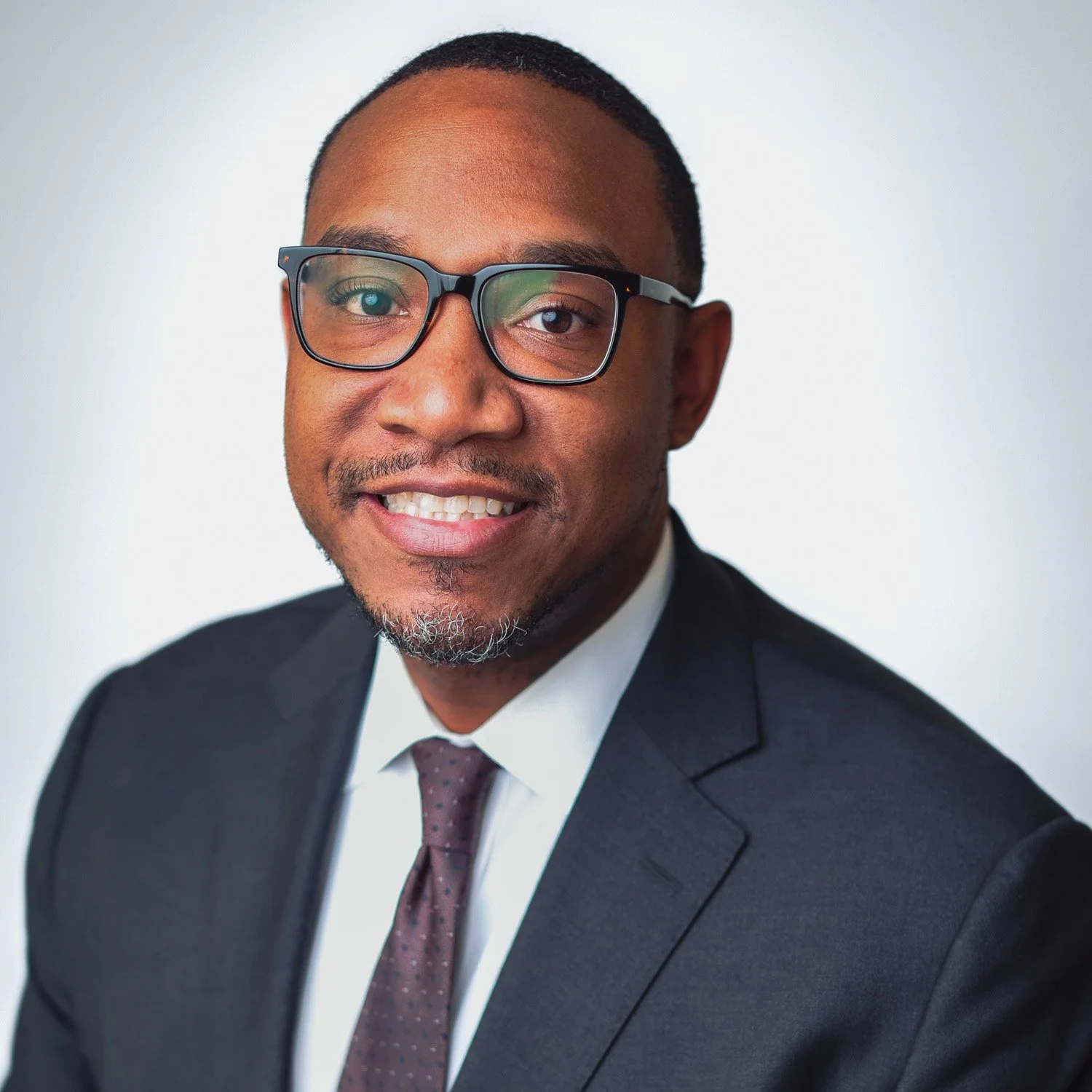
Christian Rhodes is a By All Means Senior Fellow at the EdRedesign Lab at the Harvard Graduate School of Education, and has been a trusted advisor to education leaders across the country for the past 15 years. Christian served as Senior Advisor to U.S. Secretary of Education Dr. Miguel Cardona and as Chief of Staff for the Office of Elementary and Secondary Education, where he led the Department’s efforts to increase access to summer learning and enrichment programs and helped establish a practitioner-focused repository of district and state responses to safely reopening America’s schools. Prior to his federal appointment, Rhodes served as Chief of Staff for Prince George’s County Public Schools in Maryland, a district serving 132,000 students across 210 schools. Currently, Rhodes serves as Chief National Impact Officer at Harlem Children’s Zone. He previously served as Deputy Executive Director of the William Julius Wilson Institute at Harlem Children’s Zone, partnering with communities across the country to help put 1 million young people on the pathway to social and economic mobility.