The American Dream Is the Freedom to Leave — and the Responsibility to Return
As the United States marks its 250th anniversary, the Harvard Graduate School of Education's EdRedesign By All Means Senior Fellows share personal reflections on the American Dream and the work that remains to expand opportunity for all.
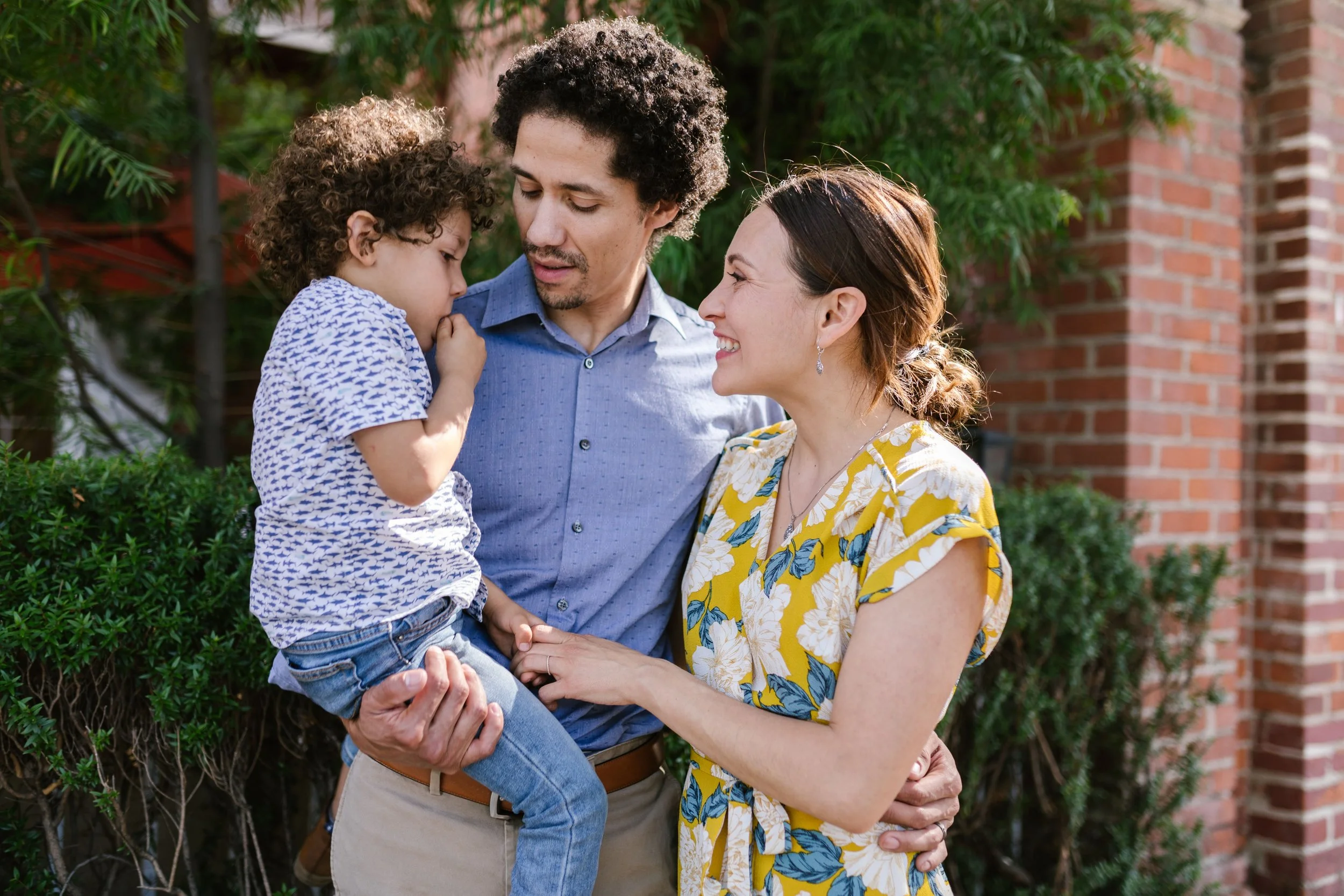
My father returned home from work every night with his clothes soaked through — blood-stained and smelling of animal carcasses — one hand balancing his hard hat and the other ready for an embrace. He was an undocumented immigrant working as a meat cutter in a processing plant, and to anyone else, his appearance might have been proof of exhaustion or limitation. As a child, I thought it looked like strength and ambition. It looked like protection and safety.
To me, he looked like everything I wanted to become. He looked like the American Dream.
I admired the way my father moved through the world with purpose, the way his labor translated into stability for our family, the way sacrifice became love. I would run around the house wearing that white hard hat, imagining myself stepping into that same version of respect and dignity. And every time, my father would stop me.
Taking the hat off my head, he would say, quietly but firmly, I wear this, so you never have to.
At the time, I didn’t understand what he meant. Why wouldn’t he want me to be like him? Why wouldn’t he want me to follow the most visible model of strength I knew? Only later did I understand that his American Dream was not to have me step into his boots, but to create the conditions for me to take a different path. His hope was that I would become something else — something apart from what he had to be. That tension — between admiration and departure, belonging and distancing — became the defining question of my childhood. I also think it defines the American Dream.
Like so many children of immigrants, I grew up straddling two worlds. On one hand, there was where I came from: a family shaped by labor, migration, and survival. On the other hand, there was where I wanted to go: a future that felt undefined, but unmistakably distant from the life I saw up close. Growing up meant constantly negotiating identity — who I was, who I could be, and who I felt I needed to leave behind to become anything at all.
That questioning is not unique to immigrants. Every young person asks it in one form or another. But in the immigrant story, it carries an added weight. You’re chasing something you can’t fully name, guided by a dream that you may not even be able to clearly articulate. For my father, that dream was coming to this country. It was financial stability. It was safety. It was the belief that work and sacrifice could secure something better for his family than what he was leaving behind in Mexico.
For me, the dream took a different shape. It was school. It was distance. It was a future unbound by where I came from. And critically, it was unlocked by someone else’s belief in me — a Communities In Schools (CIS) site coordinator, part of a nonprofit organization operating in my school that connected students to a caring adult who guided them to support, resources, and opportunities. My CIS Coordinator, Mrs. Reyes, helped me see possibilities beyond the narrow lane of what I thought was available to someone like me.
Her belief in me changed everything. It allowed me not only to chase becoming, but unbecoming — to outrun who I was and where I came from as fast as I possibly could. To leave home, context, and identity in the rearview mirror. I felt I needed to shed a layer of skin to unveil a different person, set apart from the community I convinced myself was holding me back. But in many ways, I was chasing the same thing my father had chased: success defined as distance, ambition measured by how far away you could go, progress imagined as separation from your origins.
For a while, it worked. Leaving home felt like proof the American Dream was real. That choice itself — the ability to go, to reinvent, to disengage — felt like freedom. Distance created clarity. Escape created dissonance. As I moved further from where I began, questions of identity came rushing back. Who am I if I am no longer running? What does success mean if it requires erasure? What does a dream cost when it is built on disconnection — from family, from community, from self? I began to realize that to be whole, I needed to integrate my present and my past. That tension — between the dream once imagined and the reality now understood — is where the American Dream lives today for me.
What I eventually learned is that the American Dream was not only the ability to run away. It was the powerful reality that if I ran far enough, the dream would draw me back.
As with my father at age eighteen, I left home believing I might never return. In my case, I boarded a plane for the first time, bound for Stanford University, carrying both my family’s hopes and my own ambition. I did return — with a college degree — but the distance I once thought I needed only clarified what mattered most.
Time and experience forged the parts of me that I once carried with shame — where I came from, the labels others had attached to me — into pillars of strength. No longer did I return home ashamed of the metaphorical dirt and grit that soaked my identity. Who I was, where I came from, and what I’d accomplished became the medallions I wore with pride. They were proof to myself and others of strength and ambition, of what one could achieve with support, protection, and safety. Of the fact that a different future was possible and attainable.
While faraway dreams constructed my childhood, I ultimately chose to come back. I moved into my old room and ran for the San Antonio City Council, where I was elected as the youngest councilmember in the city’s history. The same longing that once pushed me to leave ignited a deeper calling: to commit myself to eight years of service in the community that raised me — the very place I had once been so eager to escape.
At its best, the American Dream has always been about possibility: the belief that circumstances at birth should not determine the arc of a life. But too often, it has been mistaken as a solo pursuit, divorced from systems, supports, and shared responsibility. From community. My story — and my father’s — reveals something different. Neither of us moved forward alone. His labor made my opportunity possible. And my opportunity — my potential — was unlocked because someone showed up inside a public system and believed a different future was within my reach.
That is why, as America celebrates its 250th year, the question is not whether the American Dream still exists. It is whether we are willing to invest in the conditions that make it attainable for everyone. Are we collectively willing to wear the hard hat so that future generations don’t have to?
Children and young people do not lack dreams. What they too often lack is access — to stable adults and integrated supports, to institutions that see them fully and meet them where they are, and to opportunities they need to see to pursue.
Families do not lack aspirations. They lack systems designed to work together rather than in isolation and that can support them and their children. The promise of America cannot rest solely on the myths of individual perseverance, grit, and merit; it must be upheld by collective infrastructure and community. The American Dream is not the freedom to leave one place for another. It is the responsibility to build places worth returning to and remaining in.
Today, I lead the very organization that once found me in a school hallway and unlocked my imagination. That is not coincidence — it is continuity. It is what happens when a nation understands that supporting children, youth, and families is not charity, but strategy. Not sentiment, but a pillar of our shared future. At CIS, we believe every child should have the resources they need to realize their full potential in school and beyond, regardless of their background or circumstances. And every day, across 3,500 schools, our colleagues and community partners work diligently to make a different future — that American Dream of possibilities and freedom — one that is attainable to children no matter their circumstances.
What keeps me going is a lesson my father taught me long before I understood it. Much of his life was spent working with his hands — from cutting meat to landscaping, planting trees, and preparing soil to earn extra income. As he worked, he would repeat the same line: Do you know the best time to plant an oak tree? Fifty years ago. The second-best time is now.
Today, CIS is fifty years old, reaching more than two million students across the country. And still, too many children remain disconnected from the American Dream — not because they lack aspiration, but because the relationship-based supports that counteract poverty and isolation are treated as optional rather than essential and funded accordingly. The urgency is this: we no longer have the luxury of waiting. The work of preparing the soil — of showing up early and consistently for young people — cannot be deferred to the next generation.
My father wore a hard hat so I wouldn’t have to. The question before us now is whether we are willing to do the same — for the next generation, and the generations after that. Are we willing as a society to create the conditions for our children to have different, better outcomes than us or are we content solely to reproduce for them what we experienced? Because the truest measure of the American Dream is not how far any one of us can run, but how intentionally we make opportunity inescapable for those running behind us.
About the Author:
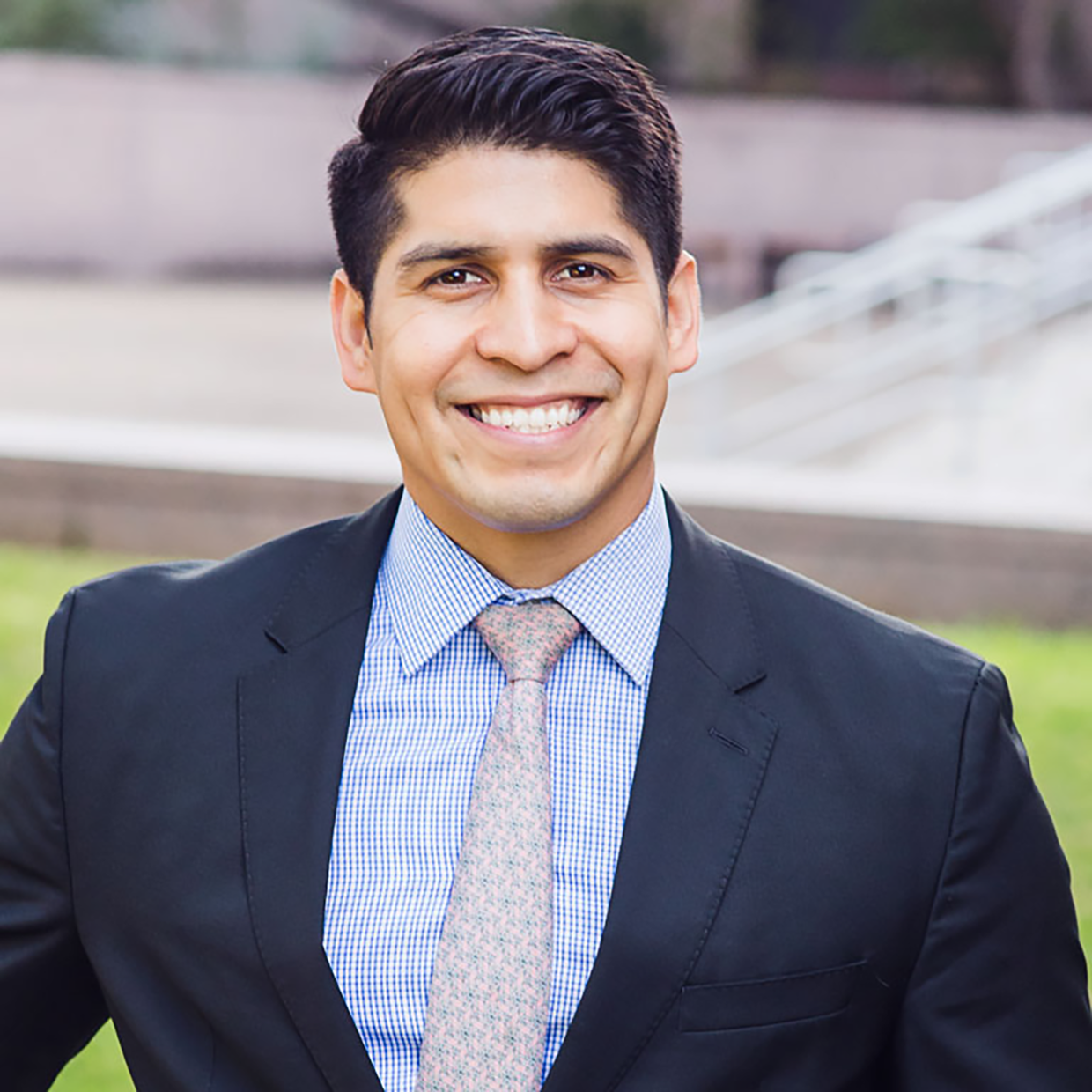
Rey Saldaña is a By All Means Senior Fellow at The EdRedesign Lab at Harvard Graduate School of Education, and the President and CEO of Communities In Schools® (CIS®), a national organization dedicated to surrounding students with the support they need to stay in school and succeed. A CIS alumnus, he brings a unique, firsthand perspective to the role, leading efforts to expand impact and opportunity for students nationwide. Prior to this role, he served as Regional Advocacy Director for Raise Your Hand Texas Foundation and chaired the San Antonio Metropolitan Transit Agency (VIA).
Saldaña previously served four terms on the San Antonio City Council after first being elected at age 24, becoming the youngest councilmember in the city’s history. During his tenure, he advanced initiatives in early childhood education, public transportation, access to parks and community clinics, and improvements to the truancy system, while also chairing the Intergovernmental Relations Committee. In addition to his public service, he has held academic and leadership roles with Trinity University, Palo Alto College, the University of Texas at San Antonio, and KIPP San Antonio Public Schools, and served on the CIS National Board of Directors as its first alumni member. He holds a master’s degree from Stanford University’s Graduate School of Education and two bachelor’s degrees from Stanford University.