The American Dream, Higher Education, and the Work of Economic Mobility
As the United States marks its 250th anniversary, the Harvard Graduate School of Education's EdRedesign By All Means Senior Fellows share personal reflections on the American Dream and the work that remains to expand opportunity for all.

As the son of a Louisiana sharecropper and a self-made entrepreneur, my father, Elson Nash, migrated west to chase the kind of opportunity the American Dream advertised. He worked by day, pursued schooling at night, advanced through civil service, and even took real-estate courses that eventually helped him build an apartment complex. His life reflected the American Dream’s basic logic: effort plus learning could expand economic options.
My father was excited to apply to college in the 1940’s. Berkeley, to be specific. But, his veteran counselors blocked his dream. Few Black students could “handle” the rigor of the University of California, Berkeley, they warned him. This was not a rejection letter, per se. It was gatekeeping by guidance — an early, informal barrier that still shapes who even sees selective public universities as possible. It was also the catalyst that would shape my family’s legacy for generations to come.
Institutional and structural barriers come in many shapes and sizes. My father’s educational opportunity was derailed long before admission by institutional representatives who wielded their authority to influence who was worthy enough to apply. Rather than accept defeat, my father turned disappointment into determination: his children would earn the degrees he was advised to forgo. That decision — personal, familial, and strategic — points to the national challenge at 250: America cannot rely on extraordinary resilience to compensate for ordinary institutional obstacles. If the American Dream is to remain credible, pathways to college must be designed so that talented students are invited in rather than subtly pushed out.
Decades later, I matriculated into Berkeley through a more formal access route: a pre-college science program for minority students. The program blended STEM coursework, SAT preparation, and application support into a pipeline that positioned Berkeley as the destination — an emblem of what was possible when academic talent met opportunity.
Yet once I was admitted, the challenge changed shape. Like many underrepresented students in the sciences, I ran into the “gateway” design of introductory STEM: concurrent chemistry, math, and biology sequences that compress risk into the first year and punish small gaps in foundational knowledge with big consequences. When the early curriculum functions as a high-stakes filter, universities can convert access into attrition — especially at large public research institutions where help can be hard to find and competition can be normalized as rigor.
Fortunately, I found support that helped me avoid getting swept out of STEM. The Professional Development Program (PDP), associated with Dr. Uri Treisman’s collaborative-learning model, was not just tutoring. It paired high expectations with community — peer-led problem solving, routine practice, mentoring, and a cohort experience that made academic struggle a shared experience rather than an isolating one. The lesson for the nation’s mobility agenda is clear: the degree’s value to a student’s economic future depends on whether institutions invest in the conditions that make success likely.
Being at Berkeley was familiar — I had been going to the university through pre-college programming since high school. The high school summer programming created an intimate environment of learning; our own bubble filled with buildings and minority administrators I came to know well. But the familiarity quickly turned to distance when a whole city of students arrived for my freshman academic year.
The unfamiliarity worsened with a later discovery of dyslexia that was even more impactful to my educational experience. Dyslexia affected how I processed dense reading, lecture-heavy instruction, and timed exams. From the outside, my learning difference was viewed through the lens of capacity. But the issue was not capacity; it was fit between student and institutional design. When universities treat disability support as peripheral — something students must discover, request, and navigate alone — they risk losing capable learners who could thrive with accessible instruction and assessments. A lack of disability support within institutions can serve as a hidden barrier affecting upward mobility at scale.
True to my father’s dream, my son followed in my footsteps and will matriculate into Berkeley as a law student this year. But Elson Amiri Nash’s trajectory to the tree-lined street of Telegraph Avenue was a different experience from my father and me. My father had little support academically to pursue his dreams — the result of the economic and educational impact of Jim Crow laws on Black families in America. But his sacrifices and hard work opened different doors for me, and my sacrifices and hard work opened different doors for my son.
Chief amongst them was the way my wife and I were able to respond to and provide personalized learning experiences for our son. As I built a career in education and community initiatives, my wife and I translated our accumulated learning into the educational design of our son’s early years. We realized early on that our son struggled to thrive in the conventional learning environment class offered. His learning style was of questioning and exploring and we were keenly aware of the clashes that could ensue from the mismatch between expected routines and a student who questioned most things. Our family responded by homeschooling him through middle school. Our son’s days consisted of blended home-school groups, music study, hands-on science, and frequent museum and gallery visits, cultivating both his academic curiosity and cultural literacy. For high school, he sought a broader peer environment and enrolled in an arts magnet program that paired rigorous college-preparatory coursework with sustained training in the arts. He focused on classical piano while also practicing writing and poetry performance.
A liberal arts education at Brown University broadened his writing, civic engagement, and professional direction. By the time he applied for law school at Berkeley, the school was no longer a symbol of discouragement. It was a place of belonging. My son’s admission to Berkeley’s law program completed my father’s long-held dream and demonstrated what economic mobility through education could look like in practice: a family converts one generation’s blocked opportunity into succeeding generations’ credentials, voice, and professional leverage.
As the United States celebrates its 250th anniversary, the celebration invites more than a backward look at founding ideals. It asks whether the country can still deliver on one of its most powerful promises: that where you start should not determine where you finish. Today, that promise is under strain. Families feel the distance between hard work and economic security widening, and many communities experience opportunity as something unevenly distributed, inherited, or rationed. One urgent challenge for the nation at 250, then, is restoring credible pathways to economic mobility — pathways that work across race, class, geography, and learning differences.
Higher education has long been central to the American Dream: earn a degree, gain skills and social capital, and move into greater stability than the generation before. But that only holds when colleges and universities are both accessible and navigable — when admission is possible, when the first year does not function as a sorting mechanism, and when supports match the realities of students’ lives.
The three-generation experience of the Nash family, repeatedly intersecting with the University of California, Berkeley, demonstrates that the American Dream can be blocked by institutional signals — and that families and institutions can redesign the pathway so that mobility becomes a realistic outcome rather than a slogan.
At 250, the American Dream cannot be defended only as an idea; it must be renewed as an operating system. My family’s story suggests several concrete moves for higher education leaders and policymakers who want mobility to be more than rhetoric:
Treat advising as an equity lever. Train counselors and advisors to avoid “fit” narratives that function as gatekeeping; track advising outcomes; and make pathways to selective programs transparent.
Redesign gateway courses so they are gateways, not trapdoors. Improve sequencing; expand active learning; offer co-requisite supports; and align grading and assessment with mastery rather than weeding.
Scale structured academic communities. Invest in cohort-based, peer-supported models that normalize collaboration, sustained practice, and belonging alongside rigor.
Mainstream accessibility. Make disability-related supports easier to access; strengthen screenings and referrals where appropriate; and adopt inclusive course design that reduces needless barriers for students with learning differences.
Build mobility ecosystems with K-12 systems and communities. Expand bridge programs, early research exposure, and partnerships that help students arrive prepared — and help families who lack time and insider knowledge to navigate the system.
The United States will mark 250 years with ceremonies, stories, and deserved pride. But the most persuasive tribute to the nation’s founding promises is a renewed commitment to upward mobility — especially for those historically told, directly or indirectly, that elite opportunity is not for them. Higher education remains one of the strongest mechanisms the country has for turning talent into economic security and civic contribution. It is also one of the easiest places for invisible barriers to accumulate: discouraging messages, first-year structures that concentrate risk, and support systems that students may only discover by accident.
My family’s three-generation arc shows what becomes possible when aspiration is sustained and institutions provide structures that translate aspiration into completion. As America approaches its semiquincentennial, the urgent challenge is not simply to celebrate the American Dream, but to make it accessible — to ensure that education reliably delivers economic mobility across generations. Doing so would be a legacy worthy of the first 250 years, and a down payment on the next 250.
About the Author:
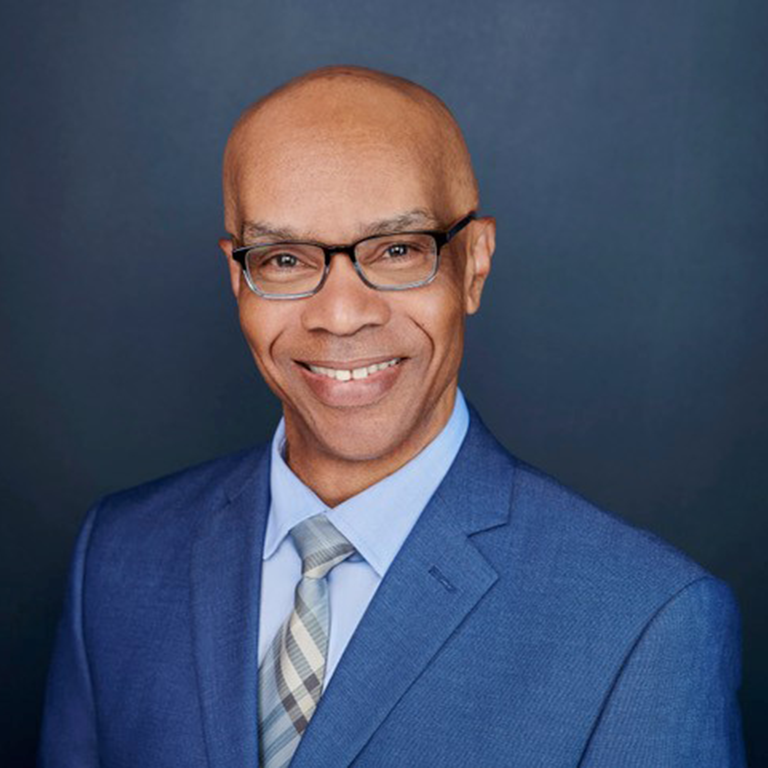
Elson B. Nash is a By All Means Senior Fellow at The EdRedesign Lab at Harvard Graduate School of Education, and has worked in the education and non-profit fields for over 30 years. He started his career with the Carter Center’s first domestic initiative called the Atlanta Project (TAP). After TAP Elson worked in various capacities in higher education at the local, state and national levels. Elson’s career as a funder began at Ashoka-Innovators for the Public where he searched and selected social entrepreneurs in the U.S. and Canada. From Ashoka Elson went to the Corporation for National and Community Service (CNCS) where he started as a program coordinator for Learn and Serve America. His tenure at CNCS ended after 10 years where he ultimately served as the Deputy Director of the White House Council for Community Solutions.
In July of 2012, Elson began as Team Lead for the Promise Neighborhoods and Full-Service Community Schools programs at the U.S. Department of Education. After serving as the Team Lead for nine years, Elson became Director of the $450M School Choice and Improvement Program Division which included seven programs. On December 31, 2024, Elson retired from the Federal government after 22 years. Elson started a new chapter as Senior Consultant, Strategic Partnership with the Education Commission of the States on February 3rd, 2025. He is currently a Senior Fellow at Blue Meridian Partners as of September 1, 2025.