The American Dream Begins with Flourishing Children
As the United States marks its 250th anniversary, the Harvard Graduate School of Education's EdRedesign By All Means Senior Fellows share personal reflections on the American Dream and the work that remains to expand opportunity for all.
My third-grade year began in a new town, at a new school, and with a high-stakes test. School administrators told my mother my previous school in Newark, NJ (a predominantly Black community), “[w]asn’t as advanced as schools in Scotch Plains” (the predominantly white community we were moving to). They added that it would be best for my sister and me to repeat a grade. What my third-grade mind heard them tell my mother was, “Your children aren’t smart enough.”
My mother fought back and insisted the school test us first. If we passed, we wouldn’t be held back. If we failed, we would repeat a grade. I knew, in the way children pick up on such things, that the white teachers expected us to fail. I also knew my mother would be embarrassed if we didn’t pass. My sister, Tishunda, and I passed — her with flying colors, but I barely made the cut. I felt what the administrators implied: I just wasn’t smart enough!
In 1899’s The School and the Society, John Dewey wrote: “What the best and wisest parent wants for his own child, that must the community want for all of its children. Any other ideal for our schools is narrow and unlovely; acted upon, it destroys our democracy.”
My introduction to a new school in the third grade with different racial and socioeconomic demographics than those I was used to was an unlovely experience. And one that would impact my academic and early professional career.
Flourishing children begin with early development. As noted by child psychologist Urie Bronfenbrenner, “In order to develop normally, a child requires progressively more complex joint activity with one or more adults who have an irrational emotional relationship with the child. Somebody's got to be crazy about that kid. That's number one. First, last, and always.”
For me, that adult was my third-grade teacher in Scotch Plains. Ms. Dunn was white and had a knack for making everyone feel special. In her class, I was called by my name, seen fully, and celebrated for my brilliance. I felt limitless — capable of solving the most complex multiplication problems and taking down any fraction with ease. I remember how I loved working hard to affirm Ms. Dunn’s high expectations of me — expectations I’d begun to hold for myself.
But that sense of limitlessness and brilliance faded with each successive grade. Ms. Dunn was an outlier. Without those external high expectations and support, I returned to believing the negative things my 4th through 12th grade teachers and school administrators seemed to believe about me. My parents tried to help, but it was hard for them to give me what I needed. They couldn’t be for my sister and me what they themselves had never experienced. Although they knew education was the key to our upward mobility, they too were caught in the generational cycle of America’s waste system, where the education and the flourishing of only some children mattered, but not if you looked like us.
My parents grew up as sharecroppers in the South. My father, who attended a one room K-12 grade schoolhouse in Blakely, Georgia (a small city with the 2nd highest number of lynchings in the state) never finished the 9th grade. He grew up being called the “N”-word so much that he used to say he thought the racial slur was his middle name. My mother attended college near Birmingham, Alabama, in 1960 (dubbed “Bombingham” due to the high number of unsolved bombings targeting African Americans), only to be smuggled out her first year by caring faculty following racialized death threats from the locals. Her pursuit of education came to an end unexpectedly. Her brilliance, interrupted. She and my father later joined the millions of African Americans who were a part of the Great Migration, driven north by the promise of economic opportunity and safety.
What I understand now is that when children feel seen, supported, unconditionally loved, capable, and expected to do well, they have the foundation to flourish as human beings. When children flourish, so does our society, as those children grow up to contribute positively to our shared community, bask in shared prosperity, and work to secure and maintain our democracy.
On the other hand, when children (who, too often, are Black, brown, and/or low-income) are treated like I was, it diminishes their sense of efficacy. They begin, tragically, to believe in their own downgraded potential and limited life possibilities.
After surviving the low expectations and limited possibilities of elementary and high school, I went on to attend two Historically Black Colleges and Universities (HBCUs) for my bachelor’s and master’s. In college, I had an army of caring adults who wouldn’t let me fail because they understood the stakes for myself and society if I did. I felt seen and supported once again. Those adults expected the world from me and, like with Ms. Dunn, I delivered.
My story and my parents’ stories illustrate a significant point about what we continue to ignore as a nation. Not enough of us actively prioritize the flourishing of our children through the equitable education of ALL children, especially children of color and low-income children.
Today, academic inequity grows as the “education gap” (both white-Black and income related) swells. For example, according to the NAEP scores (our national report card or assessment of educational progress), while the highest achieving students are often white and Asian and more affluent (61% white and 14% Asian, respectively, with less than 25% low-income), the bottom 25% of students are often students of color and low-income (25% Black, 40%+ Hispanic, and 25% white, with more than 75% low-income).
Across cities like mine in Minneapolis, the education gap is much, much steeper. For example, 75% of white children read at grade level, compared to only 17% of Black students across the district. These gaps are foundational to all the other racial gaps we see in health, income, wealth, well-being, safety, life expectancy, power, and representation in every field and industry in our country. Added to that, there is a growing youth mental health crisis — depression, suicidality, isolation, and more — with feelings of persistent sadness and hopelessness up 40% among youth. And all of this is happening against the backdrop of a growing technological divide, and an artificial intelligence frenzy that has affected every corner of society.
Improving these statistics will impact more than just numbers on a page, it will change the trajectory of scholars' and families’ lives, offer positive long-term economic impact on the local and state economy, and ultimately bolster our fledgling democracy. A recent study by a Harvard-Cornell research team revealed that when low-income children receive relationship-based personalized supports and access to caring adults, they do better in school and their adult lifetime earnings increase. Those supports help increase children’s economic opportunities as adults and benefit local economies through taxes and spending.
When you combine human capital with social and financial capital, you fuel equitable human flourishing, generational wealth, and well-being. You create an environment where children are seen, believed in, and supported. Where they know with certainty that they are smart, limitless, and the greatest asset of their country.
Today, I am the President and CEO of Northside Achievement Zone (NAZ), where for the last 15-years, we’ve been committed to monumental transformation. Our goal: to “create generational wealth by powering potential and purpose (human flourishing) on the Northside.” Rooted in high expectations and high supports for children, we create a culture of achievement where all our children graduate high school and college prepared to thrive professionally and personally. They enter adulthood equipped to succeed in their careers and create generational wealth and well-being.
We accomplish this through the support we provide our scholars at every stage from pre-birth to career to ensure that they all have an equitable opportunity to flourish as individuals and as part of society. By ensuring every child has an individualized academic and social emotional plan for success, academically effective after school and summer opportunities, and high dosage tutoring, and their parents receive education and training in effective parenting, advocacy, and college preparation (along with a litany of other services and supports), we create an environment where our scholars feel seen and supported. Where they are expected to do well. Where they can flourish.
At 250 years old, America faces a defining question: What does the American Dream mean today and who is it really for? It has never been about individual success — on the contrary, the American Dream has always been about collective flourishing. Today, that dream remains out of reach for too many children — especially Black and low-income children — and will continue to be so unless we fundamentally change how we develop human potential and create generational wealth.
For all the flaws and valid criticisms of our Founding Fathers, I still believe in the glorious words of our Constitution and its preamble: "We the People of the United States, in Order to form a more perfect Union, establish Justice, insure domestic Tranquility, provide for the common defense, promote the general Welfare, and secure the Blessings of Liberty to ourselves and our Posterity, do ordain and establish this Constitution for the United States of America…”
This for me is the essence of the American Dream: promising to do the right things to make our union more perfect with each successive generation. We must be the ones to execute those noble promises made 250 years ago — and we must do it with fidelity and integrity. For America to ensure that the American Dream is in reach of everyone, we must commit to the equitable flourishing of all our children. Only then can we strengthen and sustain our democracy. Education and wealth building have long been the tools for liberation, equity, and agency in America, and must be so for all children if we’re to witness and share in the prosperity of our country.
In 1776, esteemed forefather, Thomas Paine wrote in Common Sense, “We have it within our power to begin the world over again.” 250 years later, we still do! By ensuring equitable educational outcomes for all children regardless of race or socioeconomic background, and increasing economic mobility through generational wealth, we can sustain America’s democracy and economy and a prosperous future for all. Our children and our democracy deserve nothing less.
About the Author:
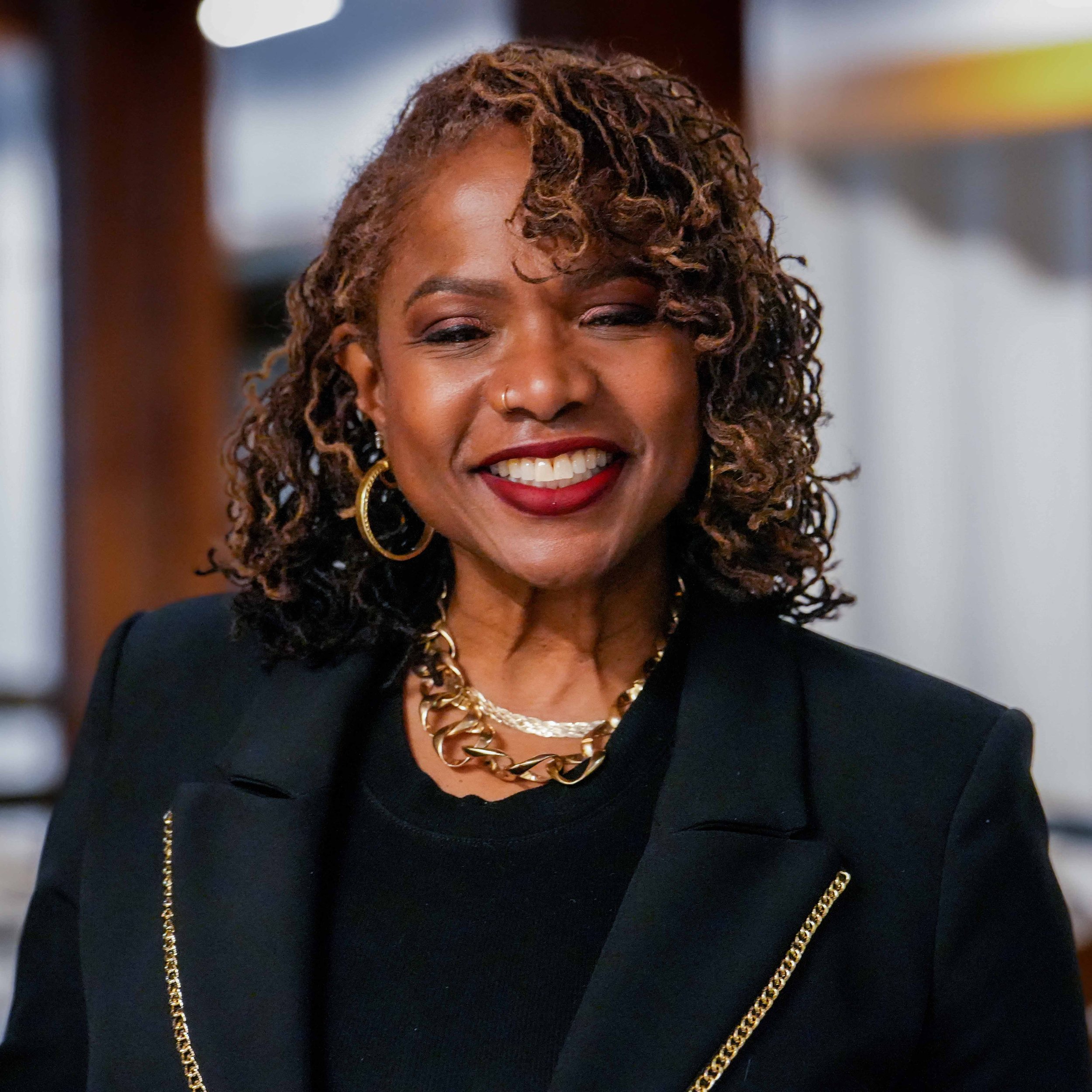
Sondra Samuels is a By All Means Senior Fellow at the EdRedesign Lab at the Harvard Graduate School of Education, the Co-founder, President & CEO of the Northside Achievement Zone (NAZ). In partnership with parents, students, non-profits, schools, and staff, she leads a revolutionary culture shift in North Minneapolis focused on creating generational wealth through education, family stability, and racial equity. A 29-year resident of North Minneapolis and a national leader committed to comprehensive placed-based solutions and anti-racist results-based accountability, Samuels and her team work tirelessly to ensure the integration of effective cradle-to-career solutions across the NAZ Collaborative. Under her leadership, NAZ was named a federal Promise Neighborhood, achieved membership status of the StriveTogether Network, and has become a nationally recognized model for comprehensive place-based solutions for community transformation and systems change.
Samuels co-founded the country’s first statewide placed-based coalition, the Education Partnership Coalition, composed of nine place-based, cradle-to-career organizations across Minnesota, which has secured over $36M in state funding over a 10-year period to collectively support over 100,000 students in achieving academic and life success. She also serves on the Minneapolis Federal Reserve’s Inclusion Advisory Board, the Leadership Team of Generation Next, and the Great MN Schools Board of Directors. Sondra was recently named to Time Magazine’s inaugural Visionaries list honoring change-makers helping children and young people reach their full potential. She is a graduate of two Historically Black Colleges and Universities (HBCUs), having received her bachelor’s degree from Morgan State University and her master’s from Clark Atlanta University School of Business.