
American Children are Falling Out of Love with History – Here’s How to Bring Them Back
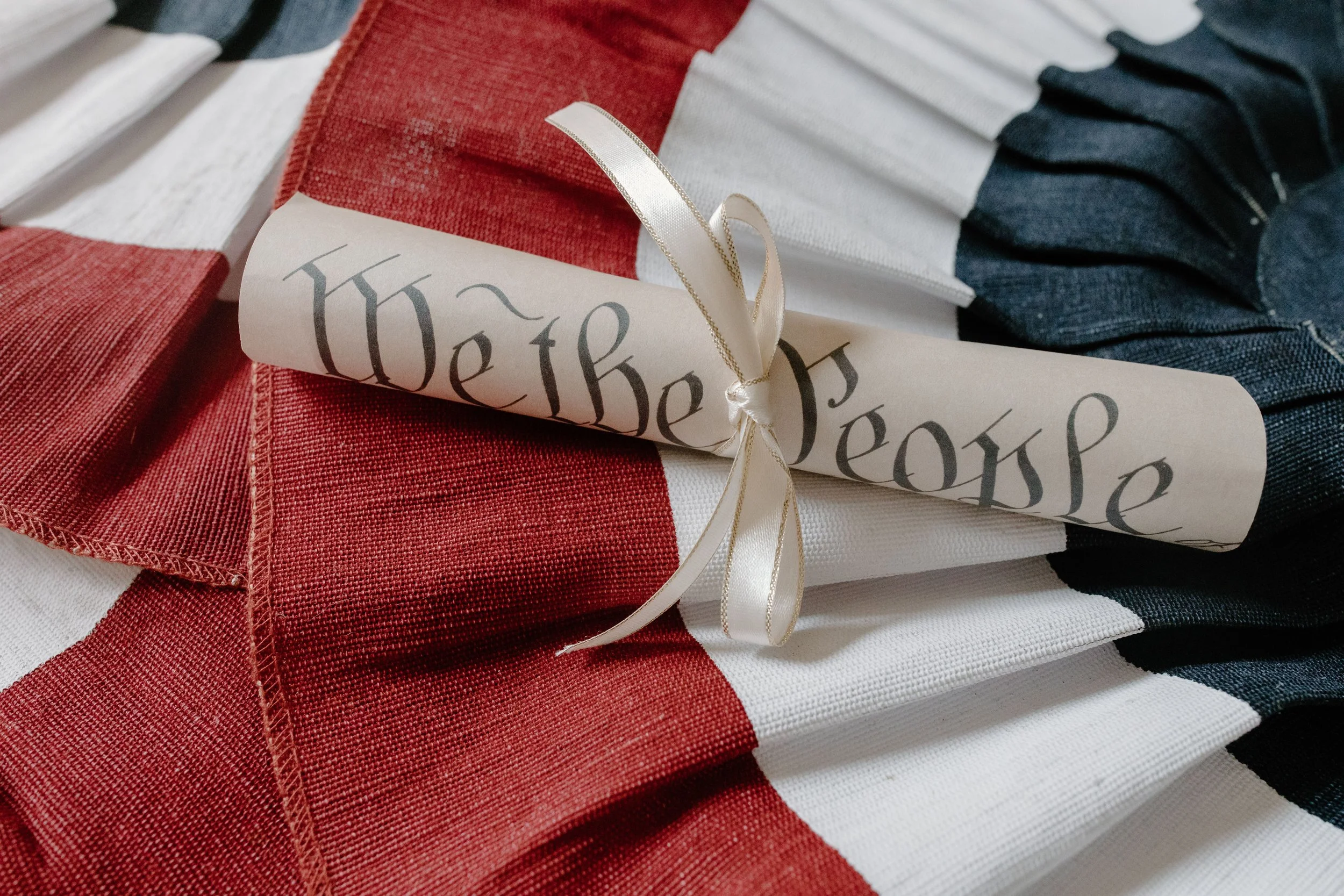
It’s our country’s big, important anniversary. A celebration of all we stand for, not to be seen again for generations. While we are eager to celebrate, many of us feel distrustful of our politicians and worried about war, inflation, and the sustainability of our planet. The news is filled with culture war battles, debates about diversity and immigration, and doubts about whether anyone in business or government tells the truth anymore.
You may think I am talking about America today, but I write about 1976, the last time our nation celebrated a semicentennial.
As a 61-year-old reflecting on the 250th anniversary, I remember the backdrop of our Bicentennial as an 11-year-old boy growing up in a suburb of Boston. We had just endured the first large-scale military defeat in our history, compounded by revelations that military leadership misled the public about the war in Vietnam. The average inflation rate in the late 1970s was 8.1% and a 30-year mortgage cost nearly 9% interest. Just two years earlier, for the first time in our country’s history, a president had resigned to avoid impeachment as the American public absorbed the fallout of Watergate.
In this tense environment, a question arose: Was it the right time to celebrate the nation’s birthday?
The answer was then, as it should be now, a resounding yes.
History needs to be public in big ways and small
The Bicentennial showed up in everyday life. From the police officer next door who taped an American flag to his cruiser, to the plumber across the street who painted his whole truck red, white, and blue, and to every student who collected tacky 200th pens, pins, and commemorative quarters – the celebration was alive everywhere. Even the pizza boxes had an American flag and a “Happy Bicentennial” logo, which somehow made the pizza taste better.
My school friends and I raced to see who could be the first to memorize the presidents in order. At lunch, we competed for who could scribe the most authentic “John Hancock” signature. Without phones glued to our hands, some of us even read books such as Johnny Tremain that summer.
Schools taught about the Declaration of Independence and the Constitution, of course. More importantly, family members retold stories of how the Revolution was won and discussed the significance of the founding fathers. They had been taught the same from the prior generation.
This celebration wasn’t orchestrated by our elected leaders. It came from the community, liberal and conservative citizens alike, living in red and blue states. People who could be called, in today’s vernacular, Purple Patriots. Conversations were had with these elders, at the dinner table, at a ballgame, at church, even in our backyards when we ran through the mud pretending to be Minutemen. All of us were mesmerized by the story of our founding.
What can we do now to celebrate history and engage the next generation?
At the moment, it is clear we are not doing enough. Even in my state of Massachusetts, only 39% of students met expectations on the first-ever civics statewide standardized test administered in 2025, and 16% failed entirely. Nationwide, historical literacy is declining, with a Cato Institute survey finding that a majority of Americans don’t know why the American colonies adopted the Declaration of Independence to separate from Britain 250 years ago.
This should concern anyone, like me, who believes education is the foundation of a healthy democracy. Historical literacy, after all, is the key ingredient to informed citizenship and without that foundation, our democracy cannot thrive.
Patriotism, and civic engagement more broadly, needs an innovative, entrepreneurial ecosystem to engage the next generation
Full disclosure: my family gives to or invests in organizations working in this space. After stepping down as CEO of Curriculum Associates, I chose to focus my time and resources on public history and civic education, drawing on my experience in K-12 education to support more engaging and accessible ways to teach history.
Living near Boston’s Freedom Trail, I often see students moving quietly through historic sites looking at dense exhibits that struggle to hold their attention. Too often, the opportunity to ignite curiosity is lost. Encouragingly, a new generation of approaches is emerging – ones that shift history from passive observation to active engagement.
Experiential, immersive learning is bringing history to life. At sites like Mount Vernon and Fort Ticonderoga, students step into real-world scenarios, working through decisions faced by historical figures or engaging directly with reenactments and demonstrations. Increasingly, historic sites are also experimenting with more sensory, narrative-driven formats. At Boston’s Old South Meeting House, for example, a digital reenactment experience (Ruckus!) uses sound, light, and projection to immerse visitors in the debates that helped spark the American Revolution.
Digital and AI-enabled tools are creating new entry points. Interactive technologies now allow students to engage directly with historical voices – grounded in primary sources – in ways that feel immediate and relevant to a generation shaped by interactivity. At institutions like Boston’s African American History Museum, for example, visitors can interact with an AI-driven Frederick Douglass based on his own autobiography.
Scalable, classroom-centered innovation is equally important. Platforms like iCivics show how high-quality civics education can reach millions of students through accessible curriculum and game-based learning, meeting teachers and students where they are.
New forms of storytelling and public exhibition are also reshaping engagement. Multimedia installations and digital reenactments are transforming how historical moments are experienced, making them more dynamic and emotionally resonant.
Finally, expanding access to primary sources may be one of the most transformative shifts ahead. Advances in archival processing, through platforms such as Historiq, are beginning to reduce the time required to digitize and organize historical materials, making local documents and artifacts far more accessible. Emerging location-based tools such as PastPort will soon connect historical content to physical places, allowing users to point their phone at a grave, statue, or building and hear directly from an avatar of a historical figure. That means in our hands we can not only learn about the lives of Abigail Adams, George Washington and Ben Franklin, but have them as our tour guides.
Together, these innovations can make history more democratic and more personal. If we want the next generation to engage meaningfully with history, we must meet them with experiences that reflect the world they inhabit.
You own this
As part of my civic work, I have had the great honor of working with former Joint Chiefs Chair General Joseph Dunford to create a presidential center for John Adams, that also highlights the lives of Abigail, John Quincy and other family members. In one conversation, as we were considering a vision statement for the organization, the general told us to consider the slogan “You own this.”
To me, “You own this” refers to our collective responsibility to keep our democracy nourished and our civic institutions, and civic education, strong. At the time I heard the general make that statement I had been complaining about the lack of K-12 programming for the 250th, wanting to whine about the lack of planning I had seen in our schools, with our politicians, and among our business leaders.
But the general’s prodding led me to try to do something myself. In January, I created, with the support of iCivics and Fidelity, a Massachusetts-wide 8th grade 250-second video contest based on the first two paragraphs of the Declaration of Independence. The goal was to give 8th graders agency and meet them where they are in hopes of getting them to actually read the original text of the Declaration of Independence.
The “We Declare!” contest was more popular than I ever imagined, with thousands of students participating. Both teachers and students report that this simple contest has led them to engage with and learn more about our founding document.
General Dunford knows well what late historian David McCullough once said, “Are we ready to accept the reality that in a government of the people it is not some longed-for leader who will save the day? If we’re looking for leadership, the place to look is in the mirror.”
With the 250th anniversary, the mirror is right in front of us. Rebuilding historical literacy is not someone else’s responsibility, it belongs to all of us. In classrooms, homes, museums and neighborhoods. Every step we take to teach history well is an investment in a stronger, more resilient democracy. The question is whether we will rise to the responsibility that history and democracy demand.
As an 11-year-old, I celebrated America’s 200th birthday. I learned the importance of engaging with our nation’s history. It brought me closer to my community and filled me with pride to celebrate an incredible milestone. I look forward to celebrating yet another milestone this summer.
About the Author:

Rob Waldron is the former CEO of Boston-based edtech company Curriculum Associates, chair of Historiq and a board member of Massachusetts Historical Society, the Boston Foundation and the Adams Presidential Center.