
Why Peace in Sudan Matters for Security and Global Food Supply
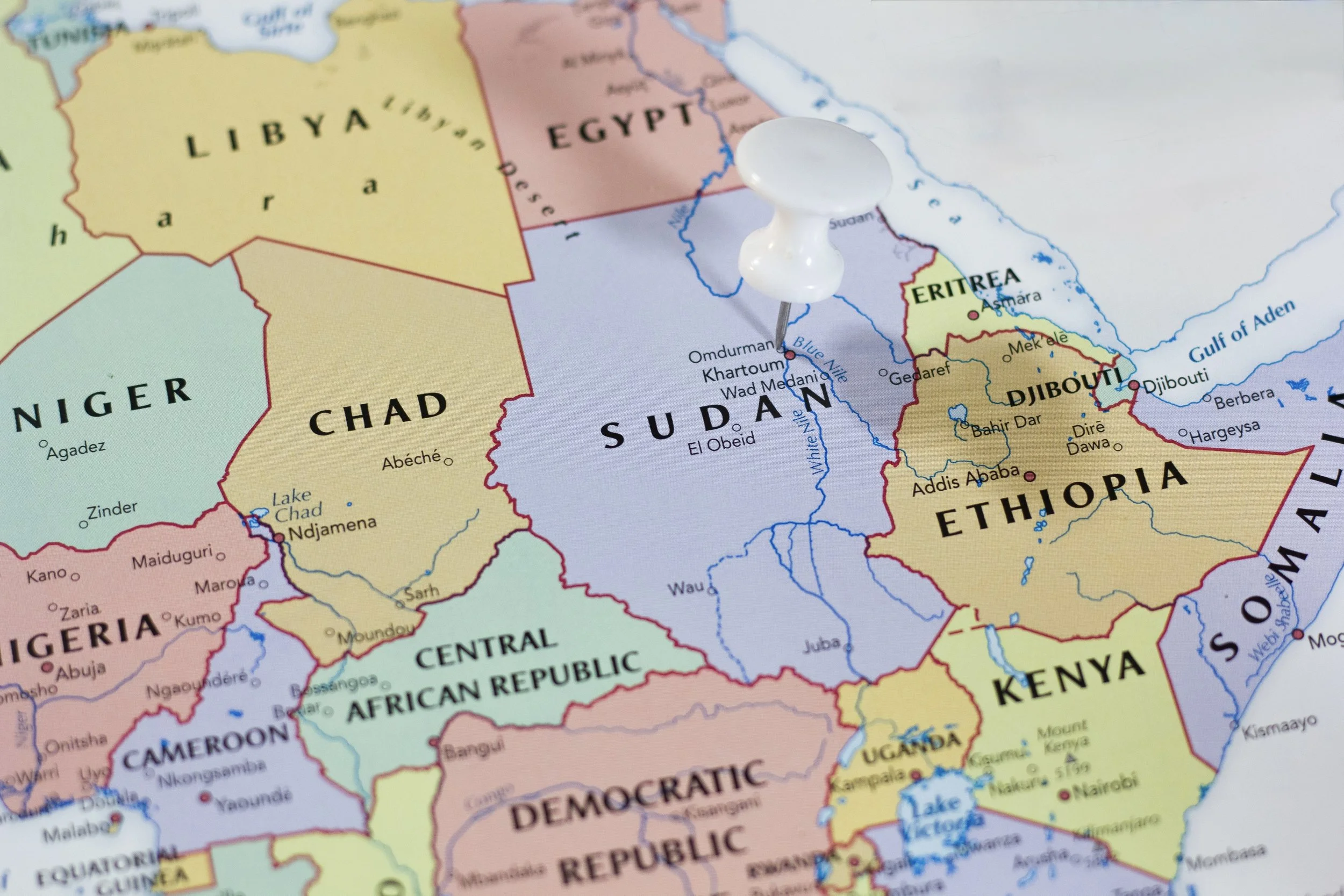
Credit: sharafmaksumov - stock.adobe.com
Ending the civil war in Sudan has never looked more challenging. What began as a domestic power struggle quickly spiralled into one of the world’s deadliest civil wars with rival factions carving the country in two. The conflict continues to hollow out cities, starve entire communities, and allow foreign powers and non-state actors to exploit the country’s immense strategic and economic potential.
But Sudan is no typical fragile state. It has held three republics before. It knows elections, and it knows democratic institutions. And it has a population that has mobilized, again and again, through peaceful revolution, for civilian rule. In other words, Democracy is not an experiment for Sudan; it’s a muscle memory. And the path is well trodden: the United States, Germany, and Switzerland offer distinct federal models whose core principles can be adapted to Sudan’s context.
Its diaspora, scientists, physicians, engineers, agronomists, economists, stretching across the UK, Ireland, the Gulf and beyond are ready to return. And when peace arrives, their skills, investment, and networks will be critical. Sudan’s greatest resource is its people, waiting for a chance to plug back into their own country. The Sudanese are ready to do business, and at a time of global uncertainty and regional fragility, the dividends of peace are greater than many realise.
The following six reasons stand out:
Regional Security: With open war once again scarring neighbouring states, Sudan’s latent power in the region should not be underestimated. Pivoting from a local security vacuum towards a long-term provider of securitywill require a fundamental reimagining of the role Sudan can play in ensuring that the Red Sea’s vital trade arteries remains open to the world. Ending hostilities would help regional power brokers secure a peace dividend for themselves. By way of example, Sudan can partner with the Gulf Cooperation Council on the one hand and its African neighbours and Egypt on the other in order to foster both domestic and regional political stability. With proper security guarantees in place, Sudan can begin serving as a key partner in the Red Sea security architecture.
Trade: Geography makes Sudan a natural commercial hub ready to bridge Africa and the Gulf. The country’s 530-mile stretch of Red Sea coastline fronts the world’s fourth busiest shipping lane, a choke point for global trade, energy, and food security. Port Sudan alone, in its hampered capacity, handles around 90% of Sudan’s total trade per year. Sudan can link its landlocked African neighbours (Central African Republic, Chad, and South Sudan) to the sea via a series of new ports. With investment in railway tracks, river ports and dry freight corridors, Sudan has the potential to become the Africa’s eastern commercial gateway.
Livestock and Agriculture: Sudan is a potential game-changer in the fight against growing world food insecurity and rising food prices. The country’s 200 million acres of fertile land straddling the Nile is easily the world’s most underused yet strategically located food basket. Compared to Ukraine, where conflict has ravaged a good portion of its 41.3 million hectares of arable land, Sudan boasts an agricultural potential nearly triple that size. With targeted investment from the U.S., Egypt, Saudi Arabia, and the EU, Sudan’s emerging agritech sector could scale up irrigation and modern farming, boosting productivity and helping the country lead in testing new investment models.
Natural Resources: Sudan’s civil war simply cannot be separated from the generations-long scramble for natural resources that is becoming more critical to global supply chains. Alongside its great mineral and oil wealth, Sudan dominates the global gum arabic market, a chemical agent used in everything from soft drinks to medicines and cosmetics. Steps to formalize Sudan’s gum arabic production along with reforms in resource governance will allow the country’s industries to flourish and contribute to global value chains and thus open the door to more high-value exports.
Energy: The sun-exposed lands of Sudan, its dam infrastructure and proximity to energy-hungry neighbours, make it a renewable and conventional powerhouse. Flagship projects like the African Development Bank’s Desert to Power stretching across the Sahel is a sign of hope for the entire region. Sustainable peace could stabilize eastern Sudan, attract energy investment, and turn the country into an energy transmission hub for North and Central Africa and even link to Gulf and European energy markets.
Displacement and Human Trafficking: Sudan is a natural buffer against irregular migration and human trafficking. And with violent extremism, conflict and climate change continuing to trigger irregular migration and human trafficking, a capable and peaceful Sudan can prevent these trends from worsening. While an estimated 1.2 billion people are expected to be displaced due to a combination of climate change, conflict and unrest by 2050, it’s Sudan’s immediate region that will stand to gain from a lasting peace in the Nile Valley.
Sudan’s peace must be tangible, immediate and human-driven. The nation is equipped with the democratic muscle memory and diaspora to turn the lights back on across state institutions, local commerce, food, and energy systems.
Globally, the benefits would be colossal. But the promise of Sudan’s role as a future trade hub and regional migration regulator all hinge on its basic security, loyal partners and the emergence of world-class leadership.
For Sudan to shift from security vacuum to regional anchor, the post-conflict order must begin with the rapid disarmament, demobilization, and reintegration of fighters. This is an important prerequisite to the safe return, rehabilitation and reconstruction of the country. Credible mechanisms for justice, dispute resolution, restitution, and compensation will then be essential to prevent renewed cycles of violence.
A new Standing Economic Commission for Sudan, composed of renowned international economists, and partnered with local Sudanese technocrats, can work with international partners, including the IMF and World Bank to coordinate debt and currency stabilisation, rebuild revenue collection, and unlock investment into agriculture and logistics.
Politically, Sudan’s future governance must reflect its breadth and diversity: 500 ethnic groups speaking one hundred different indigenous languages across 18 states. They require bottom-up representation within a strong federal system built on justice and accountability. Sudan’s long tradition of local governance will only amplify the chances of success. Pursued in parallel and with dedicated support from the international community, these security, economic, and governance tracks offer Sudan a pathway towards a stable and prosperous future.
About the Author:

Amin Awad is a senior humanitarian leader with over three decades of experience in global crisis response and refugee protection. He currently serves as President of the Foundation Council at the Geneva Centre for Security Sector Governance and is an Assistant Secretary-General of the United Nations, where he most recently led crisis coordination efforts for Ukraine. Prior to this, he held dual roles as the UN’s Regional Refugee Coordinator for the Syria and Iraq situations and Director of the Middle East and North Africa Bureau at UNHCR, overseeing humanitarian assistance for nearly 20 million displaced people. Over the course of his UN career, Awad has worked across some of the most complex emergencies in the Middle East, Asia, Africa, the former Soviet Union, and the Balkans. He is a 2020 Senior Fellow of the Advanced Leadership Initiative at Harvard University.