Power Is Shared: Organizing Community, Protecting Democracy, Reclaiming Our Humanity
Q&A with LaTosha Brown
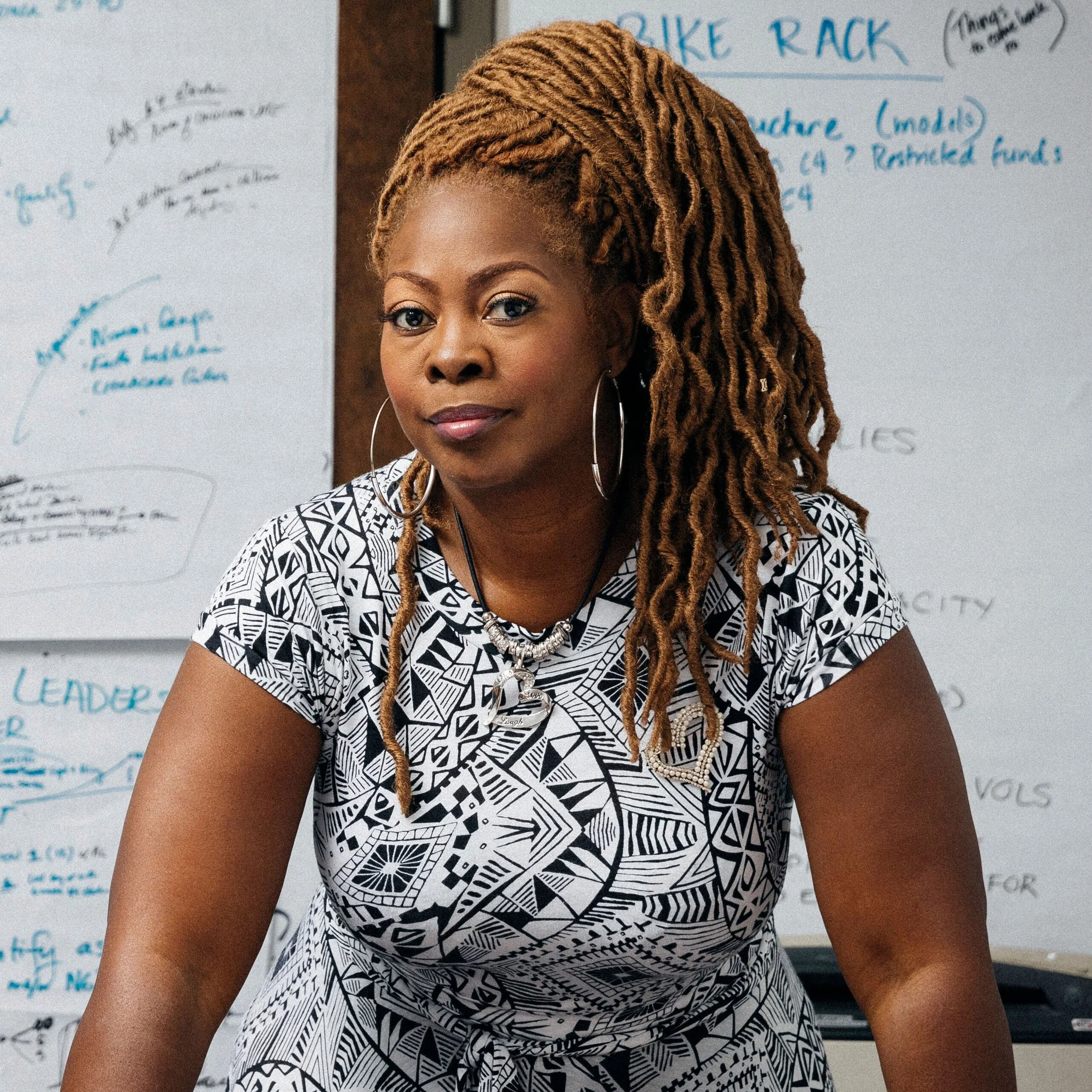
LaTosha Brown is a nationally recognized activist, community organizer, and social change strategist whose work has reshaped the landscape of Black political power in America. She is the co-founder of Black Voters Matter Fund, an organization dedicated to increasing civic participation and building power in marginalized communities, particularly across the American South. Brown's intellectual leadership has been recognized by Harvard University. She served as a 2019 Resident Fellow at Harvard's Institute of Politics, a Fall 2020 Leader in Practice at Harvard Kennedy School's Women and Public Policy Program, a 2020 Hauser Leader at the Center for Public Leadership at Harvard Kennedy School, a 2020–2021 American Democracy Fellow at the Charles Warren Center at Harvard University, and a Senior Practice Fellow at the Ash Center for Democratic Governance and Innovation at Harvard Kennedy School. She is also a sponsor of the Power, Innovation and Leadership Program at Harvard's Social Innovation + Change Initiative. A gifted storyteller and movement builder, Brown's organizing philosophy centers not just on electoral participation, but on cultivating deep community belonging and healing — guided by her conviction that "our politics will not save us, but our humanity can." Her advocacy extends beyond the ballot box, challenging philanthropic inequities and leading bold initiatives such as the "We Ain't Buying It" economic pressure campaign. A sought-after speaker and global human rights advocate, Brown continues to inspire a new generation of leaders fighting for justice, dignity, and belonging for all.
Carmel Shields: What does effective community organizing and building grassroots power look like in practice, especially in historically disenfranchised communities?
LaTosha Brown: The key is activation — activating people's sense of agency and their power to act. When we talk about building grassroots power, we have to ask: who is this power for, and what power are we tapping into? There is a fundamental approach of bringing folks together, because part of the power comes from people gathering so they can amplify their collective strength.
The distinction I always make is this: you can attract massive amounts of people, but that doesn't mean they have anything in common, and it certainly doesn't mean they are united in action. True community organizing means tapping into people's sense of agency — how you speak to them, inspire them, and motivate them to understand the power of collective action. It is not simply gathering people. It is creating a container for belonging, a space where people feel they are part of something, and a space where the desire for change can take root and grow.
Shields: With ongoing challenges to the Voting Rights Act (1965), what's at stake? What does true democratic participation look like beyond casting a vote at the ballot box?
Brown: Voting is the outward expression of our collective choice. It is the activation of our agency — a decisive act that shapes policy and molds our democracy. My approach is twofold: protect what we have, and push for what we deserve.
The Voting Rights Act of 1965 was never a ceiling; it was the floor. It opened democracy for millions, but it was never exhaustive. It fixed part of the problem. Our democratic system must continue to adapt and evolve, from fighting voter suppression to pursuing full transformation through proportional representation and ranked-choice voting. Democracy has the tools to grow, but we must have the will to use them.
The most critical fight right now is to sustain the health of our democracy because so much hinges on uniform voting access across this country. Voter registration, same-day registration, access to the ballot — none of that can be contingent upon which party holds power. We need a Department of Democracy, much like the Federal Reserve, that safeguards and protects voting rights independent of partisan winds. We must fight voter suppression, yes, but we must simultaneously strengthen voter protection as we move deeper into the digital age. Society evolves, and our democracy must be convened, accessible, and ready to meet the people where they are.
Shields: Tell us about the inspiration behind The Sick & Tired Bus Tour. How does direct community engagement like this fit your broader organizing strategy?
Brown: The Sick & Tired Bus Tour was rooted in the fight for healthcare access and it was inspired by one of the greatest freedom fighters this country has ever known: Fannie Lou Hamer. Hamer gave us the rallying cry of the Civil Rights Movement when she stood before a crowd in Harlem on December 20, 1964, and declared, "I am sick and tired of being sick and tired." As a leader of the Mississippi Freedom Democratic Party, she embodied a righteous, unrelenting demand for dignity and justice.
I am fortunate to have known Fannie Lou Hamer's legacy intimately, and we adopted her phrase — that fire, that truth — for this tour. We took the frustration that communities across the South are feeling and channeled it into positive, purposeful action. Through storytelling and narrative, we bore witness to the real and devastating consequences of healthcare denial throughout the South. The tour was about bringing attention to those inadequacies — not just talking about them in conference rooms, but showing up, sitting with people, and amplifying their voices.
Shields: In the past, you have mentioned there are three critical elements, “money, movement, and message” that work together in creating change. Can you elaborate?
Brown: When we founded Black Voters Matter in 2016, we built it on the integration of money, movement, and message — and together, those three create an intellectual muscle memory. Nobody else was doing this work in the way we knew it needed to be done. We were deeply frustrated by the prevailing narrative, because we were not the ones controlling it. Who tells the story shapes the story — and the story shapes us.
What we are building is an ecosystem — a movement with real capacity, grounded in thought leadership and technical expertise. The message matters. The money makes the message move. And the movement is what turns that message into power. All three must work in concert, or you risk having resources without direction, or vision without the means to execute it.
My theory of change centers on this: shape the message, control the narrative, amplify it, and be authentic. We are in the middle of a narrative war — misinformation and disinformation are poisoning our democracy and eroding people's belief in one another. We must engage in a new and different way. Social media gives us a platform, but it can also do tremendous damage, especially when its ownership aligns with antidemocratic forces and algorithms are engineered to divide us.
Shields: You've said, "Our politics will not save us. But only our humanity can, if we remember." When political systems feel broken, how do you persist in the demanding work of sustaining the movement?
Brown: At the foundation of why I do this work is something simple: I fundamentally love humanity. Life is precious. Human beings are remarkable. Every single person is a miracle. When you center your work in love for people, not just opposition to systems, it gives you a deeper well to draw from. I have what I call the love bug, and I believe this is a beautiful planet under unnecessary stress. We have abundance here. We have enough. Every problem we face, we can solve together if we choose to.
What has gone wrong is that we have allowed the man-made systems we created — politics, economics, institutions — to be elevated above the people those systems were meant to serve? Politics should move people forward. It should be rooted in our collective humanity. But we have built a culture so obsessed with the pursuit of more that we have forgotten the abundance that already surrounds us. We must evolve. We must fight the hoarding of resources and center our communities differently. Criminal justice can be restored. Our humanity can be reclaimed.
I am heartbroken by what I see but I will not give up. I may disagree with policy. I may stand in fierce opposition to any political figure or party. But no person and no party can demoralize me. Because if you truly love humanity, you cannot reduce another human being. The right to eat, to be sheltered, to be seen — these are not political issues. They are issues of humanity and basic decency. And I must ask, what is so broken in you that you have forgotten that love is available for all of us? Systems may fail us, but our capacity to care, connect, and create together is inexhaustible.
In a moment of extreme political change, being spiritually grounded is essential. Prayer, song, and time with loved ones keeps me anchored. Love is the greatest antidote to fear. I have also been leaning into my creativity as an act of resistance and renewal. To this end, I am co-creating Soul Table, a cross-country television series, with former CNN journalist Brooke Baldwin and chef Dominique Crenn. We travel across America in an Airstream kitchen gathering strangers around a shared table, over a locally prepared meal, to have the kind of honest, technology-free conversations that remind us we are, before anything else, human. It is essentially a narrative media strategy in a time when division is weaponized. Together we are building space for individuals of diverse backgrounds to gather and share what stirs their souls, and rediscover one another's humanity. It is a demonstration that community is still possible, that our diversity is not a division but a gift, and that the table is one of the most powerful organizing tools we have.
My advice to emerging leaders is straightforward: It is important to know this work was never meant to be carried alone. When we activate people's sense of agency and bring them into collective action, we remind one another that power is shared.
You do not have to solve everything at once; focus on what you can activate. Transformation happens when people move from frustration to agency. Protect your spirit. Stay rooted in community. Disagreement is normal; demoralization is not. No party, no policy, no political figure should have the power to take your humanity from you. We have enough creativity, enough brilliance, enough love to meet every challenge before us. This work is hard. It is also sacred, and we can do it together.
About the Author:
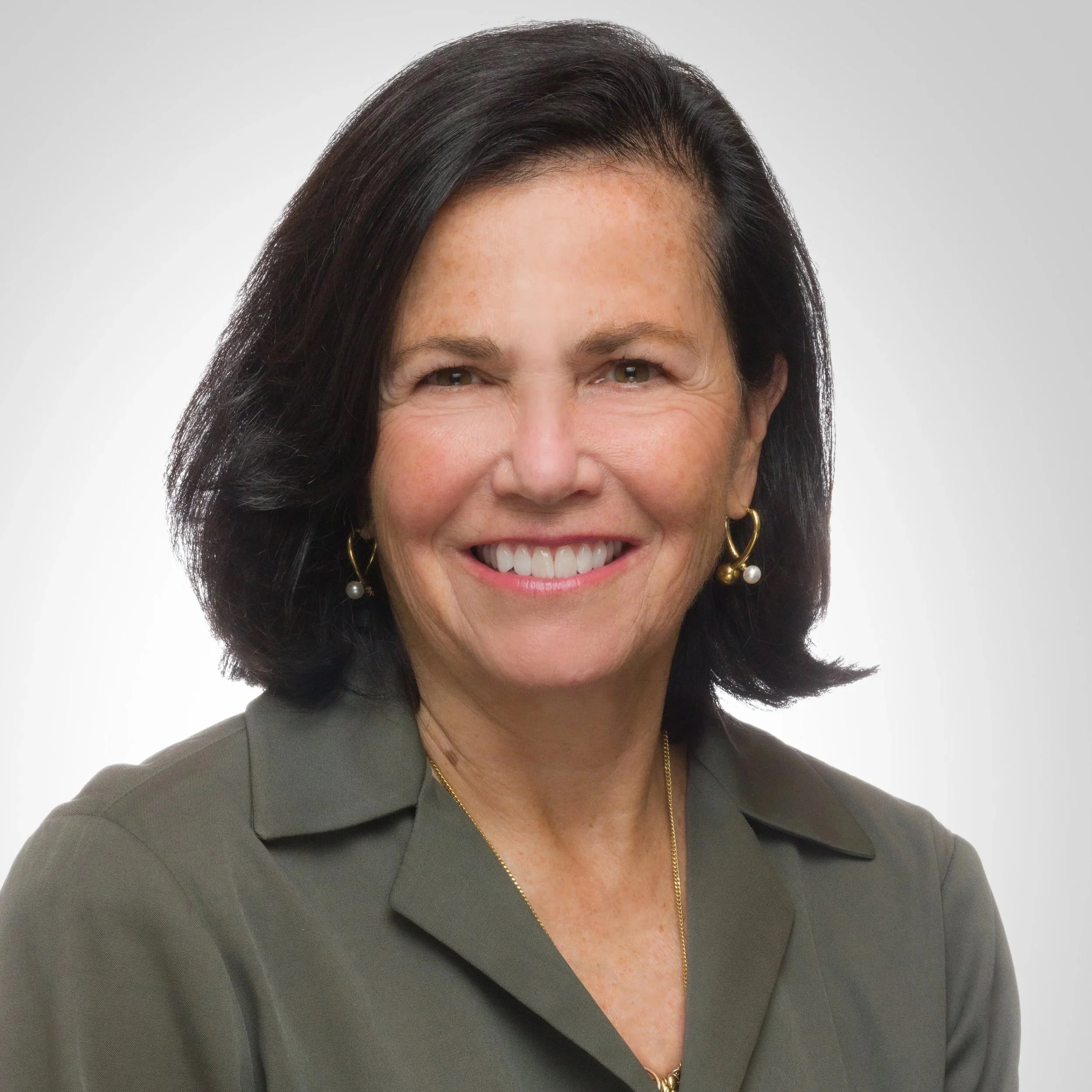
Carmel Shields is a 2023 Harvard ALI Fellow, founder of healthlitpro.com, and principal of Shields Health, where she helped scale one of New England’s largest networks of medical imaging and ambulatory surgery facilities. She currently serves on the board of the Women’s Foundation of Massachusetts, as a member of Invest to Elect and is a former board member of Care 2 Communities, a nonprofit focused on sustainable community-based healthcare in Haiti, House of Possibilities, Stonehill College, and Nativity Prep Boston.
This Q&A has been edited for length and clarity.