Renewing the American Pledge through Civic Architecture
As the United States marks its 250th anniversary, this Braver Angels Civic Scholars Council series examines the concept of courageous citizenship and the conditions needed to strengthen civic engagement and democratic institutions, arguing that active citizenship beyond merely voting is critical to preserving American Democracy.

The Declaration of Independence closes with a pledge that has echoed through American civic life for 250 years: a mutual commitment of “our Lives, our Fortunes, and our sacred Honor.” It was a public commitment to shared risk, shared responsibility, and shared consequence – courageous citizenship as the willingness to act together under uncertainty and to accept the costs of collective action.
In the American tradition at its best, courageous citizenship is not merely a private virtue. It has been an institutional achievement, sustained through associations, churches, schools, and shared practices that converted commitment into durable public action.
Civic architecture is the term for what those institutions provided: the durable institutional pathways through which ordinary people act with standing and binding civic consequence. Courage is not only something citizens possess. It is something institutions either authorize or quietly prevent from becoming consequential. Renewing the pledge at the Declaration’s 250th anniversary cannot mean renewed sentiment alone. It must mean rebuilding civic architecture.
A Historical Demonstration
For sixty years, from 1908 to 1968, Black communities across the American South built and sustained an educational infrastructure of approximately five thousand schools under Jim Crow, on a fraction of the public funds spent on white schooling, in counties where Black voters had been disenfranchised and lynching was a tool of public order. They did it through two complementary institutions: the Rosenwald school-building program (1912-1932), founded by Sears and Roebuck president Julius Rosenwald with Booker T. Washington of Tuskegee Institute (now Tuskegee University), and the Jeanes Teachers – a network of mostly Black women, educated at the era’s HBCUs and normal schools, who organized the communities the schools served.
The Rosenwald Fund contributed up to one-third of construction costs provided the community could raise the rest. Black communities raised their share through donated land, direct labor, hauled materials, fish fries and bake sales. The balance came from public school funds, released only because the Black community match and the Rosenwald grant required white school boards to commit them. The matched-funding model was itself a design move: the schools belonged, in a real sense, to the communities that built them.
The Jeanes Fund established in 1907, paid for the teachers. The first Jeanes Teacher, Virginia Estelle Randolph, was hired in Henrico County, Virginia, in 1908; she would supervise more than twenty Black schools across the county. By 1937 there were 426 Jeanes Teachers across the South. The historian Valinda Littlefield has described them as essentially county superintendents for Black schools. They visited three or four schools a week, trained teachers, organized communities to build libraries and gardens, and worked with attorneys, doctors, school officials, and philanthropists to extract resources for Black education. Two-thirds of Rosenwald schools were built in counties where a Jeanes Teacher was employed. The correlation is not coincidence. The Teachers were the institutional pathway through which the schools came to be.
In civic-architecture terms, the work had four design properties. There were named maintenance owners: the Teachers themselves. There were durable cycles: annual reports, supervisory visits, the parent-teacher associations the Teachers organized. There was locatable authorization: county-level standing even when formal titles understated their authority. And there were dated public artifacts: schoolhouses, libraries, commencement programs, school improvement leagues. The work was repeatable across counties, sustainable across decades, and inheritable across generations. Authorship was not concentrated in exceptional individuals; it was embedded in the role, and it persisted as the role was passed forward.
The institutional bridge from this work to the civil rights movement is direct. The Citizenship Schools that the Highlander Folk School and the Southern Christian Leadership Conference operated from the late 1950s through the late 1960s – the schools Septima Clark and Bernice Robinson built, and, in the same lineage, the Student Nonviolent Coordinating Committee organized the 1964 Mississippi Freedom Schools – were direct intellectual descendants of the Jeanes pedagogy. John Lewis, Medgar Evers, and Maya Angelou were Rosenwald school graduates. The civil rights movement’s leadership did not arrive from nowhere. It came up through the institutional pathways the Jeanes Teachers had been building for half a century.
Charles M. Payne’s distinction between organizing and mobilizing names this analytically. The marches and sit-ins of the 1960s were mobilizing – turning people out for visible action. They worked because the organizing had been done first, over decades, by the Jeanes Teachers and the communities they had formed into agents of their own civic life. When civic architecture is in place, courageous citizenship can show up at scale. When it is absent, courage burns out.
What Was Displaced
The Jeanes Teacher program ended in 1968. The same window that ended the legal regime of segregation also began a different kind of dismantling. Federal money flowing through the War on Poverty and Great Society programs reorganized civic life around service delivery rather than relational power-building.
Robert Woodson, the longtime civil rights activist who founded the Woodson Center, has described the mechanism precisely. In the first year of the War on Poverty, what Woodson calls “indigenous” community organizers – local, community-rooted leaders – were the people whom federal money reached. When those organizers began to challenge local political decisions, federal policy was changed: outreach workers had to be college-educated. The change sounds technical. Its effect was structural. A class of professional administrators replaced the community-rooted organizers who had been the institutional pathway through which Black communities authorized themselves into civic life.
What followed over four decades was a broader regime of professional managerialism that consolidated the substitution Wendy Brown has named the underlying logic with precision: a neoliberal governing rationality that recasts political life in economic terms, treating human beings as consumers and institutions as service providers. Michael Sandel diagnosis the same dynamic from a different angle, calling it the long substitution of credentialism for the older language of citizenship and common purpose. In The Careless Society, John L. McKnight traces it at the institutional level, distinguishing between associational life, where people act as members with mutual responsibility, and institutions, which deliver services to clients. As institutions expand, they quietly dismantle the associational life that had been doing the formative work.
Member becomes client. Co-author becomes consumer. Authorization to act becomes invitation to give feedback. Standing-with-consequence becomes voice-without-standing. The story is not partisan; it indicts a regime of institutional management practice, not a party. Woodson’s conservative critique of expanding federal administration and Brown’s progressive critique of neoliberal market logic name pieces of the same dynamic. What was displaced was civic architecture.
A Design Failure, Not a Moral Failure
When civic architecture is displaced, what remains is structural civic exhaustion. Schools, universities, workplaces, congregations, and civic associations still function operationally. They process students, deliver services, follow procedures, and hit metrics. But they no longer reliably give ordinary people durable ways to exercise power and responsibility and shape the future together.
The temptation in this condition is to respond with civic language: more dialogue, more engagement, more calls to courage and character. None of that is wrong. None of it is enough. Civic language is everywhere already. What is missing is the institutional capacity to convert that language into consequence. We send people back into organizations whose rules, roles, and decision pathways still treat them as spectators. Under those conditions, courage becomes symbolic.
This is not a moral failure. It is a design failure. Telling people to be brave does not produce courage when institutions reliably offer voice without standing. This is where Harry Boyte’s tradition of public work and citizen professionals does the work the moment most needs. Citizen professionals carry public formation into their everyday institutional roles. Civic architecture is the next step in the same tradition: it embeds the authorship in the structure itself, so the work does not depend on the presence of exceptional individuals and continues when they move on.
Civic Pathways in Living Practice
Three layers of institutional work at Huston-Tillotson University (HT) and across the Democracy Schools Alliance of Texas HBCUs (the Alliance) network now extend the design grammar of Rosenwald and Jeanes into the present. None was designed as civic architecture. All have grown into it.
The Politics Lab of the James L. Farmer House (Farmer House), founded by HT in 2022, is the institutional home. It holds the theory of change: civic architecture in the Black institutional tradition, the design and construction of durable institutions that embed civic purpose, collective authorship, and relational power into the fabric of democratic life. The Farmer House runs the Apprentice-Associate-Author pathway, through which students take partial ownership of real institutional work, learn alongside faculty and staff who have the skills, eventually run a full cycle, and are positioned to teach the students coming up behind them. The lineage is direct: James L. Farmer Sr. taught at Samuel Huston College, the predecessor of HT, from 1925 to 1930 – the years Jeanes Teachers were active across the South. His son, James L. Farmer Jr., became one of the major civil rights leaders of his generation: he co-founded the Congress of Racial Equality in 1942 and directed the 1961 Freedom Rides. The Farmer House inherits this institutional tradition by design rather than by analogy.
The Democracy Schools Alliance of Texas HBCUs is the network that has been building since 2019, when HT faculty reached out to Central Texas Interfaith, a Texas affiliate of the Industrial Areas Foundation, to develop experiential learning that would connect students’ campus experience with politics. The Alliance now produces the annual Texas HBCU Democracy Schools Conference Series, in its fifth year, and Freedom Schools: A Journal of Democracy and Community, published by University of Texas Press, now in its fourth volume – a dated public artifact of the work.
The Texas HBCU Legislative Caucus is the proof-of-concept. It is a standing, bipartisan body inside the Texas Legislature that now carries an HBCU policy agenda across legislative sessions, the first of its kind in any state. Lawmakers from both parties show up to it. It produces results across cycles. After the inaugural Year One conference, Alliance stakeholders set its creation as a goal and worked with state lawmakers on both sides of the aisle to build it. At the Year Three conference in 2024, lawmakers announced its formal creation. Subsequent artifacts include House Bill 3296, which advanced to public hearing, and a state proclamation of Texas HBCU Day. The Caucus matters because it shows a non-HBCU institution — a state legislature — taking on a piece of HBCU civic DNA voluntarily, because the institution’s own actors came to see why the work served their public purpose.
These are not novel inventions. They are continuations of the design grammar Rosenwald and Jeanes practiced (authorization, locatable responsibility, durable pathways) adapted to higher education and a state legislature instead of rural counties.
Principles for Building Civic Architecture
The Jeanes-Rosenwald demonstration and the contemporary Texas HBCU work converge on a small set of design principles for anyone (in a school, a congregation, a workplace, a nonprofit, a public agency) who wants to build civic architecture inside an existing institution.
Name the maintenance owners. Civic architecture requires people with locatable authority for sustaining the work, not committees, not initiatives, but individuals whose role is the work itself. The Jeanes Teacher was the role, not the person; the supervisory model passed the work forward as the role passed forward. The Farmer House holds the Apprentice-Associate-Author pathway under a named director and faculty, not a steering committee. Without named owners, the work belongs to no one and dissolves when attention drifts.
Build durable cycles. Annual conferences, collaborative visits, peer-reviewed journals, legislative sessions. The cycles are the institutional metronome. The Jeanes Teacher’s annual report to the county and her three-or-four-school weekly visitation cycle were the early form. The Texas HBCU Democracy Schools Conference Series, now in its fifth year, is the present-day counterpart, the annual return that lets the work be sustained, measured, and corrected. Without the cycles, attention fades between moments and the work has nowhere to come back to.
Locate the authorization. Standing must be visible. The Jeanes Teachers held county-level standing even when their titles understated it. The HBCU Legislative Caucus is a standing bipartisan body, not an ad hoc working group; it can advance a bill and commit a budget. Authorization is the difference between a working group and a body that can do those things. With it, the work can be picked up by anyone in the role; without it, the work is improvisation.
Produce dated public artifacts. Schoolhouses, journals, conference proceedings, public hearings, bills, proclamations. An artifact is a public commitment that can be cited later. The Rosenwald schoolhouse with its dated cornerstone is one. The third volume of Freedom Schools: A Journal of Democracy and Community, published by University of Texas Press, is another. House Bill 3296’s public hearing record is another. The artifacts make the work legible and contestable, and they hold the work even when the people doing it move on.
Design for inheritance. The work must outlive its founders. The Apprentice-Associate-Author pathway is one form of this discipline; the supervisory model through which one generation of Jeanes Teachers trained the next was another. Both share the same design: the role is taught while it is being done, and the people coming up know they will eventually do the teaching. Inheritance is what keeps the institutions carrying the idea after the first carriers have gone.
The Pledge Renewed
The Jeanes Teachers and the Rosenwald communities did not call what they were doing civic architecture. They built it. Under some of the worst conditions American history has produced, they made themselves the authors of a public life the country had refused them. The institutions they built carried the courage of one generation forward into the next.
The civil rights movement did not begin with the marches and the sit-ins. It began decades earlier, in the schoolhouses, libraries, and church halls those communities had been building. When civic architecture was in place, courageous citizenship could be carried at scale. When it was displaced, the courage continued in individuals but could no longer be carried by institutions.
The 250th anniversary of the American experiment is not a celebration of a finished story. It is a recommitment to a story that needs to be carried further. The pledge cannot be renewed in sentiment alone. It must be renewed in form – through the rebuilding of civic architecture inside the institutions of everyday life, so citizens can act together with binding public consequence. Courageous citizenship will be how the next chapter is written, but only if we build the institutions that let the courage matter.
About the Author:
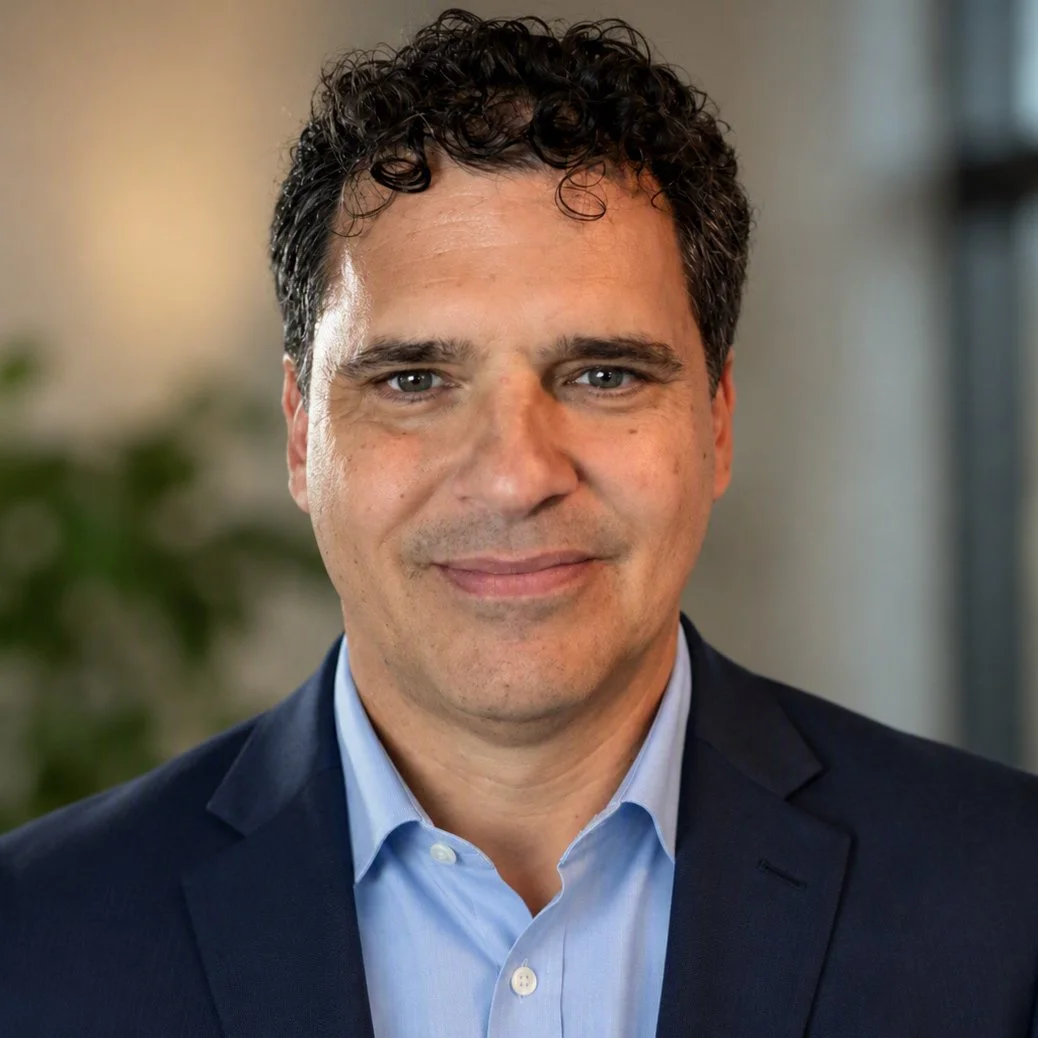
Robert M. Ceresa is Associate Professor of Political Science and Founding Director of the Politics Lab at the James L. Farmer House at Huston-Tillotson University, an HBCU in Austin, Texas, and Austin's first institution of higher education. His current work develops the idea of civic architecture, the institutional design through which ordinary people gain durable standing in democratic life, drawing on the Black institutional tradition that runs from the Jeanes Teachers and Rosenwald Schools through the Citizenship Schools into the civil rights movement. He convenes the Texas HBCU Democracy Schools Alliance, which produces the annual Texas HBCU Democracy Schools Conference Series and the journal Freedom Schools: A Journal of Democracy and Community (University of Texas Press), and which helped seed the Texas HBCU Legislative Caucus, the first bipartisan HBCU caucus in any state legislature. He is the author of Cuban American Political Culture and Civic Organizations: Tocqueville in Miami (Palgrave, 2018) and a founding member of the Braver Angels Civic Scholars Council.