
Power grids, water supplies and local permitting are struggling to keep pace with AI on Earth. A small team of 15 in Redmond, Washington, is building the next generation of data centers in space.
Q&A with Philip Johnston
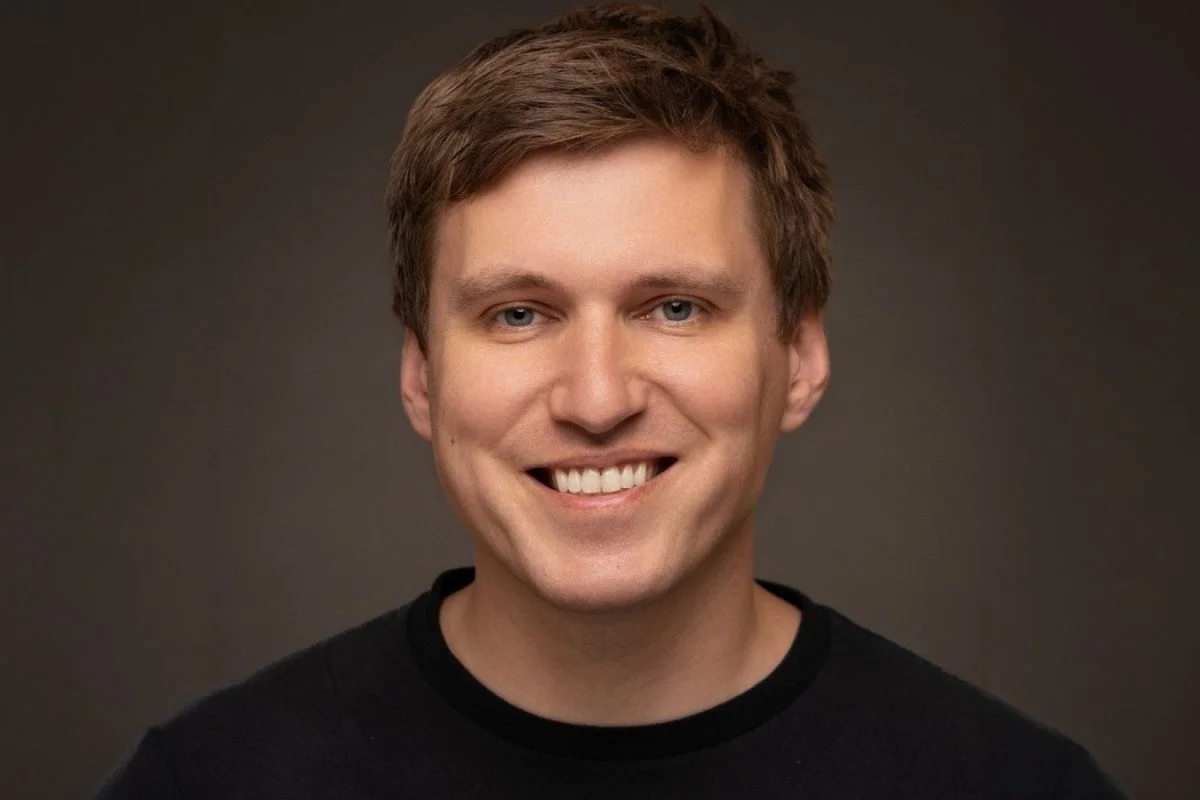
Philip Johnston is Co-Founder and CEO of Starcloud, which in November 2025 launched the first NVIDIA H100 GPU into orbit and trained the first Large Language Model (LLM) in space. Founded in 2024, Starcloud has raised about $450 million and is valued at $2.3 billion as of August 2026. Previously, Philip worked with national space agencies at Mckinsey & Co. and co-founded Opontia, an e-commerce venture based in Dubai. He holds an MPA in National Security and Technology from the Harvard Kennedy School, an MBA from Wharton and an MA in Applied Mathematics and Theoretical Physics from Columbia University, and he is a CFA charter holder.
Emily Chien: Thank you, Philip, for joining me today to talk about Starcloud’s work across AI, energy and space. What does Starcloud do, and why do you believe the next constraint on AI is energy rather than chips?
Philip Johnston: Starcloud is building the world’s first orbital data centers to address the AI energy challenge. Initially, we’re providing cloud compute and edge services for other spacecraft. Later, as SpaceX Starship and other launch vehicles ramp up production, we intend to be competitive with all terrestrial data centers on energy and infrastructure cost.
The constraints on energy are real. Permitting alone for new energy projects for data centers on Earth can take five to 10 years. We know energy is going to be the bottleneck, because next year there will be something like tens of gigawatts more chips being produced than new energy sources coming online. You don’t have to be an economist like Milton Friedman to understand that energy is the bottleneck, not the chips. That’s why we’re trying to address that problem.
Chien: Let’s start at the beginning. Your path runs from applied mathematics and algorithmic trading to McKinsey & Co., studies at the Harvard Kennedy School, then building a company in Dubai. When and why did you decide that your next chapter would be data centers in orbit?
Johnston: I spent a bit of time at McKinsey working with the space agencies of different governments, and that’s where I started to notice that launch costs were coming down. With the US Space Shuttle, it was about $60,000 a kilo. It went from that down to about $6,000 a kilo with Falcon 9.
In mid-2023, I took a trip down to Starbase,Texas. I didn’t have an invite. I just walked around. This was before the first Starship launch, so not many people were paying attention. Two things blew me away. The vehicle was very impressive, but more impressive was the manufacturing capability they were building. They’re building two Starship gigafactories designed to produce something like three Starships a day, which is mind-blowing, especially as Starship capacity aggregates on itself. With Falcon 9, if you build a new one every day for a year, at the end of the year you only have one Falcon 9 upper stage. If you build a new Starship every day for a year, at the end of the year you have 365 Starships.
So I started thinking, let’s imagine a world where the launch cost was maybe 10X cheaper than it is now, and the launch capacity was maybe 100 or 1,000 times more than it is today. What can be enabled that currently isn’t? We were initially looking at Isaac Asimov’s idea of space-based solar, which is the idea that you have huge solar panels and beaming the power down to Earth. That’s how we started the company, named Lumen Orbit, for “luminosity in orbit”.
We tried to sell that capacity through energy offtake agreements before we built it and quickly realized that almost all new energy projects on Earth, even in 2023, were being built to power data centers. The main problem with space-based solar is you lose 95% of the energy transmitting it from space to Earth. So we reran the break-even launch cost numbers for putting the data center itself in space and published a white paper "Why we should train AI in space" in September 2024 saying that if the launch cost gets to X, it will make sense to build all data centers in space, and X is not too far away. That became the basis of this company.
Chien: What problem are you solving? Communities around the world are increasingly resisting new data centers over electricity, water, and land. Why is orbit the answer, rather than more renewables, nuclear power or efficiency gains on Earth?
Johnston: Let me compare orbital data centers with solar, the cheapest form of energy we have on Earth. A terrestrial solar project has three big costs.
The first is permitted land, and that’s the biggest cost in North America, because there are not too many communities in the US that want to cover 10 square kilometers of countryside with solar panels.
The second is battery storage and backup power, because you only get about eight hours a day of peak sunlight.
The last is the cost of the solar cells themselves.
In space, you don’t need permitted land, so your biggest cost is gone. And you don’t need battery storage and backup power, because we’re 24/7 in the sun. Finally, you need eight times fewer solar cells, because one square meter of solar panel in space produces about eight times the energy of one on Earth. The main additional cost we have is the launch cost. Break-even is when launch costs less than permitted land, batteries, and solar.
Orbital data centers take a huge burden off of the grid and water supply that’s needed for datacenters on Earth.
Chien: Less than two years after you founded the company in January 2024, Starcloud-1 put an NVIDIA H100 GPU into orbit and trained the first AI LLM in space. What did you learn, and what surprised you most?
Johnston: I think we broke several records. The fastest company before us to go from founding to having something in orbit took about four years. We did it in 21 months. We had an initial quote from one of the traditional aerospace prime contractors, I won’t say which one, for doing what we did on Starcloud-1. They said it would cost $75 million to $100 million and take four years. We did it for $2 million reaching orbit in November 2025. That’s a testament to my co-founders, Adi Oltean our Chief Engineer and Ezra Feilden our CTO, who built the payload by hand. Adi spent 20 years with Microsoft building data centers, and Ezra spent a decade building solar panels and satellites and had also worked on NASA’s lunar pathfinder mission.
We learned that you could do things in space a lot cheaper than people say. We also learned how these chips actually operate in space, and we’ve been surprised. The NVIDIA H100 AI chip is still perfectly functional, and it’s been up for a year now. We’re still running workloads on it for various government customers, particularly inference on satellite imagery.
Before we launched, people said you couldn’t run these power-dense, data center grade GPUs in space, because they produce a lot of heat and are too sensitive to radiation. With Starcloud-1, we proved that you could solve the thermal problem, and that if you do enough testing, you can figure out where you need shielding for radiation.
Chien: What about the debate around chip failure rates? Are there any learnings from your initial experience?
Johnston: We’ve had one restart failure, basically a radiation-induced restart failure. We were expecting about one a month, and so far, we’ve had one in 11 and a half months. The restart failure rate is much lower than we expected. We did a lot of ground testing in particle accelerators to make sure of that, including three rounds at Brookhaven National Lab for heavy ions, and four rounds at a cyclotron in Knoxville, Tennessee for high-velocity protons.
We used that to inform the choice of shielding, software, and components. We also had a very long “burn-in” period. “Burn-in” means you run the chips as hot, or as aggressively, as possible before you launch them. Normally a burn-in period might be a month. We did three months. Once you get through this infant mortality phase, the chance of failure decreases very rapidly. Any chips that failed on the ground, we didn’t use.
Chien: You’ve compared Starcloud to Equinix rather than a cloud provider. Walk us through the economics and what has to be true for space-based compute to cost less than a data center on Earth, and by when?
Johnston: Even if there was no constraint on building new energy projects on Earth, once the launch cost hits a certain point, and we think that’s around $500 a kilo of payload, it will just be cheaper to build these in space than on Earth. We expect to be competitive with terrestrial data centers on energy and infrastructure probably around the end of 2028 or early 2029.
On the business model, we’ve signed agreements with companies like Crusoe, a big data center builder, where we’re more like an energy and infrastructure provider. We say to them, we have a box, and this box has power, cooling, and connectivity. We’ll work with you on whatever chip architecture you want, and you can sell to whichever customers you like, for whatever price you like. So instead of being like an AWS, we’re more like an Equinix, which rents data center space to others. That’s another business model we’re considering.
Chien: And given what’s going on with SpaceX and the retirement of the Falcon 9, how are those launches looking for the next couple of years?
Johnston: It’s actually pretty constrained for the next few years. Because the rideshare program (e.g., SpaceX Falcon 9) is being retired, everybody is scrambling to book launch until Starship and some of the other launch vehicles come online. Once Starship comes online, we expect launch costs to normalize again, hopefully below where they were for Falcon 9, because it has a reusable upper stage.
Chien: Your partners include NVIDIA, Crusoe, AWS and SpaceX’s Starlink lasers. SpaceX is also your launch provider and, with plans for up to a million satellites, your biggest competitor. Some might say you are playing both sides of the coin. How do you manage that, and what is Starcloud’s advantage?
Johnston: It’s a good question.
Right now, we have a great relationship with SpaceX. We filed with the US Federal Communications Commission (FCC) for a 20-gigawatt constellation of up to 88,000 satellites acting as a distributed datacenter in space (currently in review). SpaceX wrote a letter of support for our application, and we wrote one for theirs. We’re under contract with them for launch and communications. It does look like they’re now going to aggressively build orbital data centers as well.
We see a world within 10 years, where most new compute capacity will be deployed in space, which is on the order of a trillion dollars a year at that point. Either you think SpaceX will have a monopoly on that, or you don’t. If you don’t, I think Starcloud is by far the best positioned of any other player. Even Google has its own version of this. I think we are moving way faster than anybody else.
Chien: Is your competitive moat your speed? Or is it something else?
Johnston: Speed is one of our advantages.
It looks like SpaceX may offer a cloud service, but they’re mainly going to be serving their own internal workloads, like Cursor and Grok. Essentially all of the hyperscalers are going to need a solution for space compute in the not-too-distant future. Some of them will go through SpaceX for that, and some of them will want a more independent solution.
Chien: Is computing in orbit truly greener once you count the full lifecycle, including rocket launches, manufacturing, and satellites that reenter the atmosphere? What happens to a satellite at end of life and what do we know about its reentry effects?
Johnston: Today, most new energy projects for data centers are being built with natural gas. Our all-in carbon emissions, including the emissions from launch, will be about 10X less over the life of the data center than if you build a natural gas power plant to power a data center. That’s 90% less CO2.
So compared with a natural gas plant powering data centers on Earth, space compute it is as good as it looks. If you compare it to building a solar project on Earth, it’s more marginal. But the problem is we can’t cover 100 square kilometers of countryside with solar panels due to local community concerns.
On reentry, there’s no carbon. Most of the satellite’s mass is aluminum and silicon, so no fossil fuels burn up. You melt some aluminum in the upper atmosphere, which, as far as we know as of today, does not have any negative impact. There’s no evidence to suggest that the reentry process has any negative effect at the moment.
Chien: As orbit becomes economic infrastructure, who should govern it? What would good orbital governance look like in five years?
Johnston: One of the primary things all players are concerned about is avoiding any kind of collision. At the moment, SpaceX puts out an API with an extremely accurate position and forecast of all satellites. It’s the industry standard, because operators advertise their own forecasts and maneuvers, and SpaceX takes those into account. I expect that will continue to be the status quo for quite a while.
I would add that in the dawn-dusk sun-synchronous orbit, there’s almost nothing flying now. These orbits are at altitudes between 600 and 850 km. It’s a much less risky place to fly than the mid-inclination orbit that all of the Starlink satellites fly in. Starlink satellites crisscross each other the whole time, and avoiding collisions means slightly slowing one down.
In contrast, in the dawn-dusk orbit we’re going to fly in, the satellites trail each other in the same direction, in different layers, with no crisscrossing. Almost by definition they fly at the same speed, because they’re in the same orbit. So the chance of collision is much, much less.
Chien: How do you think about security and data sovereignty for AI running in orbit?
Johnston: Fortunately, we have a great case study for this, the Starlink network which has approximately 10,000 satellites, and it’s used right now in Ukraine. We have a pretty good understanding of how to make space data transfer secure, including end-to-end encryption.
Chien: Starcloud became Y Combinator’s fastest unicorn ever and has raised about $450 million in less than three years. What do investors underwrite in a company whose largest satellites depend on launch rockets that are not yet flying commercially?
Johnston: Many space companies, like ViaSat, Inmarsat, and Eutelsat rely on others for launch. Launch is like the railroads. You wouldn’t necessarily not invest in a goods company because it has to rely on the railroads.
I think the real reason they’re investing is that they think this will be by far the largest market opportunity ever, and it will.
If you want a horse in the race, we’re the best horse to have in the race for the price. You can invest in SpaceX at $2 trillion, or you can invest in us at $2 billion now, so long as you don’t think there’s going to be a monopoly forever. Even if we have to wait five or seven years for a competitor to SpaceX, which we might, investors still find that compelling.
Chien: Looking out three to five years, what milestones should we look to that show that space data centers are working? What keeps you up at night, and what gives you hope?
Johnston: Our launch in January 2027 will prove our radiator and radiation shielding technology. Then the only remaining piece is for launch to become cheap with Starship in 2028 onward.
Chien: Philip, you recently co-founded the Fermie Explorer Mission to send a probe toward Alpha Centauri, the closest star system to Earth located over four light-years (about 25 trillion miles) away. Does that inform how you think about your legacy?
Johnston: I don’t really care about my personal legacy to be honest. I care a lot about the legacy of humanity and civilization. I think we want to be a civilization that settles the galaxy not a lame one planet, short-lived civilization.
Chien: I thank you for sharing Starcloud’s inspiring mission and your vision for powering AI responsibly beyond Earth’s limits.
About the Author:

Emily Chien is an Executive Fellow at Harvard Business School whose work focuses on how agentic AI is reshaping business models, markets and corporate governance. She is an investor in and advisor to AI ventures and corporations in accelerating value creation, with prior operational and executive roles with JPMorgan Chase, Fidelity Investments, and American Express. As a long time champion of and innovator in data, digital and AI, Emily led AI transformations for IBM clients in banking, investments and insurance, was a 2021 AI Fellow with the World Economic Forum and holds a patent for digital payments now used by Amazon.com, American Express and others. She serves on the International Financial Reporting Standards (IFRS) Advisory Council, is a member of the Economic Club of New York, and co-chairs the Private Equity/Venture Capital Group of WomenExecs on Boards.
This Q&A has been edited for length and clarity.