

According to the Centers for Disease Control and Prevention (CDC), overdose deaths in the U.S. dropped 27% in 2024, marking its largest one-year decrease on record. While this suggests real progress in addressing America’s substance use crisis, it masks a more troubling reality. The data does not accurately reflect the current state in Black communities.
An Unseen Crisis
As the world grappled with COVID-19, an invisible crisis intensified within the Black community with a 20-year high in deaths due to substance misuse. The ongoing overdose epidemic was not given enough attention, leading to delayed responses and reduced resources. The pandemic made the situation worse by disrupting treatment services and increasing stress and isolation, conditions that likely contributed to the spike in substance misuse and related fatalities.
As the country moved into a new phase of COVID-19, the overdose epidemic continued its deadly destruction.For Black women, overdoses represent the fourth leading cause of death, behind cancer, COVID-19, and heart disease per 2021 data. Among Black men, there are 54.1 fatal drug overdoses for every 100,000 people, compared to 44.2 for white men. For Black teenagers, overdose deaths linked to synthetic opioids increased five-fold from 2019 to 2021. Then there’s the case of my hometown. In New York, the rise in overdose fatalities before the pandemic was alarming, with the number of deaths in the Black community quintupling from 2010 to 2020.
Previous administrations took steps to address America’s burgeoning opioid crisis, including legislative and public health efforts to expand treatment, prevention, and recovery services. For example, the Obama administration helped enact the Comprehensive Addiction and Recovery Act (CARA) in 2016, which was the first major federal addiction law in decades. It also secured $1 billion in funding to improve access to care through the 21st Century Cures Act. The Trump administration followed with the SUPPORT for Patients and Communities Act in 2018 to broaden treatment availability and strengthen recovery infrastructure.
While these efforts represented federal engagement and first steps toward confronting opioid addiction as a public health crisis, more punitive, enforcement-centric policies and cuts in critical treatment funding have undermined broader progress. The result is a system where access to care remains uneven, and overdose deaths continue to be disproportionately high among Black communities.
More recently, under the direction of the Department of Government Efficiency (DOGE), many critically supportive government functions and grassroots organizations faced the threat of punitive funding cuts, or complete elimination, because their efforts were race conscious. These actions risk reversing decades of progress. As Dr. Aletha Maybank, Founder and CEO of NovellaWells, warns: "when government action undercuts evidence-based health interventions of any type, it undermines decades of hard-earned progress to remediate health inequities. We must protect, implement, and expand supports and solutions that we know work as well as co-create new ones”. The push by key stakeholders to preserve and expand targeted resources for historically marginalized communities is not just urgent; it is essential.
This watershed moment presents an opportunity to reframe the national conversation and shed light on the racial inequities and impact of the opioid epidemic on Black communities. As the anti-racist leader of a multi-generational service provider, I fervently believe we cannot remain silent as more Black people die alone, succumbing to opioid overdoses at disproportionately higher rates. So, what steps can we take to confront this public health issue respectfully and effectively? Here are three corrective actions to consider:
1. Dismantle the Stigma
One of the greatest barriers to addressing this issue with the gravity it merits is the stigma surrounding those who are living with a substance use disorder. "Stigma kills, and for Black people, it does so twice over. First by isolating those who need help, and again by justifying society’s indifference. Until we confront the racialized stigma around substance use, we’ll keep losing lives that could have been saved," said Philip Rutherford, CEO of Black Faces, Black Voices.
Rather than viewing individuals living with substance misuse with compassion and humility, institutions regard this systemic health crisis as a moral failure. And far too often, this shame projection is covertly racial in nature, with a particularly offensive brand of judgment reserved specifically for Black and Brown communities. This harmful “othering” permits societal complacency, with a blind eye turned towards the suffering in our community.
If we’re serious about ending the overdose epidemic, we must apply a sense of universality to the face of addiction. It’s imperative to take a dignity-first approach as a service provider offering treatment. Truth is, what impacts one impacts all. This isn’t a them issue, it’s an us issue.
2. Make Care-centered Treatment the Default
Regardless of income level, Black people are disproportionately impacted by severe economic disparities because of longstanding systemic racial barriers. This discrimination manifests in the ways institutions combat substance misuse. Rather than prioritizing compassionate, rehabilitative care, Black or Latino people account for roughly 57 percent incarcerated in state prisons and 77 percent in federal prisons for drug offenses, respectively, compared to 30 percent of the general U.S. population. This overrepresentation in the criminal legal system for drug offenses, despite similar rates of substance use across racial groups, underscores the explicit bias and intersection of systemic racism found in the criminal legal and public health systems. What if the approach toward substance misuse prevention for Black and Brown people shifted from harsh to humane?
Anecdotal evidence within the realm of addiction treatment has shown that comprehensive trauma-informed care, paired with evidence-based curriculums around relapse prevention, disrupts systemic harm and helps people heal. “Harm reduction is more than a public health strategy. It is an unrelenting action that demonstrates that every life matters, especially those society pushes to the margins. If we truly want to disrupt the cycle of overdose and inequity, we must invest in programs and services that the community and people with lived and living experience define. Harm reduction is people centered care that meets people where they are, not where we think they should be,” said Tracie Gardner, Executive Director of the National Black Harm Reduction Network. As the inequities of the overdose epidemic continue to rise, it is imperative that service providers and policymakers embrace a culture of healing if we want to build sustainable systems.
3. Make Treatment More Accessible
For many Black people, the barriers to accessible treatment are intensified due to historic and present-day systemic racism from the service providers to the care that’s offered. "Access isn’t just about availability — it’s about trust, cultural respect, and systemic change. Black communities are too often met with judgment instead of care. Breaking down barriers to treatment means confronting bias at every level of the system," said Dr. Roland J. Thorpe, Jr., Program for Research on Men’s Health, Johns Hopkins Center for Health Disparities Solutions. A lack of cultural sensitivity and humility from service providers makes treatment less accessible, and data indicates this leads to older Black adults who seek treatment being less likely to complete a program thanks to services being prematurely terminated. Furthermore, states that have not utilized the Affordable Care Act’s Medicaid expansion are correlated with lower rates of substance use treatment admissions, limiting accessibility to care. Add in rising gentrification and NIMBYism that prevent construction of more substance use treatment and harm reduction sites and the path to care begins to feel increasingly unattainable for Black people. Finally, racial stigmatization is often a determining factor in who can freely access life-saving medications like methadone and buprenorphine, negatively affecting an already toxic situation.
Moving Forward
We must tell a more complete story of how the racial disparities in treatment of substance use disorder demand urgent attention. An effective approach that explicitly acknowledges the racial disparities of the public health crisis devastating our communities is necessary to save lives.
For an in-depth analysis of the history and complexities surrounding this issue, Elmcor Youth & Adult Activities, in partnership with a coalition of leading public health and advocacy organizations, recently released an executive summary on the state of the Black opioid overdose crisis. Additional comprehensive information is scheduled for release in the coming months. The findings make clear that progress cannot be measured in aggregate terms alone. As Dr. Gary Puckrein, CEO of the National Minority Quality Forum, explains, “the latest report underscores why we must not confuse aggregate progress with equity. The Physical Laws Framework reminds us that public health outcomes are determined by forces — social, economic, and environmental — that exert unequal pressures on different populations.” He adds that “Black Americans continue to bear a disproportionate burden of overdose deaths, not because of biology, but because of policies and systems misaligned with their lived reality.” Addressing this reality, he argues, requires interventions that are structurally aligned with the communities most at risk — “investing in care that is culturally grounded, trauma-informed, and accessible,” because anything less “sustains the cost of indifference, measured in Black lives lost.”
There is a critical opportunity to advance a national, solutions-based dialogue surrounding the racial disparities of the opioid overdose epidemic. Simply put, the consequences of ignoring this epidemic and its disparities are dire. They threaten the health, future, and well-being of our community and country.
About the Author:
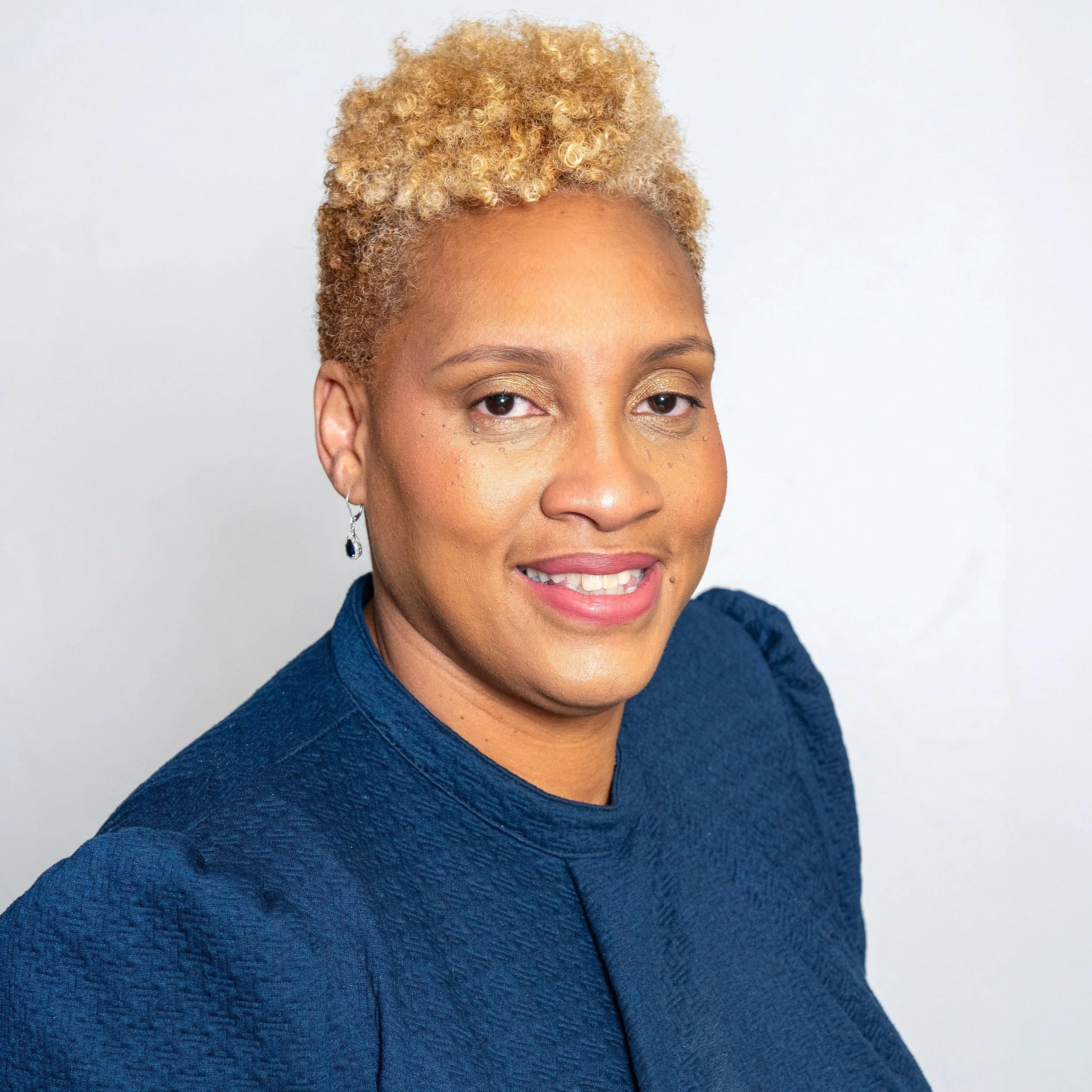
Saeeda Dunston is the CEO of Elmcor Youth & Adult Activities, an organization serving Queens, NY, since 1965. Saeeda has significantly contributed to developing and improving programs focused on behavioral health, health equity, social and economic justice, anti-stigma initiatives, and community education. Notably, she spearheaded Elmcor’s first Supportive and Affordable Housing Project, providing essential housing solutions to the chronically unhoused, individuals recovering from substance use disorders, and older adults. Additionally, her vocal, impassioned grassroots advocacy forged the groundwork that ultimately prompted the inclusion of a funeral assistance fund operationalized in the Biden-Harris administration to support families who lost loved ones during the height of the COVID-19 pandemic.