
Q&A with Alex Wagner
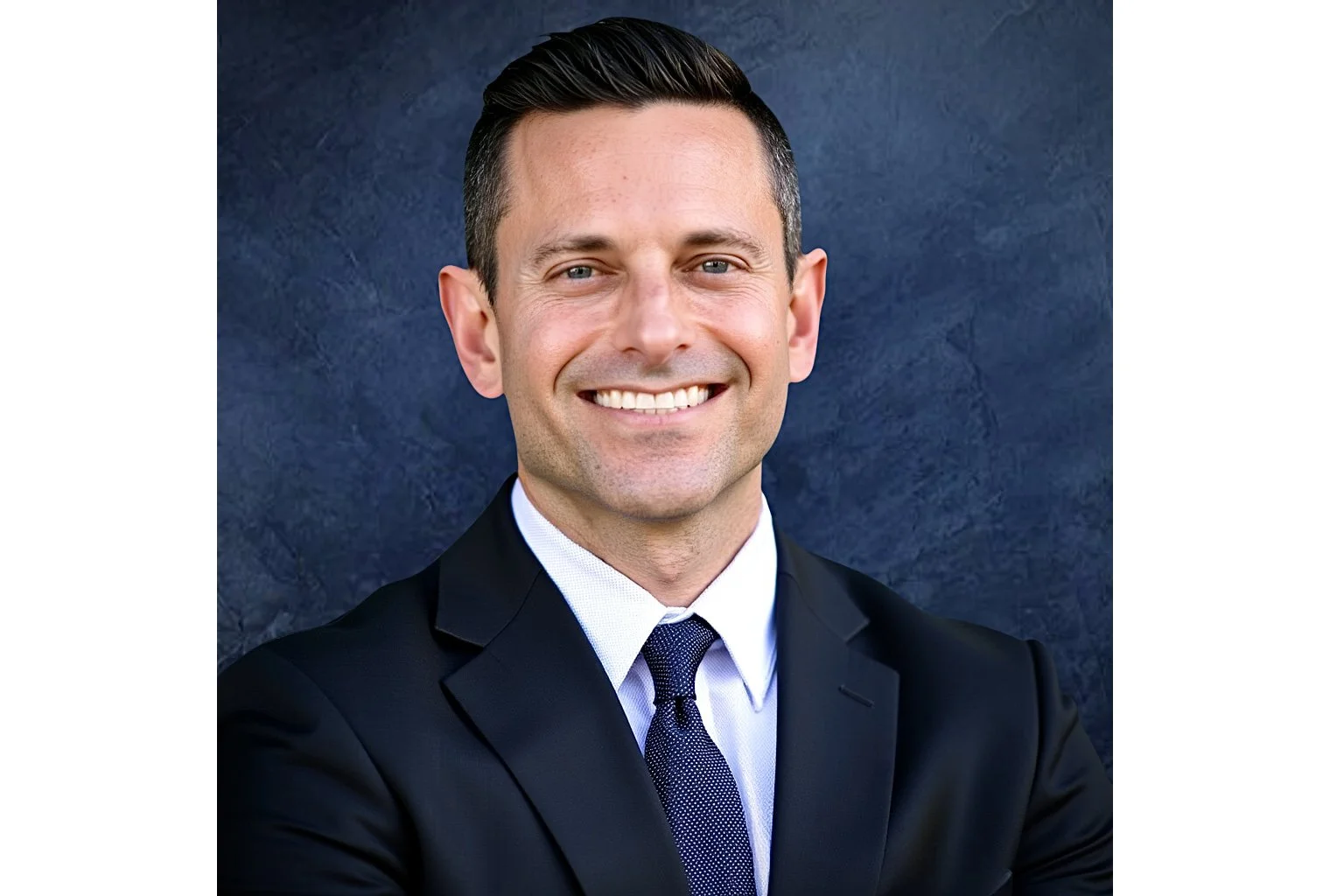
Alex Wagner served as Assistant Secretary of the Air Force for Manpower and Reserve Affairs from 2022 to 2025, nominated by President Biden and confirmed by the U.S. Senate. He previously served as Chief of Staff to the Secretary of the Army. He teaches "Law, Policy, and National Security" at Syracuse University's Maxwell School and was a Pritzker Fellow at the University of Chicago's Institute of Politics. Wagner holds an A.B. from Brown University and a J.D. from Georgetown Law.
Anthony J. Mohr: When you were a fellow at the University of Chicago’s Institute of Politics, your seminar description stated, “Understanding the politics of the Defense Department is essential for anyone who wants to make a difference.”
Alex Wagner: I was a political appointee, so being attuned to the administration’s priorities was always on my mind, but I meant politics with a small-p. For example, which military department is going to take the lead and implement something first? Who will Congress credit if a new recruiting policy works, or who will it blame if it fails? How do you engage acongressional staffer on an issue that is their boss’s priority but not yours? Whether a career civilian, a military general, or a senior political appointee is the right person to make a big announcement public. If you don't understand politics — not necessarily electoral politics — but for example, the political implications of military action or inaction, or the political implications of a basing decision, you won’t be effective.
One of the highest-profile issues during my time at the Department of the Air Force was where to base U.S. Space Command, the combatant command that runs space operations: Colorado Springs, Colorado or Huntsville, Alabama.
In his first term, Donald Trump decided to move it to Huntsville for reasons good and bad. Huntsville is the home of America’s rocket program and Space Camp, largely due to the German scientists and engineers we intentionally recruited after the Second World War to build our nation's rocketry program, which then became our space program, because the only way you can put a satellite or human in space is on top of a rocket. Biden reversed that decision and kept it in Colorado, where most of the Air Force's space assets already sit. Understanding the operational and fiscal case for a basing decision only gets you so far. Understanding what it means politically, with Congress and with the governors involved, is what makes you a credible advisor to the Secretary of Defense and the President.
Mohr: What should a person involved in social impact know about the Department of Defense (DOD) — now known as the Department of War — and the military?
Wagner: Pop culture, whether it be movies, TV shows, or even commercials during football games, all portray the military and those that serve as binary: the media tends to portray service members as tip-of-the-spear warfighters, flying planes, navigating nuclear submarines, maneuvering tanks in the field, or Marines storming beaches. And the commercials, largely fundraising for veteran- and military-supporting organizations, often highlight all the ways that military service can break you — mentally, physically, emotionally — so those who serve transform into charity cases: overcoming PTSD, a disability, or a societal reintegration challenge that could result in homelessness or, worse, in suicide.
Today, only 1% of Americans serve. So, first, more Americans need to know something — really anything else — about their military. The small number of civilians who have a more nuanced understanding of who serves in the military and what the military actually does disproportionately come from military families or those who live near military bases, where they're able to interact with people in the services in their daily lives.
After September 11th, the military put up walls around itself: both physical walls around its installations for protection from threats, but also new restrictions and rules that turned into walls guarding how people in the military should present themselves in society. For example, not wearing their uniforms outside military bases, for force protection purposes.
Mohr: I remember years ago, in airports when I flew home from college over the holidays, I saw lots of people in uniform.
Wagner: You rarely see that anymore, even when you're boarding the plane. In most cases, service members arediscouraged from wearing uniforms in public unless they’re performing an official duty. As a result, Americans who were not deeply familiar with the military became even further separated due to rules and regulations that were promulgated for legitimate force protection reasons. So back to my initial advice: relying on pop culture isn’t enough. Americans need a better and broader understanding of this country’s military, and they need to be proactive about seeking it out.
Mohr: How should civilians in the social impact world get to know the military and the DOD?
Wagner: Start with how little exposure civilians, especially in the social impact space, actually have to the military unless they seek it out. Think about how the military is currently presented in civics classes. Most people’s understanding was shaped by the Cold War, the Vietnam War, and a general sense that the defense budget is full of waste. I was at a conference recently where Senator Joni Ernst (R-IA) said the Air Force overpaid by 8,000% for soap dispensers on the C-17. I was surprised to hear that, because I used to work in the Department of the Air Force, so I googled it while she was talking. She was absolutely right: the cost of the soap dispensers in the C-17s tiny bathroom was inflated from their actual cost by 8,000%. But when you looked at the total cost, the Air Force only paid about $150,000 over what they should have. Compare that to what the National Guard’s DC deployment has cost taxpayers every day since last August. They’re not doing much, usually walking around the safe neighborhoods, preventing tourists from taking souvenirs of the reflecting pool’s peeling lining, but all of that still costs about $1.5 million every day and with no apparent reduction in violent crime. Or how about the decision to change the name of the Department of Defense to the Department of War? The Congressional Budget Office estimated that could cost up to $150 million. $150,000 is real money, but against a $900 billion budget, if you’re hunting for waste, there are much bigger fish to fry.
The second thing for those who care about social impact is to understand the actual history of the military. The military reflects where society actually is, because it needs to recruit hundreds of thousands of 18- to 24-year-olds from that society every year.
In 1948, before Brown vs. The Board of Education and well before the Civil Rights Act of 1964, the military was desegregated out of necessity. The military paid women the exact same amount as men for the same jobs before the Equal Pay Act. And finally, the military helped pave the path for Americans to see gay and lesbians differently due to its effective repeal of the law known as Don’t Ask, Don’t Tell, which prohibited gays and lesbians from being open about who they are. That’s because if gays and lesbians could serve openly in the military, what other part of America's social fabric should they be prevented from accessing? The military’s acceptance of gay people made the road to marriage equality much smoother.
I traveled everywhere from the South Pole to Greenland with my uniformed team as Assistant Secretary of the Air Force, and the one thing civilians consistently said to them in uniform was "thank you for your service." They meant it, but it became apparent that such appreciation and acknowledgement was the only thing many civilians understood about military service. What I actually learned about who serves and what the military does came from conversations, not academic classes or pop culture: the stress of moving every three or four years, finding childcare when both parents work, how long it takes to get a spouse or child a medical appointment. When I visit a college or university, I ask to talk to the ROTC (Reserve Officer Training Corps) detachment commander. I'll engage with a chapter of Students Veterans of America and ask them how well they feel they’re integrated into the campus. How do their classmates and professors see them? Not only for their sake, but for the rest of the university community, so those civilians can benefit by integrating a different perspective into their thinking, so they can better understand and employ the U.S. military. It is not a Swiss Army knife. It is a tool of national strategy, and it's a tool of social change, and it’s an effective one.
Mohr: Wasn’t there a colonel who said something like, we have no choice. People show up and we need to make it work; can you do the job?
Wagner: That’s the thing. At the unit level at the installation or base, military members are much more concerned about whether someone is a good teammate, someone who does their job well, and somebody adding value to the unit, to the command, to the force, to the country. They are less concerned about what country they originated in, who they love or worship, or what color their skin is. They are more concerned about whether they can meet the standards, whether they’re good at their job, because ultimately that’s someone you would feel comfortable having your back in a high-stakes situation.
Mohr: I want you to assume that you are a philosophy professor or a classical literature professor at a small liberal arts college. Is it worth your while to reach out to the military?
Wagner: I'd be remiss if I didn't mention that Senator Roger Wicker (R-MS), the Republican chair of the Senate Armed Services Committee said, “The U.S military today is the largest, most diverse engine of social mobility in this country.” I think that's pretty accurate.
Mohr: Why?
Wagner: It has regional, racial, age, and gender diversity. When you're trying to make decisions that matter, you want inputs from diverse perspectives — not to check boxes or for quota purposes — but to make the best decision, you need to hear perspectives from people who may see and perceive things differently from your own experience. Remember, the military, by necessity, is incredibly diverse. It draws from all regions of the country, especially the National Guard, as it exists across 50 states and three territories, and the District of Columbia. And so, this regional diversity translates to cultural diversity. It is much more diverse racially and ethnically than the country as a whole. It has large numbers of new Americans in it. For a time, in fact, the military had an important program that helped expedite the path to citizenship in exchange for service.
If you're working on social impact and you leave military perspectives out of the room, you're missing something, the same way you'd miss something trying to design a strategy to recruit more women if the only people at the table are men.
Even philosophy professors should better understand All Volunteer Force. First, for diversity of thought and perspective. Second, I don't think there's another institution in our society that places so much focus on developing leaders and leadership. If you look at the mantras of the U.S. Military Academy at West Point, the U.S. Naval Academy, or the U.S. Air Force Academy, their goal is not just to develop great military officers steeped in strategy and military history. These institutions are singularly focused on building leaders of character. Intentional leadership development is not something that my educational experience, from undergraduate education to law school, ever emphasized, nor was it a priority across the numerous jobs I’ve had across my professional career. With the exception of business schools, few professional schools actually focus on leadership. However, in the military, regardless of whether you're an officer or enlisted, there is an intense and intentional focus on teaching and developing leadership skills. And whether you're writing a book, teaching a class, building a business, or just about anything else in life, being a good leader can make the difference between success and failure.
Mohr: Is the military involved with managing natural resources?
Wagner: The military has just north of two two million people in uniform within it, which would rank as one of the largest employers in America. It has a huge physical footprint, often the largest landholder in many states. And there are all sorts of issues on military bases, from construction challenges, architecture and engineering concerns, and so it won't surprise you that as a result, the military is the largest single user of energy in the country, not only to sustain operations but to service the installations, which are often the size of small cities and comprise some of the larger cities and towns in various states.
When I'm thinking about how we're going to effectively deter and, if necessary, deny and defeat our adversaries in an era of renewed great power competition, the cost of fuel and access to fuel is an essential component to being able to project power across the Pacific Ocean. And effective power projection also means promoting effective deterrence. So, the military has made major investments in renewable energy sources, has been the leading edge for small nuclear micro-reactors on installations, not only to provide power to the installation itself, but because so many of the service members who work on the installation, usually upwards of 70%, don't live on base. If there's a disruption in the power grid in the community, it affects and impacts the readiness and the effectiveness of those who go to work on the military base. And so, finding ways to invest in renewables, which are less volatile from shock from international challenges and can be budgeted reliably year-over-year without requiring supplemental appropriations if the cost of fuel increases was a key component of the Biden administration's national security strategy.
Mohr: What's the size of the healthcare phase of the military?
Wagner: It's one of the largest single providers of healthcare in the country. I don't think a lot of people know that people in the military get their healthcare for free. And if they retire, they have earned government provided healthcare for life. Healthcare isn't only a benefit of the job, but being healthy is a core component of the mission and mission readiness. And so, it's not only your own health, but if you're distracted because your spouse or your children don't have adequate healthcare, that degrades your ability to focus on your job.
Mohr: Let’s talk about education. How are the schools?
Wagner: For the most part, local public school systems can exist on military installations for convenience. But sometimes, if the base is in a relatively isolated area and it doesn't make sense for the local public school system to build a school on base exclusively for military kids, the military will create its own school. It's run under what's known as the Department of Defense's Educational Activity, known as DODEA. In those places, principally overseas bases, but in some places with large military populations and relatively isolated areas, there are DOD schools staffed by federal government employees as administrators and teachers. Those schools are well-funded, and the teachers are well paid. In 2023, The New York Times ran an article with the headline: “Who Runs the Best U.S. Schools? It May Be the Defense Department.” Noting that “schools for children of military members achieve results rarely seen in public education,” the success of these schools should be a model for all those naysayers about the quality of public education. If you fund it appropriately so that teachers aren't dipping into their own pockets to buy pencils and paper, you will achieve great outcomes.
Mohr: And the parents are trained in leadership.
Wagner: And of course, with leadership comes discipline. Because of the military culture, those parents and the people who are serving military kids have built-in mechanisms to make sure their kids are performing and going to school and doing their homework. Ironically, a lot of the public perceives that the military is an alternative to education: you'll either go to college, or if you don't have the grades to get in, you can go into the military. But that’s not true: I have seen time and again that the military is a pathway to education. I read a statistic that said about 95% of enlisted come in without an associates or bachelor degree. But if you stay for two terms of enlistment, around eight to twelve years, you're almost certain to get an associate degree in the Air Force, because the Air Force runs the largest community college in the world. It's called the Community College of the Air Force. If you stay in and retire after a 20-year career, more likely than not, you'll have a bachelor’s degree and even a master's degree. So, it’s unlikely you’d meet a senior enlisted person in the military who isn't far better educated and credentialed than the majority of Americans.
Mohr: I participated in civilian programs including the Current Strategy Forum at the Air War College and the Navy’s Leaders to Sea program. Do those still exist?
Wagner: Programs like these still exist in various forms. In fact, they're even more critical today for members of the military since earlier this year, Secretary Hegseth ordered the removal of military officers from many of the nation’s top civilian academic institutions. You probably read pulling people from Harvard, Princeton, Georgetown, and others, including Johns Hopkins, which was where I helped set up the Space Force's first war college in 2022.
And as the Pentagon is insourcing its talent, it leaves them unfamiliar with America’s future civilian leaders — not only in national security, but also business and industry. This is important, because as those military officers rise in their careers, they're going to be increasingly working alongside and advising civilians, people who have never served or seen the world from their perspective. Those programs help officers become better advisors to those civilian senior leaders since as they rise in rank, they will increasingly be working either alongside or as advisors for civilians, rather than solely other military leaders.
Mohr: You mentioned that the military is just as vulnerable to political pressure as other institutions. Would you expand on that?
Wagner: That is one of my greatest fears, principally because the military is so little understood, it benefits from a high degree of public confidence. But when the other branches and institutions are co-opted and compromised, why do most Americans think that somehow the military will remain immune from that? Placing all your hope in the military to preserve democracy is a misplaced hope. A healthy civilian-military balance both inside the Pentagon and the administration, and then in public life, means that the military is advising its civilian leaders faithfully and also executing the orders of those civilian leaders. And if you think that they're going to execute only those orders that they think are the right thing to do, then you don't understand the military’s proper role in our constitutional system and in the organizational system designed after World War II that created our current national security establishment.
Mohr: I want to be a responsible citizen and get to know the military. What would you recommend?
Wagner: For most of the 20th century we had a conscript force, drafting young men during World War II, Korea, Vietnam. That's why older Americans are disproportionately likely to be military-affiliated, or at least to know someone who served or was drafted. If you're doing volunteer work, retirement communities are a good place to start: a lot of current retirees are of the Vietnam generation.
Seek people out deliberately, in whatever context you have access to. You have to be intentional about breaking out of your bubble. You have to be aware and be intentional about trying to work your way in. Here in Washington, if you're a federal civilian employee or even Capitol Hill staffer, the Naval War College offers a great master’s degree program with no tuition costs. I know there are similar programs run by the Army and Air Force. There are opportunities to learn alongside members of the military and learn more about the military as a result, but you have to be aware of them and have to be in the right place at the right time. There are also many national organizations focused on serving military members, veterans, spouses, and dependents. I'm a member of the National Advisory Board for one of the largest, called Blue Star Families. They have a presence all over the country. If you want, volunteer at a Blue Star Families chapter. They are doing incredible things to make life easier for both members of the military, as well as their spouses and children.
Mohr: What should DOD do to make itself more well-known, to make the philosophy professor at Kenyon College and the classical literature professor at Reed College more aware of what it is?
Wagner: Instead of restricting where officers and senior enlisted can go to various colleges and universities, they should actively and intentionally incorporate integration of military members into historically civilian dominated institutions, whether it be academia, nonprofits, think tanks, or even corporate America as a precondition to career advancement. They should put their finger on the scale and say that a healthier American society includes having civilians know who serves in the military, why they serve in the military, and what they do in the military. Most people in the military are not in combat jobs. Let me repeat that, because it's just so important. Most people in the military are not performing jobs exclusively designated as combat. I've often said that you can do any job in America in the military. You can be an engineer, a cybersecurity or IT expert, a chef, a doctor, lawyer, or a nurse, or a human resources professional or policeman, firefighter or a flight attendant. The military has it all. If you can do it in America, you can do it in the military.
And, of course, there are certain jobs you can only do in the military, including but not limited to those combat jobs. People don't know that, and when the military doesn’t let you be a fellow for a year at Brown, or Harvard, or Columbia, or Stanford or when the current leadership boasts that everything must be about lethality and warfighting, it leaves the civilian world with a narrow view of all the things the military actually does. And so, I would expand the number of officers and senior enlisted in university and think tank fellowship programs. If you're a professor at Kenyon College — just over two hours away from Wright Patterson Air Force, the largest military installation in Ohio, the chances that you'll happen upon a military officer on campus are very limited.
Second, I’d advertise the military in different ways on different platforms and put fewer eggs in the basket of scheduling high profile flyovers at sporting events. I'm not saying to stop the demonstration teams like Blue Angels or the Thunderbirds or all airshows. I'm saying, “Yes and.” Yes, and how do you have more military voices at academic conferences? How do you intentionally strategize to get people who have lived a life in uniform into spaces and places where they feel comfortable engaging? And some of it is teaching military leaders to be politically savvy. At a certain level, military leaders can't do their jobs well if they are “apolitical.” They have to understand the role politics plays in national security and not be afraid of politics. The Chairman of the Joint Chiefs, the Service Chiefs, the Combatant Commanders are all confirmed by the Senate. What does that mean? It means that to get confirmed, they have to interview with senior political appointees and meet senators before their confirmation hearing. Then if they're confirmed, they have to testify every year defending the president's budget or national security strategy. That's an important part of their job. So, to say you're apolitical, which I hear often, evinces a lack of understanding about what politics is and isn't. You must understand politics and be comfortable working in and around political issues, but you must remain nonpartisan. That is an important distinction. It can be a hard balancing act, especially today when everything feels like it’s been politicized for partisan advantage. But I believe it’s essential for the health of the military and the country that those in uniform play an active and visible role in public life.
Mohr: Thank you so much for your time.
About the Author:

Anthony J. Mohr is a distinguished jurist with extensive experience across California’s criminal and civil justice systems. He most recently served as a judge of the Superior Court of California in Los Angeles County, presiding over civil and felony trials, and previously sat as a judge pro tem on the California Court of Appeal. He has held several judicial leadership roles, including service on the Executive Committee of the Los Angeles Superior Court and as chair of both the court’s ethics review and response committee and the California Judges Association’s Committee on Judicial Ethics. Tony Mohr is affiliated with the Harvard University Advanced Leadership Initiative (ALI '21) and currently serves on the Regional Board of Directors for the Anti-Defamation League’s Los Angeles Region.
This Q&A has been edited for length and clarity.
Cover Photo Credit: PhanDesigns, stock.adobe.com