In 1786, Philadelphia physician and educator Benjamin Rush, a signer of the Declaration of Independence, argued that the American Revolution was not yet finished. Independence had been won, but the harder work remained: forming citizens capable of sustaining a republic rather than merely inhabiting one. Rush proposed an education explicitly designed to “convert men into republican machines” — a jarring phrase to modern ears, but one that captured a widespread founding-era conviction: that self-government is a set of practiced habits, not a birthright, and that educating citizens in those habits is a public project as urgent as winning independence itself.
Rush was right about the challenge facing the new nation, but wrong about the solution. Self-government is indeed an ongoing process, but it is not the work of machines. Machines do what they are built to do; they do not investigate, doubt, or revise their principles of action, or the assumptions underlying them. A self-governing society needs something else: civic agents, people who can engage creatively, iteratively, and collaboratively in investigating, reflecting on, and shaping the public life they share with others.
That kind of agency depends on two sets of attributes that any self-governing community must work to cultivate: civic skills and civic character. Civic skills include identifying publicly meaningful information, examining issues and evidence closely, reasoning carefully across disagreement, and working productively with others on shared problems. Civic character includes the practice — in public, which is to say, beyond one's immediate kinship, cultural, and social circles — of honesty, humility, curiosity, and a sense of responsibility to people who see the world differently. Neither set of attributes is inherited. Both must be learned, and they are best learned together.
For several years I have helped develop, implement, and evaluate a college-level pedagogy built on this conception of civic agency. It does not revive the civic catechism by which Rush hoped to program his republican machines, nor does it prescribe what students should conclude from their investigations into public life. Instead, it gives students structured practice in the habits of mind and conduct that make agency possible: stating a view (and its bases and limits) honestly; approaching disagreement calmly and curiously; engaging opposing arguments accurately rather than in caricature; and searching for common ground before assuming none exists.
What my colleagues and I have found is that the skills and character of civic agency can be meaningfully fostered in almost any classroom, regardless of course content, without sacrificing other learning outcomes — and that the key is to treat students as autonomous agents from the very start.
A Public Short on Practice
The case for civic renewal across sectors needs little elaboration. Trust in institutions has collapsed everywhere along the political spectrum. Tolerance for political violence has ticked upward, even among the college educated. Employers report that graduates arrive unable to process criticism, collaborate, deal with disagreement, and think critically amid ambiguity. Young adults vote at rates that lag most peer democracies. And artificial intelligence (AI) has begun supercharging the forces of misinformation, disinformation, polarization, and social sorting that were already eroding our shared civic ground.
These are failures of skill and character together. A graduate who can analyze a dataset but cannot understand a colleague who reads it differently is missing a skill: the ability to entertain different perspectives. A graduate who could understand and learn from that colleague but will not, because disagreement feels like a threat, is lacking a character trait: the willingness to entertain differing perspectives. Public life demands both civic skills and civic character, and higher education has not reliably supplied either.
For most of the twentieth century, the leaders of colleges and universities argued — persuasively — that preparing students for careers and preparing them for citizenship were compatible, even mutually reinforcing, goals. Few institutions make that argument as persuasively today, and fewer still have a strategy for delivering on it. The reason is not indifference. It is that the two dominant models of civic learning and character formation are not built to produce civic agents.
One model treats civic learning as transmission: a canon of documents, heroes, and constitutional principles to be received and affirmed. The other treats it as mobilization: preparation for advocacy and, in some versions, for dismantling systems judged illegitimate. Both approaches have serious, well-meaning advocates. Yet transmission asks students to treat a contingent set of values and institutions as natural or unassailable, while mobilization asks them to act on conclusions they may have reached before investigating their bases or implications. Of course, few college educators fall neatly into the transmission or mobilization camp, and many abjure both. The fact remains, however, that the sector writ large has struggled to develop strategies for teaching students how to disagree with others while also seeking or creating common ground for collaborative action on shared challenges. That capacity to work across differences to improve public life is precisely what civic agency both requires and fosters.
Third Way Civics
In the early months of the pandemic, with support from the Teagle Foundation, I helped develop a pedagogy intended to address that gap. We called it Third Way Civics (3WC), and the name describes its ambition: not a compromise between the transmission and mobilization camps, but a genuine alternative to both. It is not a curriculum with fixed content. It is a discipline-agnostic method, adaptable to a history seminar or an engineering honors course, for teaching in a way that builds civic skills and civic character as a byproduct of rigorous learning, whatever the subject.
Since its first pilots at Ball State and Southeastern Universities in 2021, 3WC has spread to more than a dozen institutions across six states, reaching hundreds of students a year. So far, the evidence suggests that 3WC builds skills and dispositions of civic agency across ideological lines, while sharpening the collaborative and critical-thinking skills employers seek in new graduates. And it does so not by introducing extra requirements or activities but by weaving civic learning into the everyday, essential business of undergraduates' lives: their courses.
The 3WC approach rests on a few simple design choices. Each pairs the practice of certain civic skills with the development of a civic character trait that helps dispose students toward creative, effective, responsible, and reflective engagement with a pluralistic community.
1. Unscripted investigation: Students learn from primary materials instead of authoritative syntheses.Students in a 3WC course encounter original documents, data, and artifacts before, or often instead of, a textbook, lecture, or other interpretive framework. These materials are curated to expose students to a "cacophony of voices" regarding the issues under study. A history student might read John Winthrop’s vision of a Christian commonwealth alongside William Penn’s Frame of Government, multiple drafts of the Declaration of Independence alongside contemporary critiques by women and Black Americans, and divergent twenty-first-century narratives about the founding. A public health student might analyze competing interpretations of a data set on Covid transmission; an engineering student might analyze competing designs for the same bridge or dam. The materials can take any form, so long as they do not suggest an obvious interpretive binary: triumphal or critical, conservative or progressive, right or wrong.
The payoff comes in subsequent class discussions. Students must anchor their interpretations of the subject under study in evidence that their peers also experience as highly complicated (see below); they thus have less opportunity and less incentive to simplify issues or treat the act of interpretation as a contest to win. The skills are information literacy and evidence-based inquiry; the trait is intellectual honesty.
2. Provisional origination: Students articulate claims without an authoritative synthesis and without knowing the room. In a typical 3WC unit, students write an initial response to guiding questions about their primary materials — before any authoritative voice or group discussion can shape their thinking. Instructors explain that such responses are not intended to demonstrate mastery of material; instead, they should embody students' "first best answer" to questions that demand continued, collective inquiry. These responses serve as students' "tickets" into class, which they then share in small groups and explain using specific evidence from the assigned materials, opening their claims to intersubjective analysis.
By articulating ideas and claims in writing, in advance of social pressure, and then defending them aloud, students develop courage to advance an honest view while knowing it might be challenged, rather than waiting to see which views yield which social rewards. Because these provisional thoughts are written down, students can also see them change; revisiting one's thinking becomes a healthy habit rather than a signal of defeat. The skill is public reasoning; the trait is intellectual creativity, the mix of confidence and curiosity required to make genuine contributions to collective understanding.
3. Intellectual collaboration: Students learn to think for themselves, but never by themselves. 3WC instructors are trained to facilitate rather than transmit learning, to pose questions and structure students’ collaborative inquiry rather than hand down (or orchestrate) specific conclusions. They craft guiding questions that require reference to assigned materials but imply no obvious answers. They structure small-group sharing of students' answers to ensure equitable airtime. They assign different materials to different groups of students, then "jigsaw" discussions so that students engage not only peers with access to the same information but also peers with access to different information. Instructors then lead plenary discussions aimed at harvesting what individual students heard and learned from their peers, and subjecting interpretations and conclusions to further scrutiny.
Through formal ground rules and the social pressure of public scrutiny, this process encourages a posture of thoughtfulness, circumspection, and sobriety of judgment in students. Students must articulate their views and limit their claims carefully, while also listening to classmates’ reasoning and evidence closely enough to respond rather than merely react. The skills are those of effective collaboration: generative thinking, curious listening, critical analysis, and creative synthesis. The trait is the appreciation of difference as both a normal and fruitful phenomenon.
4. Reflective iteration: Students wrestle with what's next. Every 3WC unit ends not in a settled answer but in a plenary discussion where students confront the irreducible complexities of the subject and consider their implications. Instructors push students to go beyond sharing personal impressions and to ask themselves about the patterns they see in the group's diverse conclusions — including patterns of persistent disagreement — as well as to identify whether, how, and why their own thinking changed. Finally, students are asked, "What do you think you, or people with whom you associate and affiliate, ought to do with what you've learned from this process?"
By treating both the content and process of their learning as resources for future inquiry and conduct, students build capacity for considered judgment and action when situations demand it, as well as awareness that all learning is incomplete and all judgment fallible. The skill is critical examination and thoughtful application of learning; the traits are epistemic humility and civic courage: a commitment to doing one’s best for the community, including admitting one’s limits and failures.
What the Evidence Shows
Third Way Civics is more than just a theory of civic learning. It is a flourishing and promising practice. Assessment data gathered by Ball State’s Center for Economic and Civic Learning across 3WC’s first three years show statistically significant gains in empathy and perspective-taking, in students’ interest in diversifying their media sources, in their willingness to engage across political difference, and in their commitment to democracy as opposed to other political forms and norms. The gains are consistent across institutions and student populations.
A more granular study, undertaken by my colleagues Harry Boyte and Marie-Louise Ström, compared how several hundred students defined “citizenship” before completing a 3WC-style course with how they defined the term afterward. Before the course, a large majority of students described citizenship not in terms of civic agency but in terms of government subjecthood: of the legal status, rights, and obligations determined by one's juridical relationship to the nation-state. After a single course, the share who described citizenship in agentic and relational terms — emphasizing mutual responsibility toward others and contributions to community life — nearly doubled. Though still a modest share of students (sadly, it takes more than a single course to counteract the sense of disempowerment that pervades college campuses), these respondents point toward the reorientation that a republic of civic agents requires: from people who see themselves only as rights-holders against the state to people who also see themselves as co-authors of public life, responsible to their neighbors--including the neighbors who think, vote, and live differently from the way they do.
Scaling 3WC
Scaling this kind of teaching is not free. It requires training faculty in course-design and classroom-facilitation skills most were never taught. This includes persuading departments that civic learning is complementary to every discipline and critical to success in any career, and building evaluation tools and strategies nuanced enough to track outcomes that do not show up on a standard transcript. None of these is beyond reach. Service learning and writing-across-the-curriculum initiatives faced similar obstacles and achieved scale at multiple institutions, through demonstrated results and committed faculty champions. 3WC already has a professional-development infrastructure, a growing body of results, and a network of faculty champions on which to build.
And of course, there is the challenge of AI, a challenge that, for 3WC, presents an opportunity. It is no secret that AI-generated content fuels misinformation and algorithmically exacerbated grievance. Meanwhile, large language models make it easy for a student to produce a plausible-sounding response to an assignment without engaging source material (or their brains) at all.
Third Way Civics was not designed as a defense against the AI challenge, but its structure happens to offer one. Because so much of the intellectual work happens in live, face-to-face discussion, where students must respond in turn to each other’s prepared interpretations and point in real time to evidence that all can access, students who outsource their thinking to chatbots are quickly exposed. More importantly, 3WC helps students experience the benefits — even the joy — of generating knowledge and meaning rather than simply consuming it.
If colleges and universities are to survive, they will have to find ways to distinguish what they offer from learning by algorithmic feed. At a time when institutions struggle to balance their obligations to individual students and American democracy, scaling an experience like 3WC might cut the Gordian knot.
From Machines to Agents
Rush’s “republican machines” were meant to reproduce a self-governing society, well, mechanically, by learning about, complying with, and working to sustain its hard-won norms and forms. A dynamically evolving democracy requires respect for such legacies, but it also demands something more from its members: the capacity to form their own judgments, defend them honestly, revise them when evidence demands, and act in ways that reflect both their deepest convictions and their inescapable social context. That capacity combines civic skill and civic character, and neither is inherited. Both can be taught, not only in history, government, or service-learning courses but across the curriculum.
The task does not require the compromises of the founding fathers’ generation, including the trade-offs and compacts with injustice that many of them made. Nor does it require transforming every classroom into a seminar in history, politics, and current events. It requires something more modest and, in its way, more profound: giving students the opportunity, encouragement, and tools to investigate, reflect on, and make meaning of the world they share, together. If we can do that while also engaging them more deeply in the arts, sciences, and professional fields that beckon them, why wouldn’t we?
About the Author:
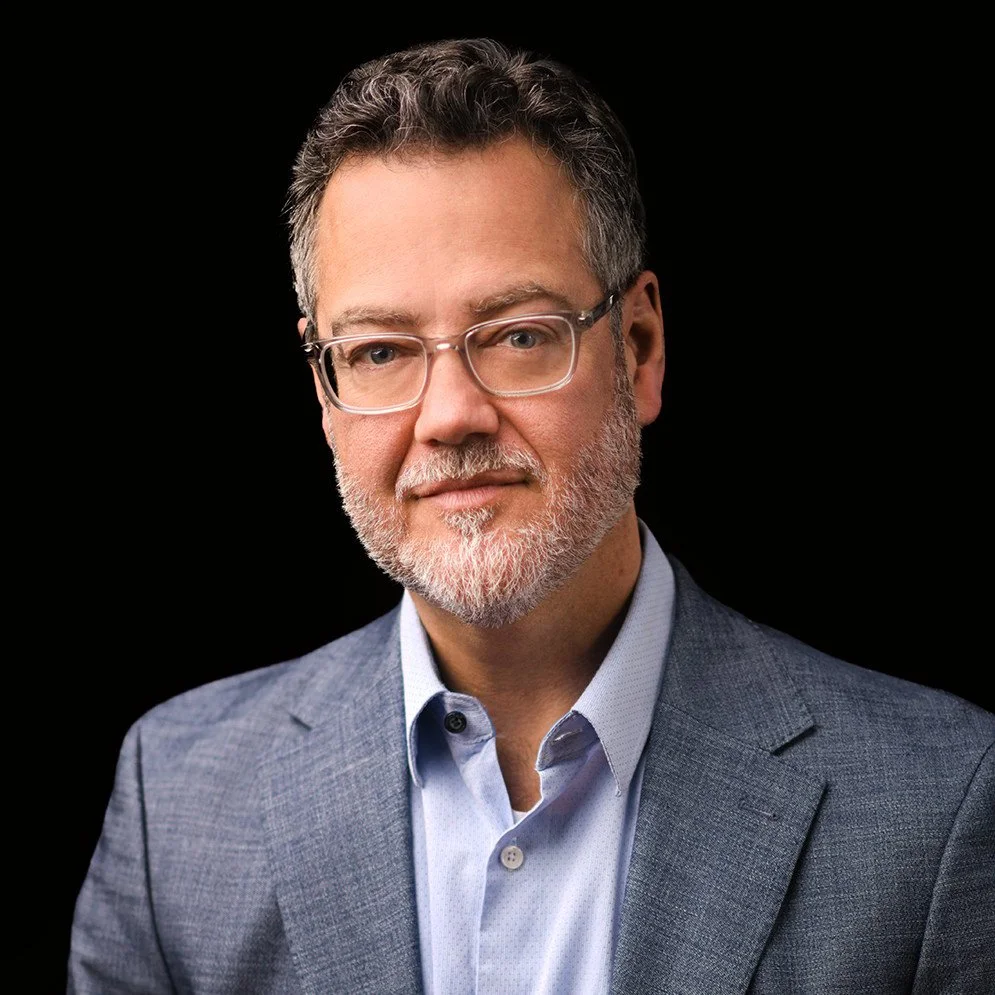
Trygve Throntveit, PhD is Research Professor in Higher Education and Associate Director of the Center for Economic and Civic Learning at Ball State University; Director and Co-Founder of the Twin Cities-based Institute for Public Life and Work; and Founder and Director of Third Way Civics: Educating Undergraduates for American Democracy, a nationwide civic learning initiative generously supported by the Teagle Foundation and Lumina Foundation. In 2025, Dr. Throntveit was named an inaugural National Civics Fellow by the Center for Revitalizing American Institutions at Stanford University's Hoover Institution. He is a Charter Member of the Alliance for Civics in the Academy and Founding Member of the Braver Angels Civic Scholars Council.