
From Healthcare to Health: What Makes a Nation Healthy?
Q&A with Don Berwick, MD, MPP (Part 2)
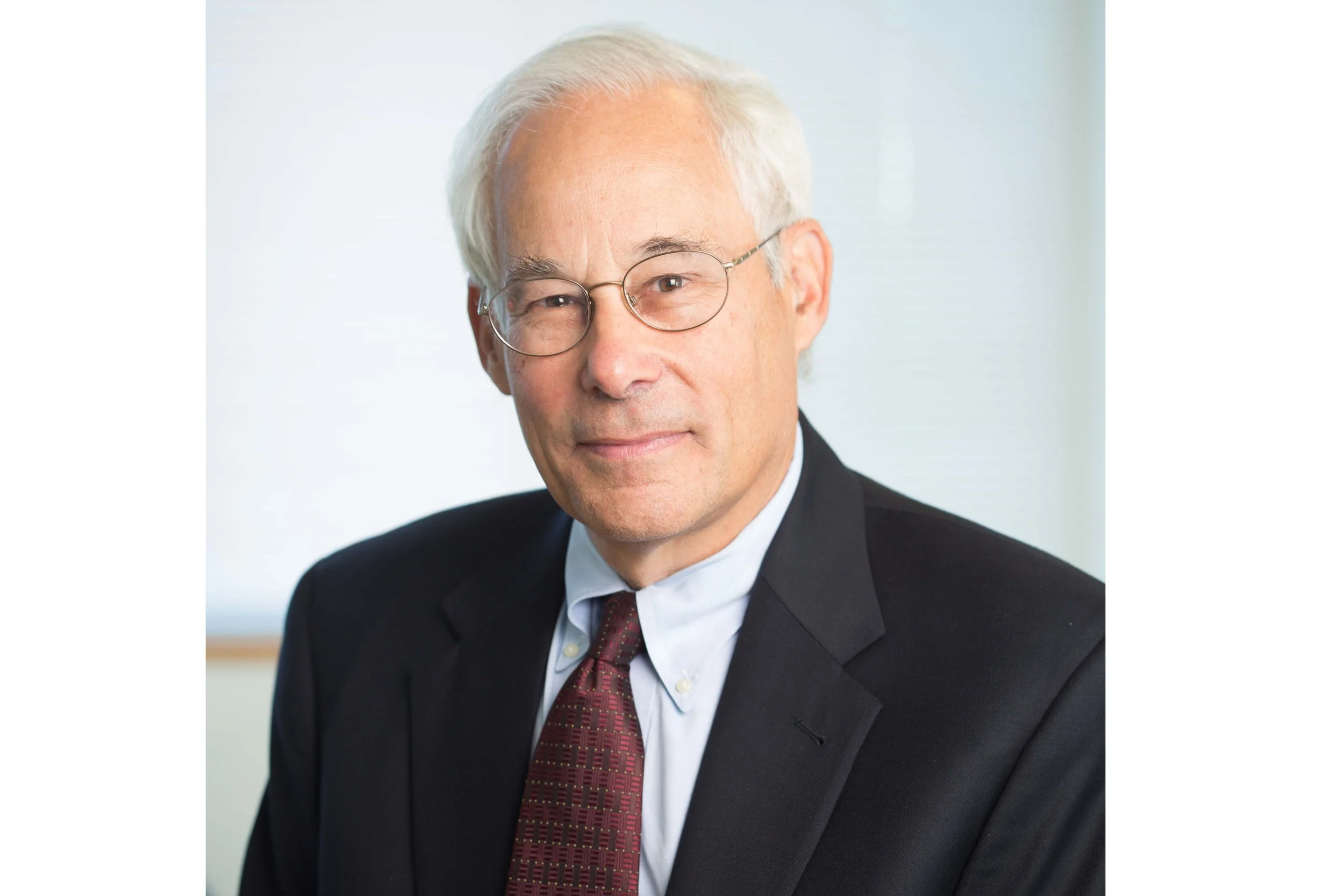
Donald M. Berwick, MD, MPP, is President Emeritus and Senior Fellow at the Institute for Healthcare Improvement (IHI), which he co-founded and led for approximately two decades. A pediatrician and nationally recognized leader in healthcare quality, safety, and policy, he served as Administrator of the Centers for Medicare & Medicaid Services in the Obama administration and has held faculty appointments at Harvard Medical School and the Harvard T.H. Chan School of Public Health.
Across three conversations with Dr. Berwick, we widen the lens from healthcare to health to the American Experiment - asking what we choose to improve, what shapes health, and ultimately, what the health of Americans reveals about the nation we are and aspire to become.
Martin Goldstein: Dr. Berwick thank you for agreeing to this interview. At the close of our last conversation, I asked what you believe the American healthcare system was designed to do and who it was designed to serve. Your answer: the healthcare system is designed to preserve and expand the wealth of incumbent stakeholders including hospitals, insurance companies, pharmaceutical companies, medical guilds. It is an engine for the accumulation of wealth through the production of care, but not with its primary goal being the best possible care for individuals or the best possible health for communities.
Donald Berwick: I stand by that. That’s not espoused design but that’s how it’s behaving right now.
Goldstein: So, let’s begin there. If the system is designed to preserve incumbent wealth - and design reflects choices - how were those choices made, and by whom?
Berwick: There’s a set of payment habits, payment rules, and regulatory regimes that are largely fit for preservation of the status quo. There’s tremendous political energy around preserving that status quo - not distorting the rules so that the healthcare system must behave differently. It plays out differently with each of the sectors: hospitals, clinicians, pharma. But the general theme would be: I’m doing just fine, thank you. Send me more money, please. And don’t change anything big.
The incumbent stakeholders I’m referring to are people and organizations with a lot of funding. Given Citizens United and the way our political system is so responsive to lobbying, they have managed to keep things pretty well as they are. There are always incremental changes, but the fundamental changes in investment and delivery are not progressing well.
Goldstein: Were the institutions themselves the architects of that design or did it simply emerge from structural forces? How did it come about?
Berwick: In the big picture, you’re talking to the wrong person. I’m a pediatrician and quality wonk, not a historian. I think Paul Starr’s book, The Social Transformation of American Medicine is a good account of how we got here. Key milestones included the establishment of an employer-based insurance system, which created the bizarre situation in which employers spend money that could go to workers on health insurance premiums instead. And then the 1965 Great Society legislation that created Medicare and Medicaid, definitely progress, but it also set up rules that still largely maintain.
And there’s a critique I mentioned last time: the work of Naomi Oreskes on the Chicago School view that markets will do better than the government which has found its way into a lot of products and services that other countries regard as social goods properly vested in government. We didn’t do that. We maintained the idea that market structures will help, and there’s a lot of investment in making sure that stays in place, rather than having a governmental insurance system, let alone a governmental payment system.
Goldstein: When you first engaged with healthcare as a student, then a physician, then at the HMO, what were the forces that seemed to be preventing the changes you could see were needed? And did they feel like forces that could be moved?
Berwick: I hoped so. My interaction with the healthcare system began as a would-be doctor and then a doctor, when I entered as a member of the professional workforce. My first encounters were simply as a student, and then a physician, trying to give care to people. As I mentioned last time, I had a special opportunity because of the degree I got from the Kennedy School while I was studying medicine - a master’s in public policy, which gave me a set of lenses on what was going on. But mostly I was just seeing patients and trying to make sure they got what they needed, and often that was a real problem.
Sometimes the problems were problems of ignorance - insufficient science. I would see people with diseases that overtook them that we simply didn't know what to do. But there were also systemic problems I could see right away. There was just so much to know and remember that I was always scared of forgetting a possible diagnosis. And there were sticky spots in the process: a piece of equipment was supposed to be in the drawer but wasn't, a report on an x-ray I couldn't find, a chart that had gone missing. There was a lot of viscosity to the flow of things that were supposed to bring you to the service of patients. Like most doctors, I was proud and happy to see patients, but frustrated that things weren't working. I was always behind, the waiting room always full, with delays I couldn't seem to control.
The next wave was becoming a doctor in a managed system - the Harvard Community Health Plan. I was made vice president because of my research background, studying clinical effectiveness quantitatively. By then we had the measurement tools of the RAND Health Insurance Experiment and the Medical Outcomes Study, providing well-calibrated and validated metrics. And the news wasn't great, plenty of evidence of inappropriate care, even in a very good organization, and plenty of evidence of patient dissatisfaction.
John “Jack” Wennberg's work - which I still think should have won a Nobel Prize - cracked the issue of variation. He was the first person courageous enough to show the degree of variability in care being delivered. I knew all this. It was my academic discipline. But in the world I was in, poor performance was noticed and documented, and that was it. If you published a paper showing how bad appropriateness was - you were done. The buck didn't stop anywhere. At the HMO, I could show variability among physicians and nurses, how many complications occurred, how long waiting times were, but I couldn't do anything about it. The myth was: if you measure, it'll change. Some magic will happen. The underlying motivational theory - never articulated - must have been that people weren't trying hard enough. That was the mid-1980s. The turning point for me was meeting Deming and Juran and others from other industries.
The more I studied that, the more I realized there were organizational and governance barriers to bringing in the changes in the care process needed to achieve different performance. The first barriers I encountered were managerial. It was just really hard to get people to change what they were doing, even if it could be better. Then, as time went on, I became more politicized. Many of the forces preventing structural change were in law, regulation, or habit - much bigger than any individual. Going to Washington and running CMS was the highest possible level of encounter with policy barriers.
Goldstein: In our first conversation you described Marmot's framework, five determinants of health, and a sixth he calls the cause of the causes. How do you understand the cause of the causes? What actually produces health, and how much of it does the formal healthcare system control?
Berwick: In reverse order: statistically, if we take 100 points of variation in health between individuals - between poor and wealthy areas of a city, between poor and wealthy countries - healthcare's share of that variance is around 10 percent. About 10 percent of your health is determined by the healthcare you receive. For an individual that can be very different - if you've had a certain kind of heart attack and can get a stent in time, it can save your life. But at the population level, it's about 10 percent.
About 40 to 50 percent of the variation is probably in your genes - your genetic endowment. And the residual 40 percent or so is shaped by what happens to you during your life - what we call the social determinants. That's what Marmot is cataloging in his five categories. It's a heuristic. You could have 100 categories, but his five account for roughly 40 to 50 percent of total variation in health. On the fairness question: we know pretty well what a health-producing community structure looks like - invest in kids, in schools, in workplaces, and so on. But even equivalently wealthy countries or cities behave very differently from each other. Some invest in the health-producing conditions and others don't, despite clear evidence that if they did, health would improve. The harvest from that difference is large. Paul Krugman recently wrote about variations in health status - we're talking about 7, 8, or 9 years of life expectancy. There aren't any drugs that do that. So Marmot's question is the right question: why would we stare in the face of evidence showing what would work and not invest? And his answer is that there's a social contract at work - that sixth variable, the cause of the causes - is fairness: the attitude a society holds toward mutual responsibility.
Goldstein: What entity is responsible for investing in the determinants of health in a community - and what entity currently answers for it when it fails?
Berwick: That’s a great question. In a hospital, if it starts to lose money, the board of trustees will engage and work with the executive structure to get back on budget - the buck stops. But for the community characteristics we're talking about, we don't have very good buck-stoppage in the US.
We have a Secretary of Health and Human Services, but we don't have a Minister of Health. If someone says the difference in longevity between a poor person in Alabama and a wealthy person in Newton, Massachusetts is of the order of a decade - who are you talking to? We've fragmented the payment, fragmented the metrics, and there is no unified entity responsible.
We do have anomalies - the Veterans Health Administration, the Military Health Command. The military is a very interesting example. In the duties of a commander responsible for readiness, health status is one of the capabilities that determines it. Evidence of high post-traumatic stress disorder rates, or high suicide rates, matters to the command structure - not just rhetorically but in reality. The Joint Trauma System in the military is one of the best examples of a learning system I've encountered. It follows all the rules for learning from what's happening on the ground and implementing lessons systematically. And it has that essential characteristic: somebody is accountable.
The Veterans Health Administration is another example. If you go to a VA facility - at least in the pre-Trump era - one of the things that strikes you right away is how focused and dedicated the employees are. They are there to serve people who served the nation. It's in the marrow, and therefore a kind of accountability exists. When patient safety became a serious issue around the turn of the century, Ken Kizer, then running the VA, picked it up immediately. Within a year or two, he'd established patient safety goals and hired astronaut Jim Bagian to report directly to him about safety structures, drawing from NASA's pre-Challenger experiences.
The Indian Health Service is desperately underfunded, but if you go onto a reservation and talk to the caregivers, there's duty and an attitude toward helping the tribal communities. So, we have these special cases. But if I ask who's responsible for stopping the opioid use disorder epidemic, or who's responsible for the fact that we have no system for care of traumatic brain injuries after acute care - crickets. Nobody there.
Goldstein: The entities you've just described - the military, the VA, the Indian Health Service - each holds, in its own way, a belief in investing in the conditions that produce health for the people it serves. Is that the fairness element Marmot is describing - the cause of the causes?
Berwick: Yes. Whether they'd go so far as to use the word fairness I do not know, but I think it would not be a bad word. There's a sense of ought in it, a sense of what's right, that all people deserve to be treated the same.
Goldstein: We're in the 250th year of a document that declares life, liberty, and the pursuit of happiness as unalienable rights - that all people are created equal. If what a country believes it owes its people determines its investment in health, what does that gap - between the declared unalienable right to life and a life expectancy gap of 10 to 15 years between the richest and poorest Americans - tell us about what this country actually believes, despite what it declared? And what would it take to close the distance between the declaration and the reality?
Berwick: You ought to be interviewing a political scientist or maybe a philosopher. But if you want to know what I believe, don't listen to what I say. Watch what I do. We walk past the problems even though we've written down that they shouldn't be there. I happened to watch my 2012 Harvard Medical School commencement speech the other day - it's on YouTube - and it says what I think. We walk past the problems. I quoted Saint-Exupéry: what it means to be a man is to feel responsible for miseries that you did not cause.
Goldstein: Social determinants of health are widely used - strategic plans, conference keynotes, mission statements. But the mismatch between what produces health and what we've built in the name of health suggests something more fundamental. A hospital screens for food insecurity and refers a patient to a food bank. A clinic identifies housing instability and connects a patient with a social worker. Is that addressing the social determinants - or is it managing the symptoms of a mismatch while the mismatch itself stays in place?
Berwick: I wouldn't gainsay those things - they're important. If you're the patient who happens to have someone ask about your food insecurity and then do something about it, by all means repair what's broken for you. Some organizations have done remarkable work that way. Montefiore, in the Bronx, has teams. When I visited, the person seeing you had at their disposal a food team, a housing team, a domestic violence team. Emergency department staff could call them in. But they were treating the downstream effects of inequity and a failure to invest in social well-being.
It's partly back to the question of where the buck stops. We don't generally have a person in direction responsible for seeing that everyone has a roof over their head, or that no children are hungry. And there's another important paradox: the closer you get, literally, to a community - to the people on a specific street - the more likely you are to see affection and mutual responsibility.
I'm having a difficult time with my hip. I arrived back from a trip, started to get bags out of the car, and was struggling. Within 20 seconds, my neighbor - who I don't know all that well - came over and said, let me do that for you. In Union Station the same thing happened. I would come to a stair with my suitcase, and almost every single time, a stranger would appear at my side. In local settings, there's tremendous generosity and a sense of fairness - whether it's what goes around comes around or something else, I don’t know, but it's highly reliable. As we scale up, we lose it.
Goldstein: You spoke in our first conversation about Wales and the sense of collective responsibility that smaller countries seem to sustain. What is it about scale that makes that possible, and what does it tell us about what we're trying to create?
Berwick: I'm very interested in what I call countries of three million - three to six million people - Wales being an example. It's not perfect, there's a lot of controversy and struggle, but there is a sense of we. Obama said when he was running for president that the most important word in our language is we. When you talk about these federal aims, that's what you mean. A heroic surgeon might repair your heart valve, but even that surgeon is depending on an enormous network. When you get to something like a roof over everybody's head, heroes are not invited, it's much more organic.
Goldstein: If the sense of we is what makes it work, how do you create it deliberately, at the scale of a city? And what is the role of a leader in that?
Berwick: I wish my thoughts were better formed. There must be a unit of action, such as a city. It can't be just a vague collective. It could be a street, or the city of Boston, or a section of the city - but without a unit of action, it's hard to ask, what is the system? Who has to do what to produce what we're after? Say, no homelessness.
And then you need a leader. I wish I'd understood this when I got into this field. I knew the mantras, but I didn't actually understand that you need a leader. I hesitate, because sometimes you do see emergent self-organizing systems.
I once showed a video in a speech - I think it was of the opening of a baseball game at Fenway Park. They invited an autistic child to sing the national anthem. He had a lovely voice, maybe 10 or 12 years old. He got started and then froze - he was so frightened. You could watch him stop and try to get reorganized. Then, first one voice, then another, then 30,000 voices started to join in to rescue the anthem and support him. No leader. It was a self-organizing expression of values and generosity. So, it can't be true that you always need a leader. But in all the circumstances I examine, it helps to have one.
There's another story I love. During World War II, a battalion of soldiers got lost in the Pyrenees Mountains - completely lost, running out of food. Then one of the soldiers reached into his rucksack and found a map. They used it and got out to safety - only to discover it was a map of the Alps. Karl Weick at the University of Michigan, a founder of the field of high reliability organizations, tells this story and muses: it may be that in the search for sense-making, any map will do. They got organized around the wrong map, but it worked. There's a role in leadership like that - someone who says, alright, here's the plan. It may be a god-awful plan, but now people say, it's a plan. Martin Luther King had no formal post of power. He was just compelling and knew how to use a microphone.
Goldstein: Rochester in the 1960s is the closest American healthcare has come to a proof of concept for this kind of collective action - Xerox, Kodak, IBM, government and private sector aligned around a shared aim. What got it off the ground, and what brought it down?
Berwick: I don't know the intimate story. My belief is that it was one of a few industrial leaders. Rochester industry was highly concentrated - Xerox, Kodak, IBM. A few very large companies in town, and something pulled them together to say, why don't we get this done? Primary care for everyone. Guaranteed.
I was there about eight to ten years ago, and it wasn't the same place. They had given up on the social contract that everyone would have a doctor. But they remembered it and were trying to start again. The leader at that time, I believe, was a man named Wegman - the founder of Wegmans - who said, hey everybody time out, this isn't working, let's get together.
As for what motivated the original leaders, I don't really know. In a longer view, they would be better companies employing thousands of people in a healthy community. But I suspect it was something a little less mathematical, just we want to live in a better place.
Those companies were known for admirable leadership. You had Paul O'Neill at Alcoa - a very risky company handling molten metal - who gave it one of the best employee safety records in the world, even among low-risk industries. I visited him at Alcoa headquarters, which he said he designed himself to encourage a community of shared effort. His desk was in the middle of a large open floor, not in an office. On his computer screen was his monitoring system for worker injuries, which he watched constantly. The one unpardonable sin at Alcoa, I was told, was to have a worker injury in your plant and not tell him. In a corporate environment, you can get a lot of mileage out of a very dedicated executive.
Goldstein: You were part of the leadership of the group that produced Crossing the Quality Chasm and its six aims - safe, effective, patient-centered, timely, efficient, and equitable. Equity was last. You described that as a tell. The 100,000 Lives Campaign didn't ask whose lives were being saved. Before we go further, one essential question: what do we mean by equity? Equal treatment - everyone receives the same care? Equal access - everyone can reach the care they need? Equal outcomes - the gaps close regardless of race or wealth? Those three definitions imply three very different systems. Which one is the field working from?
Berwick: I don't really know. There are people who spend a lot of time interrogating that word. I'm not one of them. I think it must mean that things about you that you can't control - that are not subject to your will - have a strong effect on your health status, your longevity. The cards you've been dealt.
To me, it has something to do with being able to maximize whatever potential you have, so that everyone can make full use of their talents. And there must also be some sense of basic rights. Not being hungry in a country with the capacity to feed you is a form of inequity that shouldn't be tolerated. How you establish what those basic rights are - I'm way over my head.
Right now, in America, the degree to which the color of your skin determines the opportunities you have to maximize what you bring to the world is a deep, deep embarrassment. I've called it the worm in the heart of the country.
Goldstein: The PDSA cycle, Plan, Do, Study, Act, is the methodological foundation of IHI's quality improvement work. What does it look like when it works at its best? And can it be applied to collective action or to the kind of political change the equity gap requires?
Berwick: For some reason, people have this reductionist idea that PDSA is improvement science, or that it's not. It's simply one of the ways to think about an environment where continuous improvement is possible. Because we're generally dealing with nonlinear systems that are highly unpredictable, one of the important capabilities you may have is to try things. You can't really know what's going to happen. So you try it out, ask what did we just learn, and act on what you've concluded. It's a mnemonic for everybody try things. And the observation is that cultures and organizations where people can genuinely say, I've got an idea, I'm going to give it a shot, and where leaders say yes, they just improve much, much faster. When that's distributed through a whole workforce, you learn faster.
It's an important idea, but it's only a little piece of a whole cultural change. Deming called it instant pudding - everyone wants instant pudding. But we're talking about a pretty major shift in thinking, especially compared to the American individualist ethos. You have to swallow hard and really start to rethink how we're being together.
By the way, PDSA was originally PDCA - Plan, Do, Check, Act. In my lifetime, they moved from check to study because the way you learn from action in a nonlinear environment is as much narrative as quantitative.
Could it be used in collective action? Absolutely. When I ran CMS, we ended up with around 190 black belts by the time I left, and I was only there 17 months. In a governmental system where the job was very different from treating a broken arm, the staff loved it. They loved being able to use their brains to change their work.
And if equity had been first on the list, not last - PDSA could absolutely be used to address it. There's a large equity collaborative now in Massachusetts, started by Blue Cross Blue Shield with IHI. I've seen it work.
Goldstein: You mentioned a proposal - five American cities, a three-to-five-year commitment to measurable improvements in health. What would that actually look like?
Berwick: I'm full of hot air there - it's a dream. What I'd really like to do is get 30 minutes on the podium at the National Conference of Mayors and say: I've got an offer for you. Here's a framework that will probably add half a decade to the average lifespan and a decade to the average health span in your city - any city. The science is almost incontrovertible. We have the best epidemiologists in the world ready to work with you. You already have a cabinet, you already probably have a meeting twice a week with your department heads. That meeting could become the place that begins the process of lengthening lives. Sign up here - only room for five.
Would I sell it on fairness, or on economics? I think pride is something mayors would like to feel. But I actually think the right approach is through what Boston calls the vault, the hard-to-get-into meeting of the richest people in the city. Every city has its equivalent. Let's talk to the large companies that depend on the health of their employees and come at it that way. That's taking a page out of Rochester's book. The approach has to be responsive to the history, culture, and pre-existing relationships in each city - they're going to be different from each other.
Goldstein: Before the blank slate question, one more essential: what is the aim? Not the aspiration - the specific, measurable aim. Equity of access - everyone can reach care? Equity of outcome - the gaps close regardless of race or wealth? Or something prior to both?
Berwick: I would say the aim is health span - years of healthy life before the inevitable deterioration. And then you'd need a stratified view: if you take quintiles or deciles in the city, who occupies the lowest decile of health span? It will almost certainly be poor and minority populations. Equity comes out of the aim that way - you say, we've got to do something about that.
But it would depend on the history and what kind of place you're working in. When Katrina hit New Orleans, I had already been in touch with a doctor named Don Erwin - an American hero in my view. He was a prestigious physician at the Ochsner Clinic, but he was noticing the equity gaps in Louisiana, and they bothered him deeply. So he left Ochsner and started the St. Thomas Clinic in one of the very poorest areas of the city.
When I visited, the care at St. Thomas was care you would have been lucky to get at Ochsner. He made no compromises, and in a very stressed population he developed a reliable primary care and follow-up system. It was the first clinic to reopen after Katrina. They employed formerly incarcerated young people, who ran a coffee shop in the clinic. The point is: once you decide to identify a stratum in need and customize the approach, you can get incredible things done. An amazing story. But he is struggling for every nickel - the fairness problem, every step of the way.
Goldstein: The federal architecture that presided over these failures - CMS, NIH, CDC, DHHS - is being taken apart. Not reformed. Taken apart. Is that pure loss - or is there a version of this moment that is also the first genuine opening for the kind of redesign the aim of equity requires?
Berwick: No. Not now. It's pure loss. The dismantling of the agencies and the centers of action and resources that could be contributors to redesign has been very effective. There is no silver lining.
If I look hard, I think some states are throwing up their hands - the federal government being out to lunch - and saying, we're going to have to do this ourselves. But examples are hard to find. What's happening at CDC, the taking apart of the data structures, I spoke to a former CDC bureau chief, and he said: I don't think this can ever be rebuilt. It may be permanently destroyed, or at least for a number of generations. The human resource infrastructure has been undercut.
I wish I could give a happier answer. Maybe if we're able to organize politically to get past this - there may be a reusable political structure where we don’t just get rid of the nasty stuff, but build something good. I've started a nonprofit - a 501(c)(3) - with two colleagues, called Power to Patients. Our website just went up this week, and we just received IRS approval. What we're trying to do is mobilize patients. They're really angry in this country, and the data are strong. I'm hoping we can pull them together into some kind of political force, but we'll see.
Goldstein: For our final conversation - what do we build? Not improve, not return. Starting from the community, starting from the aim, starting from what we now know - what do we build, and what is the first experiment that would prove it works?
Berwick: If I were given all the power, I think we'd need to work with unified population budgets. Take a population of 50,000 or 500,000 and say: here is the budget - the budget for being well and for recovering from illness.
In England, they were starting something fantastic. The National Health Service has never fully realized its potential,even though they had centralized leadership and a uniform national budget for healthcare, and a well-developed re-distributional system using the Jarman Index - an index of deprivation that shifted money geographically from wealthy to poorer areas. When you visited hospitals and practices all over England, you found unity at the top and fragmentation at the sharp end.
Then in 2015 to 2017, they developed Integrated Care Systems and Integrated Care Boards - designated populations, sometimes a city like Manchester, sometimes a geographic area like the Cotswolds. The leading hospitals in each area were given the job of helping to craft integrated care systems for those populations, including GPs, laboratory services, ambulance, prevention, and mental health. They divided England into 42 areas of roughly one to two million people each, with the idea: here's your budget - mental health, acute care, ambulatory care, contracts with doctors - and you can move the money any way you want, as long as the population health outcomes are on this dashboard. It was beautiful. But it has so far failed to achieve the traction hoped for, partly because the Conservative governmentdismantled the intermediate supportive infrastructures. You can't just snap your fingers and say, you're now in charge of Newcastle, make it healthy. You need education systems, sharing and learning processes. By the time Labour got back in, performance had deteriorated so badly they felt they had to change everything again.
Saudi Arabia tried the same thing - about 38 million people divided into 19 units of roughly two million each, the same population-based planning idea. Singapore divided the country into three large healthcare systems by region: the University Health System, Sing Health. The government said to each: you've got 1.5 million Singaporeans, they're yours, build the system. They had a plan for managing aging - a major issue in Singapore, where people live a long time. But the acute care hospitals that were the hubs didn't want to share resources. And half the GPs out in the community were cautious, saying leave me alone, I want to do it my way.
There are a number of stories here, but I think the basic framework of a population-based organization is the right one. I really do. Markets are not relevant - it's social planning that I'm thinking of.
About the Author:

Martin H. Goldstein is a 2020 Harvard ALI Fellow, a 2021 Senior Fellow, and Managing Editor for the Social Impact Review. Martin has thirty plus years in biopharma, initially at Hoffmann-La Roche, followed by Genentech. Subsequently, as the founder and CEO of ViroLogic, Inc., a clinical laboratory guiding therapy of HIV-infected patients. More recently, he has been working with venture to build biotech companies pursuing cutting-edge science to develop therapeutics to treat disease.
This Q&A has been edited for length and clarity.
Cover Photo Credit: DesignVectX, stock.adobe.com