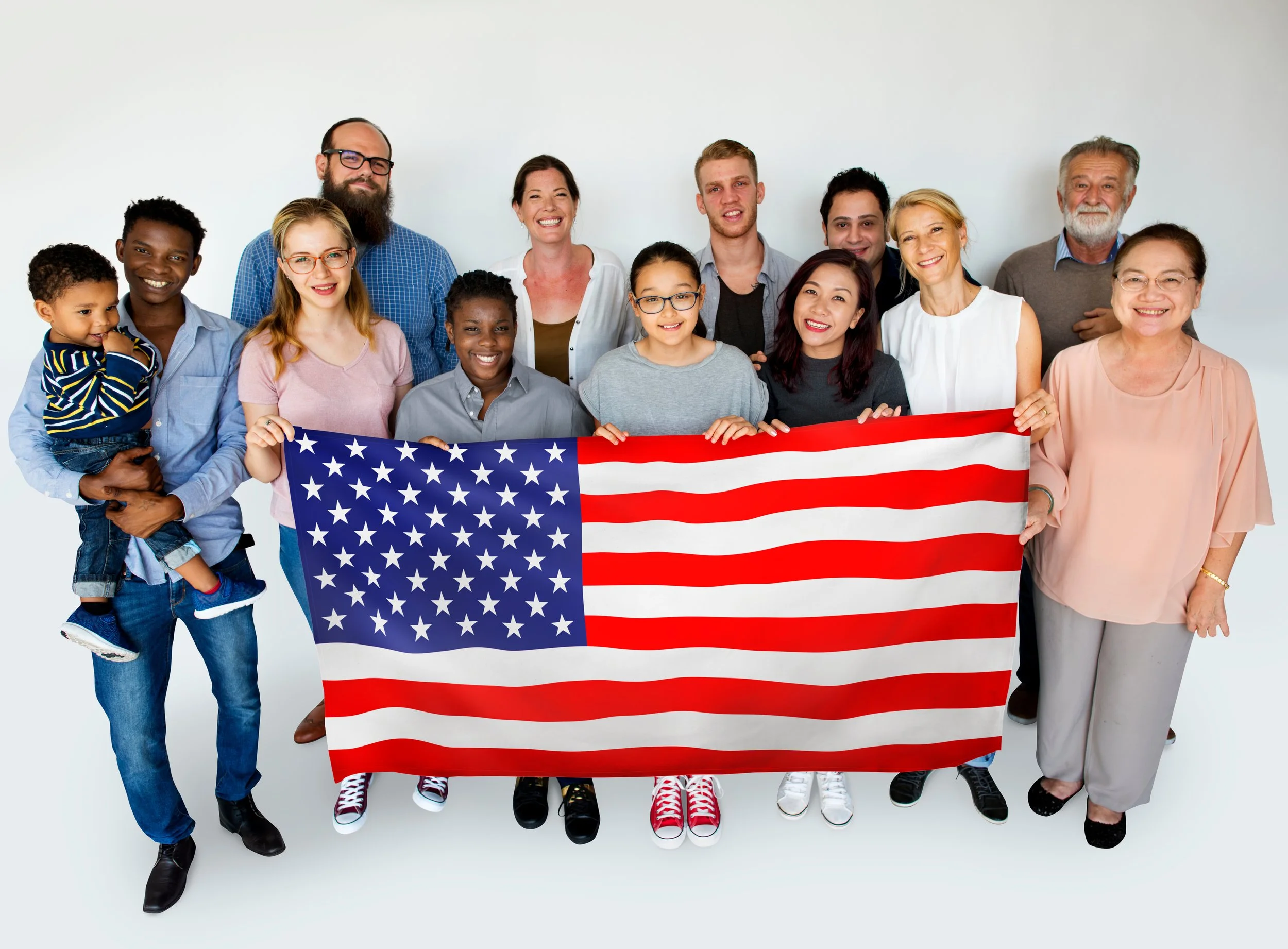
Credit: Rawpixel.com, stock.adobe.com
As America celebrates its 250th anniversary, I do so with awe, sadness, and optimism. Awe that the only country founded on an ideal – equality – has flourished and become the global exemplar of democracy. Sadness that we seem to have forgotten our core values, especially in terms of racial equity and social justice. Optimism that sturdy Americans will reach back and reaffirm those core values, along with respect for the rule of law.
Democracy Begins with the Freedom We Inherit
My commitment to democracy came from my family. My great-grandfather, George Smith (Washington) Lovejoy, was born into slavery in Virginia on October 9, 1829, before being trafficked to Georgia. My great-grandmother, Amanda Render Snow (commonly known as Mama Snow), was a teacher but told the 1910 census-taker she was a housewife, out of fear of being lynched for her literacy. Growing up hearing stories about their lives, I often joked that I inherited two extra genes: one for democracy and another for women's equity.
That inheritance became personal in 1965, when a young John Lewis came to Chatham College, a women's college in Pittsburgh, to recruit Freedom Riders. I was ready to go south and fight for equal rights, urging our country to live up to its ideals. But my mother would not give me permission – it was simply too dangerous.
At the same time, Reverend James Robinson, a Black Presbyterian minister, was recruiting participants for Operation Crossroads Africa, a summer program that paired U.S. college students with African counterparts to work on sustainable development projects in their newly independent countries. My mother relented, and I spent the summer in a small rural Muslim village in northern Côte d'Ivoire, working alongside Ivorian university students to build a youth center.
Living in that village changed my understanding of both America and myself. As I watched the traditional family living next door to the school where we were lodged, I realized that, without opportunities for education, their two young daughters had severely limited futures. I realized that, as an American, I had choices. I had agency. I could imagine changing the trajectory of their lives. That was when I first understood what I have come to think of as American privilege.
That epiphany of American privilege shaped my 60-year career of public service and nonprofit leadership.
But American privilege is not Black privilege. In 1980, I led U.S. efforts for the Mid-Decade World Conference of the United Nations Decade for Women. Our team was in the final negotiations of an apolitical education plank for the Program of Action when I called the State Department for clearance. Clearance was denied. When I broke the news to my Jamaican counterpart, she shook her head in disbelief, turned to me, and asked, "How does it feel to represent a country that oppresses and discounts people who look like you?"
Her question stung because I am an American patriot. Whenever I represented our country at international meetings, I took great pride in beginning my remarks with, "On behalf of the United States of America."
But her query was a pointed reminder that our democracy has never fully resolved the race question. Where do Black Americans fit in the American narrative? As our nation marks its 250th anniversary, we have yet to reconcile our aspiration that all people are created equal with the persistent gaps in income, opportunity and class confronting many Black Americans and other people of color.
Still, as a nation we have made progress. In many instances it was led by our government, in response to massive protests for civil rights fueled by Black Americans, often in partnership with white Americans. We should be proud of that progress, defend it, and build on it, not try to erase it.
Democracy in Action
My years in government reinforced my conviction that democracy is strengthened by the institutions and people who work every day to put those ideals into practice. When I served as Deputy Assistant Secretary for Equal Employment Opportunity and Civil Rights at the Department of State, I worked closely with the Department of Defense and found that the U.S. military was in the vanguard of integration efforts. The officers I worked with took great pride in their achievements, demonstrating that expanding opportunity through merit-based affirmative action resulted in a more cohesive, better-trained, and more effective U.S. fighting force.
Later, when I served as Assistant Administrator for Africa at the U.S. Agency for International Development (USAID), I applauded our supplies and packages being labeled "Gift of the American People," reflecting our country's longstanding commitment to helping countries strengthen their institutions and expand opportunity. To me, those words were more than a label. They reflected the belief that our country has both the capacity and the responsibility to work with others to build more prosperous, stable, and democratic societies.
Those experiences reinforced a lesson I first learned as a college student interning in Côte d'Ivoire: democracy is measured not only by the freedoms we enjoy, but also by how we use those freedoms in service to others.
Building Bridges
After stints in and out of government, I became an inaugural Harvard Advanced Leadership Initiative Fellow in 2009, where I established The Bridges Institute, a nonprofit organization dedicated to strengthening democracy and good governance across Africa. Over the following decade, my colleagues and I partnered with leaders across the continent to strengthen democratic institutions, improve governance, and expand opportunities for everyday citizens.
Then, in 2020, after the murder of George Floyd, an African American man, by a white police officer in Minneapolis, Minnesota, we were forced to confront the fissures in our own democracy. We realized there were valuable lessons to be shared between our work in Africa and the challenges facing our own democracy. That realization led us to launch Concerned Citizens Defending Democracy (CCDD), a project of The Bridges Institute that brings together leaders from business, education, faith communities, the arts, the legal profession, civil society, and other citizens committed to encouraging democratic participation, supporting free and fair elections, and advancing racial justice and reconciliation. Together, we emphasize the Constitution and the Bill of Rights, civic education, and respectful dialogue among Americans with diverse perspectives.
The work has been challenging. We have wrestled with difficult issues, including First Amendment protections, proposed changes to the Voting Rights Act of 1965, competing interpretations of the events of January 6, the elimination of Diversity, Equity, and Inclusion initiatives, and growing ideological polarization. We also launched a campaign highlighting stories of local activism, showing how citizens across the country are making a difference in their communities and strengthening democracy through personal initiatives. Separately, we provide resources to help individuals encourage voter participation in their own communities. Working through these challenges reinforced my belief that democracy is sustained not by avoiding our differences, but by engaging one another with honesty, respect, and humility while remaining committed to our country’s founding principles and its future.
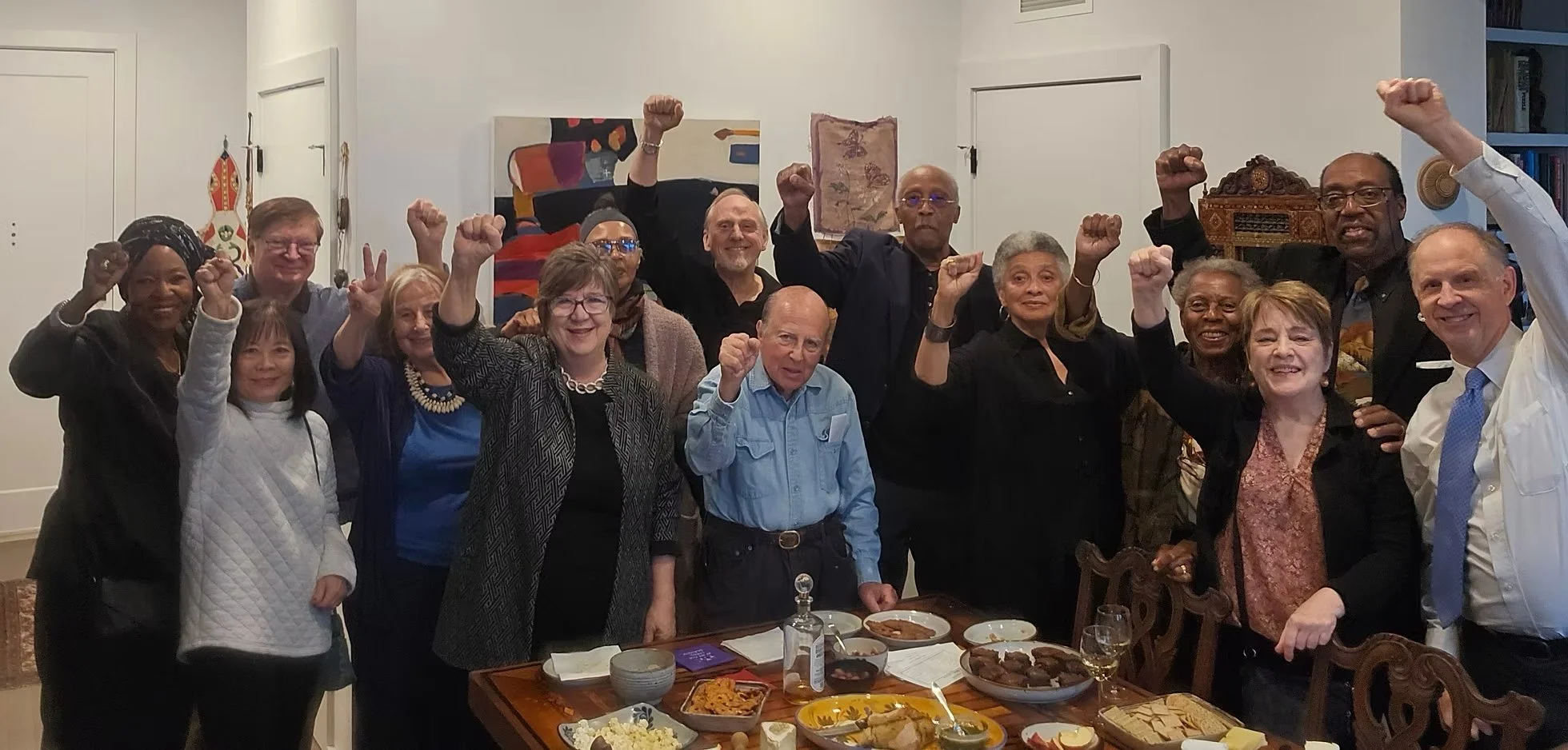
Photo Credit: Concerned Citizens Defending Democracy (CCDD)
Throughout this journey, I kept coming back to one question: How can we create safe spaces where patriotic Americans with fundamentally different views can engage one another in honest, respectful dialogue?
Strengthening Democracy Together
That question stayed with me when my husband, Bob, and I moved to Knollwood in 2024. After decades of working in government, international development, and civil society, I found myself in a community of seniors whose lives had also been shaped by public service and civic engagement. I found that reassuring and I immediately immersed myself in nonpartisan democracy promotion.
One of Knollwood’s discussion groups provided a welcoming forum for conversations about democracy and other current issues while also fostering friendships. Conversations about subjects as varied as Confederate monuments, our different life experiences, and the coarsening of our national civic discourse reminded me that meaningful dialogue is still possible. Perhaps most encouraging was residents' openness to new ideas that strengthen both democracy and community.
I hope communities like Knollwood can serve as models for neighborhoods, faith communities, civic organizations, senior living communities, and other local institutions seeking to strengthen civic dialogue, build trust across differences, and foster a renewed sense of shared purpose.
As America celebrates its 250th anniversary, we honor a country rooted in the radical notion that all persons are created equal, that there are benefits to being a nation of immigrants, and that our pluralism and diversity are the basis of our strength.
I think of my great-grandfather, George Washington Lovejoy, and my great-grandmother, Mama Snow. I imagine that when I meet them, they will ask me, "Vivian, how did you use the freedom we fought so fiercely to secure for you?" I will tell them that I spent my life trying to live the foundational values that are the basis of our democracy, that I tried to build bridges across cultures and communities, foster dialogue and racial healing, and help ensure that future generations inherit not only the freedoms we enjoy, but also a sense of responsibility for protecting them. That sense of shared responsibility to me, is the enduring promise of theUnited States of America.
About the Author:

The Honorable Vivian Lowery Derryck is the founder of the Bridges Institute, a non-profit she launched in 2009 to help strengthen African governance and democracy when she was an inaugural fellow in Harvard’s Advanced Leadership Initiative. In 2020, following George Floyd’s murder, Bridges launched a new initiative, Concerned Citizens Defending Democracy, which focuses on strengthening U.S. democracy in a global context.
Previously, Vivian served as the Deputy Assistant Secretary for Equal Employment Opportunity and Civil Rights at the U.S. Department of State, the Senate-confirmed Assistant Administrator for Africa of USAID, President of the African-American Institute, Executive Vice President of the National Council of Negro Women (NCNW), Vice President of the National Democratic Institute, and Senior Vice President of the Academy for Educational Development (now FHI360).
A 2011 Purpose Prize Fellow, Vivian has been honored with several awards, including the Guggenheim Humanitarian Award, NCNW Martin Luther King Service Award, UNICEF Achievement Award, African Union African Women of Excellence Award, UN National Capital Area Perdita Huston Human Rights Award, and an honorary doctorate from Chatham University. In 2020, Howard University established two endowed Fellowships in Sustainable Development in her name, and in 2021, the Malian government named Vivian a Knight of the National Order of Mali.