Q&A with Maury Giles
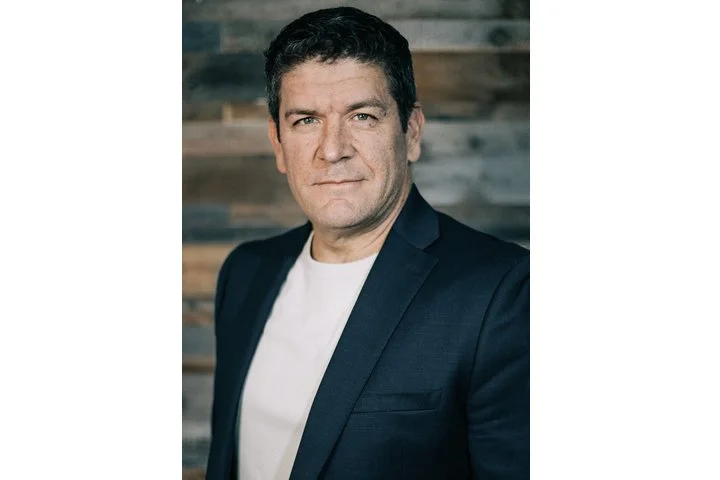
Maury Giles is CEO of Braver Angels, the nation’s largest grassroots organization inspiring Americans to build together across differences by learning to contend without contempt, rebuild trust, and share in the practice of self-government. He brings more than three decades of commercial and civic experience spanning journalism, market research, and experience design, where as an executive and entrepreneur he specialized in decoding human motivation and building high-trust engagement strategies for complex organizations. He now applies that results-oriented discipline to making courageous citizenship the honored norm in America. Before becoming CEO, Maury spent five years as a Braver Angels volunteer and moderator, leading bipartisan legislative workshops through Braver Politics. He studied at BYU and earned degrees in communication studies and journalism from New Mexico State University. Based in Salt Lake City, Maury is a husband and father of ten in a blended family who runs marathons, volunteers with CASA, serves in his church, referees high school football, and reads as many books as he can.
Sandra Kresch: Braver Angels was founded in 2016 to address political polarization in the U.S. Yet despite growing into a large national organization with demonstrated success in reducing affective polarization, as a country it appears that we are becoming more polarized. The venom in political dialogue has escalated in the past decade and things are getting more contentious rather than less. Given this, what do you think we need to do to move to a healthier society?
Maury Giles: Data show that Americans are feeling exhaustion, that our best days are in the past, and we can't solve difficult problems. I wonder if there is a silver lining in that. We as a people are getting sick and tired of being sick and tired.
There's something intrinsically American about being an American. It involves recognizing the role of neighborly connection, working together and accomplishing things, solving problems locally together. We've gotten away from that as a civic reflex. There are so many forces to divide us, whether it be the social media ad revenue-based model that forces us into our tribal corners, the duopoly of two parties controlling the electoral process, with a primary system that pushes us to the extremes, and the 51-49 margin that keeps us thinking that every election is an existential crisis. If you think about it, we are allowing outside forces to shape reality, even though they are projecting anything but reality.
If we are going to combat these forces, the techniques to create healthy dialogue that are core to Braver Angels’ approach is a great start to addressing the problem. However, when you are starting to feel even more afraid of the other side and are getting rage bait-fed by the industrial outrage complex, dialogue for dialogue's sake just doesn't cut it. It feels like it's inadequate to deal with the reality of the problem today. It's not acknowledging how significant the situation is as more people feel they must do something to make a difference.
We at Braver Angels are seeing that and are putting significant structure behind our long-standing focus on collaborative action. We've always encouraged working together, but now we're putting that front and center in our work, saying courageous citizenship is what we must do to combat the intensity of systemic incentives in society that are separating us. It's having the courage not to act with cowardice or with recklessness, but to stay at the table, engaging in conversation, not just to talk, but to identify local needs and issues, working together to build solutions.
The important thing is to focus at the local level because that's one of the easiest ways to get out of the outrage cycle predicated on national issues and identity politics. If you help people recognize a housing development crisis in their neighborhood, a homeless issue or a traffic problem and focus on the need to solve it, that will bring them together focused on common interest. We teach them how to find people with different points of view on issues, apply our methods and get to solutions. That's courageous citizenship in action, when individuals begin to realize the transformative experiences associated with finding common ground.
Kresch: Two of Braver Angels’ signature programs — Trustworthy Elections and Immigration — focus on issues where there is a huge partisan divide in America today. How are you addressing these issues and what impact are you having?
Giles: We've applied the same starting point in terms of methods with both. We are going to American voters at the hyper-local level across the country and using our “common ground” techniques. First, one team listens to the other team discuss what their point of view is on the issue. Then we ask the other group, who have a different perspective on this issue (or at least believe they do) to listen for what surprises them and what they might have in common. Then they reverse roles. This simple exercise is very powerful because it's not the way we typically engage. Typically, we engage in listening because we're trying to see whether people are on our team, to get ready to attack or cheer them on. We force a different dynamic from the outset, listening to understand, not to identify tribes. Following that, we do one-on-one conversations to learn about life experiences that shape the way people view the issue. After that, we break up the two teams to go into different rooms and ask them to identify all the values, concerns, and solutions that they think the other team will agree with, based on everything they just learned.
This sequence is amazing, as it leads to a substantive discussion of each team’s list of what they think the other team values. These are things that they believe, which are on the list because they believe the other team believes they should be there as well.
The Trustworthy Elections project was started to deal with the fact that there is growing concern in some quarters about whether our elections are trustworthy. When you go through the process I just described, we found 600 plus unanimously agreed upon values, concerns, and solutions focused on how elections can be made more trustworthy and what matters to people on this topic. Given the venom and political divide over the security of elections after 2020, finding this degree of common ground reinforced our feeling that it is possible to build consensus around the most contentious problems facing our society. We created a massive report focused on approaches with common support across the political divide and shared it with Secretaries of State around the country because that's where elections take place. We're doing the same thing on immigration right now. From the forty-five plus sessions we've done already, we have over four hundred unanimously agreed upon values, concerns, and solutions related to immigration.
In both cases, we are finding what a lot of survey data shows: when you strip away the performative politics and you just get down to what people care about, we're on the same page with 80% of it across the political divide. On the 20% where there are differences, they typically relate to solutions and the way they get deployed. We're recognizing that we have a lot of common values and concerns, and we're taking those to Congress.
Kresch: How do you define courageous citizenship as something individuals can embrace and get involved with?
Giles: Intentionally acting across political differences to build together, starting locally. It's making the choice to step out of the outrage cycle, the labels, the performative politics, everything that society tells you to do right now, and actively connect with people across differences. At its core, it's that simple, even though it takes courage to do.
We see courageous citizenship operating on three levels. First is to recognize and embrace the fact that you have 100% control over only one thing and it’s your agency to act instead of react. That’s the first step in courageous citizenship, because recognizing agency is when you begin to understand the importance of Louis Brandeis’ comment that the role of citizen is the most important office in the constitutional republic. Courageous citizenship starts with accepting that agency.
The second step is to choose to act together locally, which is especially hard today because everything in society would tell you not to do this. And we don’t mean just with all your buddies and friends. That's not what we're talking about. We're saying, find people who are different from you and act together.
The third dimension of courageous citizenship is really what we're shooting for. When you engage across differences to do things locally and build together, an amazing thing happens. You may not become best friends with people across the political divide, but you'll have respect for each other, you'll see each other with the intrinsic dignity and worth that you each have as humans. Beyond that, when people practice this work of courageous citizenship, it arrives organically at the conclusion that there are American ideals that are worthy of our defense. They don't have to do with the color of our skin, our political ideology, our gender, or our age. They have to do with the reality that we all have made the choice to live in this society that requires self-governance. And we believe courageous citizenship is the most critical ingredient to sustaining a resilient self-government.
Kresch: How does Braver Angels approach the development of courageous citizenship and inculcate it into our society?
Giles: Our approach to building courageous citizenship operates on the individual, local, and national levels. First, we have programming that is intended to help you recognize your agency to act instead of react. What we try to do is to help people look within and realize that civic engagement is something that matters to them. There's a particular tool we've embraced from a partner organization, the Dignity Index, that's meant to help you look inside yourself and evaluate the language you are using and the degree to which you're contributing to common understanding and the ability to connect with others. Finding strategic partners that are doing this work in a lane adjacent or synergistic to us is another way we're bringing about courageous citizenship. We’re trying not to replicate work done effectively by others in order to leverage our own resources to expand on what we are uniquely qualified to do.
The second thing that we believe you must do to develop courageous citizenship is to create centers of community action that are volunteer-driven. In Braver Angels, we call these “local alliances”. They have developed over the last decade as the primary channel through which we do our work. What we've realized is that the ones that have the greatest impact are those that become centers enabling people to develop civic habits, talking with each other, looking for opportunities and needs in their local area, and doing things together, engaging in collaborative action.
So, we've begun to enhance programming that we call “citizen-led solutions” focused on enabling people to identify community needs and help them mobilize to be able to address those needs collectively. That puts them in a very different frame of reference regarding their elected officials than is usual, looking at them as being “on tap”, not “on top”. That's an important principle of citizen-led solutions as it starts to recognize our individual responsibility in the civic process beyond voting, focusing on how we the people, looking at our neighborhood, would solve a specific problem and then taking recommendations to our city council, school board or county supervisors. Engaging and looking locally for things to solve together is a way of developing greater civic muscle.
Now, we also know that while people are working locally, they start to feel like they can do something bigger, and that’s when we can take on difficult national issues. Using our methods, engaging our local alliances and then finding common ground, we can aggregate action across geographic areas and take recommendations to members of Congress. We’ve done exactly that on election security through our Trustworthy Elections project and are doing it right now on immigration, ICE policy, and deportation. These are some of the most inspiring things I've seen and participated in within Braver Angels, because it's so countercultural to what we experience every day.
Kresch: What can individuals do to get on the courageous citizenship bandwagon? What actions can we take to move in the direction of a more positive society, addressing the critical needs of the American public?
Giles: It starts with something that we all intrinsically, deep down, understand as unhealthy, but really struggle to get away from. When it comes to news and information, the first step would be to shut off social media. Challenge and be skeptical of your echo chamber, your sources of information. If you can't put social media down completely, at least add something to it so it's not the sole source of your information, because it is not reality. It is taking bits of reality that are orchestrated to drive you to stick around, so they can learn about you and sell you to advertisers. Stepping out of social media is such an important thing because if you can't get out of the outrage cycle, you can't step back and start to engage in some of the stuff we're talking about.
The second thing is to look at your own life, starting in your own intimate relationships with family and close friends and then extending into your neighborhood, to be able to build curiosity about someone else's perspective and point of view. Even if you never join Braver Angels or any other organization that’s working in the bridge building space, if you can learn to ask one simple question when you hear somebody talking about something you disagree with strongly, it will change the dynamic significantly. Rather than responding with a retort, learn to pause for a second and say, “Tell me more about your life experience that shapes the way you view this issue.” If you can learn that skill alone, it will reframe the relationships in your life in a way that will enable you to have meaningful conversation on any topic related to your local society or the American experiment. Without that perspective, we are immediately responding just to labels and tribes and not engaging meaningfully with other perspectives.
Beyond these two, engage. One of the easiest points of entry with Braver Angels is to go to our website at braverangels.org and sign up for a one-on-one conversation. You can request to talk to somebody who's a different generation or gender, ethnicity, ideology, or in a different type of community. Our volunteers will pair you with somebody who you don't know who’s from somewhere else in the country for a conversation on an issue that is important to you. That simple exercise will help you recognize how good you are at being able to listen and whether you learn and experience something different when you have a conversation with someone who’s different from you than when you engage only within your echo chamber.
As a member of Braver Angels, you also have access to several tools including workshops to build your skills, as well as what we call the Depolarization Dojo. It's a training tool to help you prepare for conversations with people in your life who are different from you, using AI to recreate a synthetic representation of your crazy Uncle Ted or whomever you are struggling to connect with. You can use it to practice sensitive conversations with different types of people.
Kresch: So, becoming a courageous citizen starts with learning to listen better and to engage with people who are different from you, getting involved in your community at a local level on issues and understanding that getting engaged can have significant impact. The core is about taking agency, believing society can change if each of us tries to be courageous citizens and engages with others in a respectful way. It puts the onus on us, as citizens, rather than on institutions.
Giles: Absolutely. I believe that's the only path to bringing about true culture change. We envision an America where courageous citizenship is the honored norm, and it becomes the honored norm when we choose it. We must recognize as a people that what's happening in society reflects us. Let's work together to recognize that what is going on now is not healthy, nor is it sustainable. Only through one relationship at a time can we inculcate cultural change and get back to what de Tocqueville viewed when he came to the United States of America of his day, where he saw people who solved problems together, helping each other out, as opposed to relying solely upon institutions to come in and take care of things.
Kresch: Going forward, what is the outcome that will make Braver Angels’ work worthwhile? How do you measure success?
Giles: We must see a noticeable change, a tipping point, where the principles of courageous citizenship become the normative behaviors in our culture. That's the way we're going to be able to repair the social fabric of society. Engaging in this behavior, and inspiring others to do so, will enable us to have our civic reflex become a resilient collaboration, with dignity and respect, finding common solutions and building together. That tipping point is when 3.5% of the adult population says to everyone around them, “I stand for courageous citizenship.” In other words, I stand for these principles and behaviors. That's a sector-shared goal. We're reaching out to the other big players in the bridge building space, and saying, let's define our lanes, and let's all work toward reaching a tipping point where you start to see culture change. Right now, if you look at the top ten organizations that are doing this type of work in diverse ways, they reach at least from 3.2 to 3.6 million people already. We think it is very doable to get to 12 to 15 million if there are collaborative efforts and defined lanes going after the same goal.
Right now, partisan division is being amplified by many forces, leading to some of the same behaviors as during the most violent times in our history. Yet, our work suggests that we are not as divided on core issues and values as we are being led to believe. While some people suggest the culture wars we face can only be resolved through violence, I believe that is absurd.
To me, building the courageous citizenship muscle is the only path to affecting systemic change in America. Ultimately, when you get people engaging in courageous citizenship, you’ll see different behavior manifest in voting, in the people we elect, in who chooses to run, and all throughout the political process. More importantly, it will return us to a historical focus on citizen involvement in driving our county’s priorities, which is where this country began.
About the Author:

Sandra Kresch is a senior strategy advisor with extensive experience in media, consumer products, and professional services, and deep leadership in nonprofit governance. She is the founder and president of PSD International and was the first woman partner at Booz Allen Hamilton. Sandy also led the media and entertainment strategy consulting practice at PricewaterhouseCoopers and held senior management roles at Time Inc. She is a former managing director of Golden Seeds and continues to serve on nonprofit and corporate boards, including as Chair of the Braver Angels board of directors. Sandy is a 2021 Advanced Leadership Initiative Fellow.
This Q&A has been edited for length and clarity.